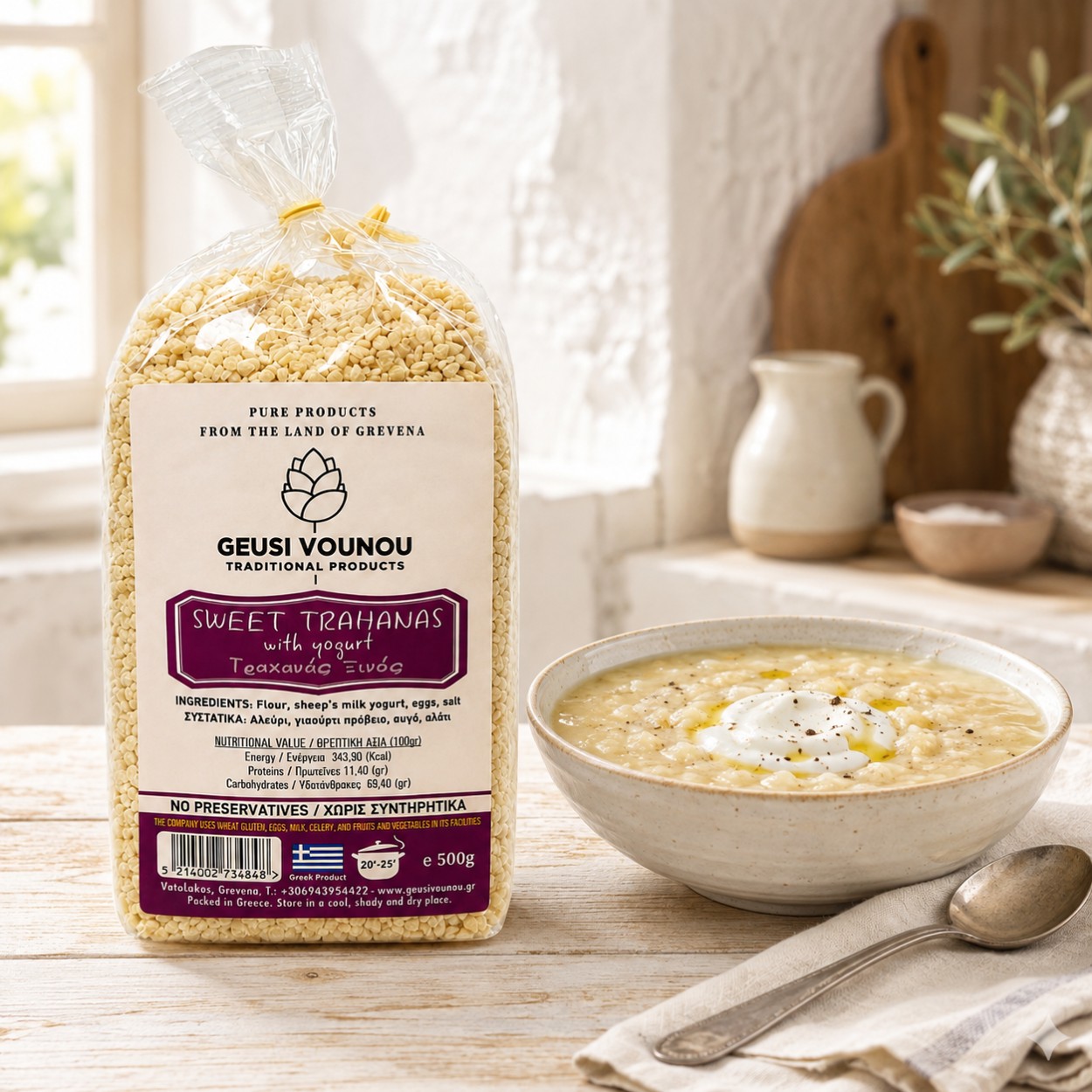
Sour trahanas with sheep’s yoghurt – Greek pasta, 500 g cooks in 20–25 minutes • sheep’s yoghurt gives a tangy dairy note • for thick soups with feta, tomatoes or vegetables
Geusi Vounou Sour Trahanas with Sheep’s Yoghurt has a tangy dairy profile and small grains that thicken the cooking liquid. It works well in thick soups with feta, tomatoes or vegetables.
- ● Cooks in 20–25 minutes • in water or stock
- ● Sheep’s yoghurt in the dough • gives a tangy note
- ● Northern Greece • regional speciality
- ● Four ingredients • flour, sheep’s yoghurt, eggs and salt


Greek pasta for thick soup – sour trahanas with sheep’s yoghurt (Geusi Vounou, 500 g)
Geusi Vounou Sour Trahanas is traditional Greek pasta in the form of small, irregular grains. It gradually softens and thickens the liquid as it cooks, so it is used mainly as the base of thick soups and one-pot dishes.
Here, the word sour does not mean that the product is spoiled or unsuitable to eat. It distinguishes this variety from sweet trahanas made with unfermented milk. The dough contains sheep’s yoghurt, which gives it a milky, slightly tangy character.
Trahanas can be cooked on its own in water or stock and finished with butter, olive oil or feta cheese. It can also be prepared with tomatoes, vegetables or pulses and served with braised meat. Depending on the amount of liquid used, the result can be a thinner soup or a thicker dish served with a spoon.
How to use
- Traditional soup with feta – cook the trahanas in water or stock, then finish with olive oil, butter and crumbled feta cheese before serving.
- Tomato trahanas – cook it with tomatoes or tomato sauce, onion, oregano and plenty of stock.
- With vegetables or pulses – add pumpkin, courgette, peppers, aubergine, lentils or beans for a thicker one-pot dish.
- With braised meat – serve as a thick side dish with beef, lamb or chicken and its cooking juices.
Add the trahanas to boiling salted water or stock and cook for approximately 20–25 minutes. Stir regularly during cooking and add more liquid as needed to reach the preferred consistency.
Suitable for
Recommended related products
- Organic Acaia extra virgin olive oil
For white, tomato or vegetable soups. Add a small amount of oil to the finished trahanas just before serving. - Tomato sauce with honey liqueur
For a tomato-based version without making the sauce from scratch. Dilute it with water or stock during cooking so the trahanas has enough liquid. - Organic Greek oregano sprigs
For tomato soup, vegetables or meat. Rub the dried leaves between your fingers and add them towards the end of cooking.
Did you know?
- Sour trahanas is not a spoiled product; the name refers to the yoghurt-based variety with a tangier, milky character.
- In Greece, trahanas is served as a thin or thick soup, often with pieces of feta cheese.
- It can also be cooked with vegetables or pulses or served with braised meat.
The product is free from preservatives, contains sheep’s yoghurt and is not labelled organic.
Sour trahanas with sheep’s yoghurt – key features
- Traditional Greek pasta – a small pasta form used mainly for soups and thicker dishes.
- With sheep’s yoghurt – the yoghurt forms part of the dough and distinguishes sour trahanas from the sweet milk-based variety.
- Tangy, milky character – works well with feta, tomatoes, vegetables and meat stock.
- Four ingredients – flour, sheep’s yoghurt, eggs and salt.
- Free from preservatives – the label states that the product contains no preservatives.
- For thin or thick soup – the amount of water or stock used determines the finished consistency.
- Cooks in 20–25 minutes – the grains soften and gradually thicken the liquid during cooking.
- 500 g pack – enough for several servings of soup or a main meal.
Sour trahanas can be prepared as a simple soup with feta, a tomato dish with vegetables, a meal with pulses or a thick side dish for braised meat. Sheep’s yoghurt gives it a different flavour from sweet trahanas made with unfermented milk.
Why choose Geusi Vounou
Geusi Vounou is a family-run agricultural business from the Grevena region of northern Greece. Its fields lie near the village of Vatolakkos at an altitude of approximately 600 metres, and the brand manages the production, processing and packing of its food under its own name.
The brand’s story draws on the legacy of grandmother Magdalini, who passed on the family’s respect for nature, ingredients and traditional methods of preparation. The current generation continues this approach, combining the family’s agricultural knowledge with modern processing and minimal interference with the natural character of the ingredients.
Geusi Vounou aims to combine Greek flavours with precise standardisation and quality control, while bringing regional Greek foods to customers beyond the country. Its production facilities operate according to HACCP and ISO 22000 systems; organic status applies only to specifically certified products.

A family story
The brand builds on the family’s agricultural experience and the legacy of grandmother Magdalini, rooted in respect for nature and its ingredients.
From the Grevena region
The business is based in northern Greece, with fields near the village of Vatolakkos at an altitude of approximately 600 metres.
Traditional ingredients, modern processing
Geusi Vounou combines Greek agricultural and culinary traditions with modern packing, standardisation and quality control.
Controlled production facilities
Production and processing take place in facilities operating according to HACCP and ISO 22000 systems.
Ingredients
FLOUR, SHEEP’S YOGHURT, EGGS, salt.
Allergens: MILK and EGGS.
Free from preservatives. Cooking time approximately 20–25 minutes.
FAQ
What is sour trahanas?
Sour trahanas is traditional Greek pasta in the form of small, irregular grains. It is most often cooked as a thin or thick soup.

Why is trahanas called sour?
The name refers to a variety made with yoghurt or fermented milk. This product contains sheep’s yoghurt; the term does not mean that the food is spoiled.
What is the difference between sour and sweet trahanas?
Sour trahanas is made with yoghurt or a fermented milk ingredient. Sweet trahanas refers to a milder variety made with unfermented milk, not pasta with added sugar.
What does sour trahanas taste like?
It has a wheat, yoghurt and gently tangy flavour. It combines well with feta cheese, butter, olive oil, tomatoes and vegetables.
How long does sour trahanas take to cook?
The label states a cooking time of approximately 20–25 minutes in boiling salted water or stock.
How do you prepare traditional trahanas soup?
Cook the trahanas in water or stock to the preferred consistency. Finish the soup with butter, olive oil and crumbled feta cheese.
Can sour trahanas be prepared with tomatoes?
Yes. It can be cooked with tomatoes, tomato sauce, onion and oregano, along with vegetable or meat stock.
What else can trahanas be cooked with?
It works well with vegetables, pulses and braised meat. Depending on the amount of liquid, it can be made into a soup or a thicker dish served with a spoon.
What are the ingredients, and which allergens does the product contain?
The ingredients are flour, sheep’s yoghurt, eggs and salt. The product contains the allergens milk and eggs; the type of cereal is not specified further on the label.
Does the product contain preservatives, and is it organic?
The product is free from preservatives. It is not labelled organic on the supplied label, so we do not describe it as organic.
Additional parameters
| Category: | Food |
|---|---|
| EAN: | 5214002734848 |
| Country of origin: | Greece |
| Manufactured by: | Geusi Vounou, Βατόλακκος, Grevená, Greece |
| Vhodné pro: | GMO Free |
| Size: | 500 g |
Product rating
Be the first who will post an article to this item!
Discussion
Be the first who will post an article to this item!
Geusi Vounou – “taste of the mountains” from Grevena, Greece
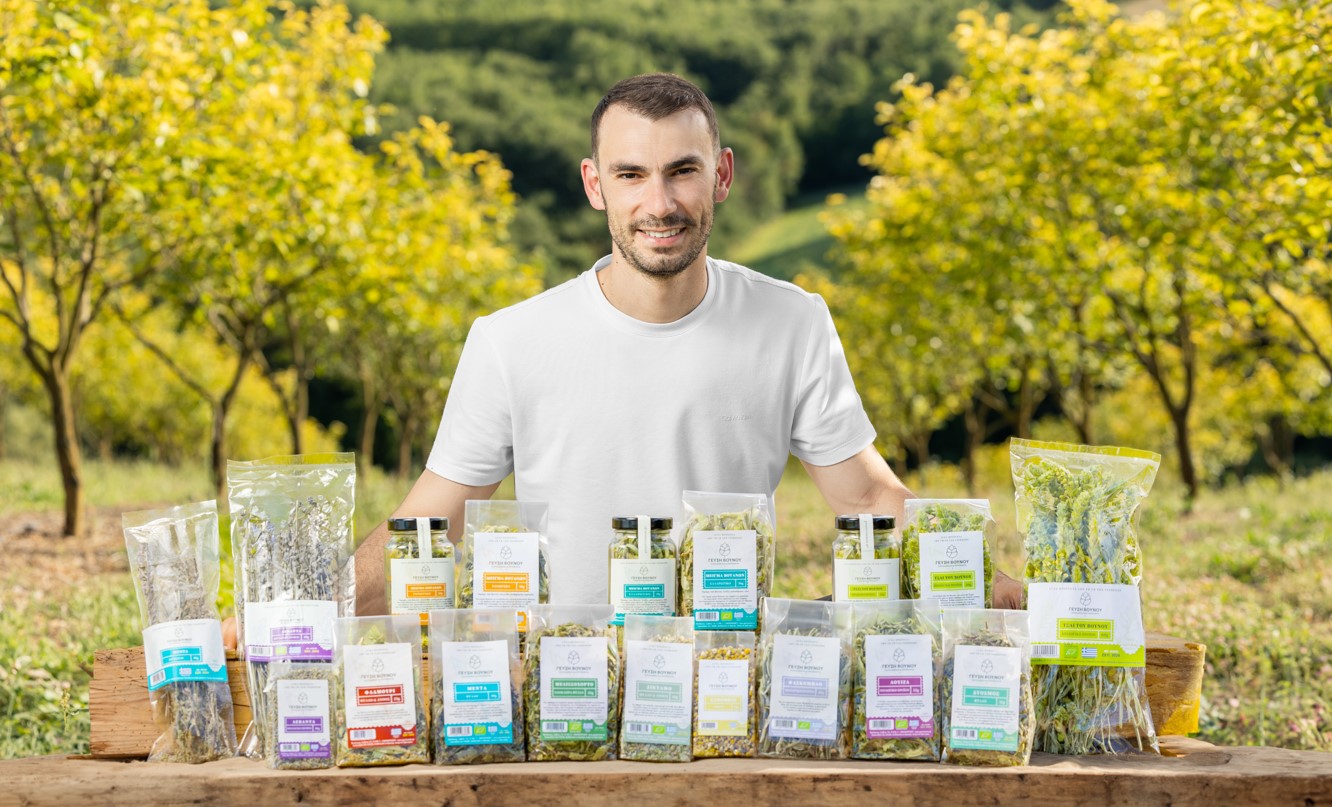
Geusi Vounou (Greek: Γεύση Βουνού, literally “taste of the mountains”) is a family agricultural business from Vatolakkos near Grevena in northern Greece. The brand is run by Vasilis Karapas, an agronomist from a farming family who planted his first oregano on family land in 2014 while still studying. He later added Greek mountain tea, thyme, sage, saffron, lemon balm, other aromatic plants and pulses.
His grandmother Magdalini was an important influence, teaching the family how to work with local herbs and emphasising the value of traditional plant material. What began as a small student project developed into an agricultural brand combining Greek farming and culinary traditions with modern processing control, packing and export.
.jpg)
Not an anonymous brand. A real farm in Western Macedonia.
- Fields near Vatolakkos at approximately 600 m above sea level – not 680 m, as our website previously stated incorrectly.
- A family farming tradition – Vasilis grew up working in the fields and built on the experience of previous generations.
- Farm-grown herbs are naturally shade-dried to avoid unnecessary loss of aroma during drying.
- Herbs and pulses form the core of the farm’s own production. We use organic claims only for products that are individually certified; the brand’s wider range is not automatically organic.
Greek agricultural press reported in 2023 that the family farm covered approximately 50 hectares, including around 20 hectares of pulses and about 14 hectares of aromatic plants. Cereals used in crop rotation also remained part of the farming system. For the pulses and aromatic crops, the source reported certified organic cultivation.
Why Greek herbs are more than “just another oregano”
With Geusi Vounou, the main difference is not decorative packaging but provenance and the way the raw material is handled. Vasilis describes manual work from planting and weeding through harvesting, drying and packing. With aromatic plants, the aim is to preserve the character of the whole plant with as little processing as possible before packing.
For customers outside Greece, it is also useful to understand what individual Greek ingredients actually are and how they are used. A literal translation of the name is not always enough. Greek mountain tea, dittany, trahanas, kritharaki, hilopitaki and petoura are not marketing terms; they are specific traditional herbs, foods or types of pasta with their own uses.
From herbs and pulses to the wider Greek pantry
Today’s Geusi Vounou range is broader than the farm’s original production. At PraveBio.cz we therefore distinguish between two parts of the assortment:
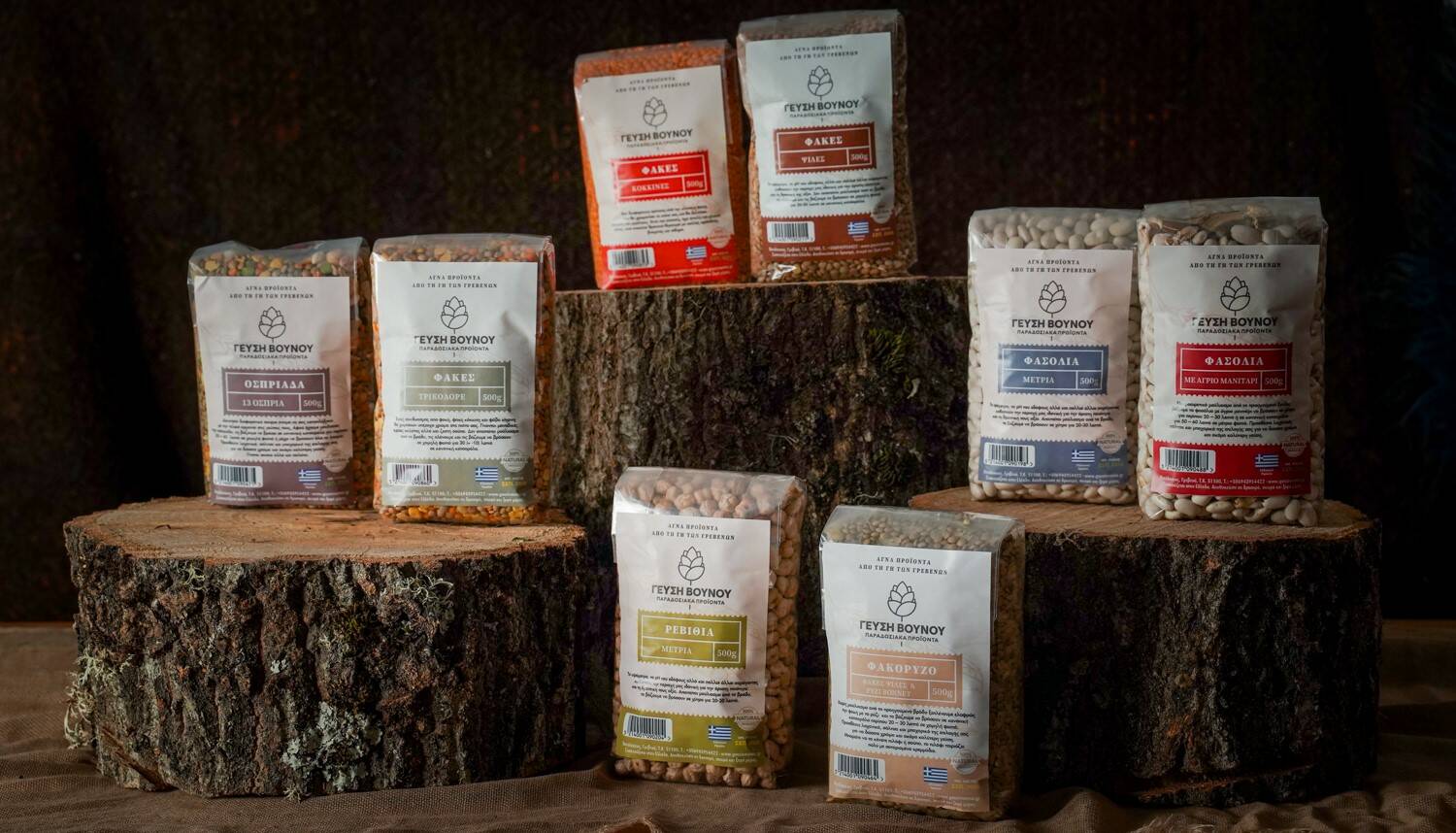
- The farm-grown core: oregano, thyme, sage, lemon balm, Greek mountain tea, saffron, other herbs and pulses.
- The wider Greek range: traditional pasta, honey, mushrooms and truffle products, flavoured olive oils and other regional foods.
For each product we therefore check origin, ingredients, organic certification, the traditional name and the correct way to use it. The aim is not to sell customers “something Greek” without context, but to explain what makes each ingredient different, how to prepare it and why it has a place in Greek cooking.
Vasilis Karapas: from the first oregano crop to an export brand
Vasilis Karapas was born in Grevena in 1994 and studied agricultural development and farm business management in Thessaloniki. He has worked professionally in agricultural production and packing since 2014. Oregano was the first crop, followed by other aromatic plants and pulses.
Greek media reported in 2024 that more than 70% of production was exported. Exports began in Germany in 2018 and later expanded to other European countries, including the Czech Republic. Geusi Vounou was not created as a souvenir brand for tourists; it grew out of a working agricultural business and now sells its products across several markets.
Geusi Vounou at PraveBio.cz
PraveBio distributes Geusi Vounou in the Czech Republic and Slovakia. As with Ceylon Kokonati, we explain the differences between individual products, their Greek names, how they are used in the kitchen and the genuine USPs of each ingredient. Organic claims are used only where they apply to the specific certified product.