
Turtle Organic Gluten-Free Walnut & Chocolate Granola – 350 g 5.9% chocolate • 4.5% walnuts • high-oleic sunflower oil
Wholegrain gluten-free oats with toasted walnuts, dark chocolate and cocoa nibs. Sunflower seeds, buckwheat and puffed quinoa add crunch. Agave syrup sweetens the granola; the chocolate also contains cane sugar.
- 5.9% chocolate and 4.5% walnuts: the chocolate contains cocoa mass and cocoa butter.
- High-oleic sunflower oil: from varieties rich in oleic acid, a monounsaturated fatty acid.
- 8.1 g fibre and 11.5 g protein per 100 g: wholegrain oats are complemented by seeds and nuts.
- Organic, vegan and gluten-free: certified organic agricultural ingredients. Contains walnuts.


Why it’s Pravé Bio
Walnuts, dark chocolate and a varied, crunchy oat base. We chose this Turtle granola for the combination of wholegrain gluten-free oats, sunflower seeds, buckwheat and puffed quinoa. Chocolate accounts for 5.9% of the recipe and walnuts for 4.5%, with cocoa nibs adding a further cocoa note.
Granola sweetened with agave syrup. The recipe contains agave syrup and cane sugar in the chocolate, so it is not a no-added-sugar granola. It provides 13.4 g sugars and 8.1 g fibre per 100 g. Serve with plain yoghurt or an unsweetened plant-based drink.
Organic, gluten-free and vegan by recipe. This is an oat-based granola, rather than a grain-free blend. It contains walnuts and may contain traces of other tree nuts and soya.

What sets Walnut & Chocolate Granola apart
- Wholegrain gluten-free oats: the first ingredient in the recipe.
- 5.9% chocolate: made with cocoa mass, unrefined cane sugar and cocoa butter.
- 4.5% walnuts: a different recipe from Turtle's hazelnut granola.
- Seeds, buckwheat and puffed quinoa: a mixture of textures alongside the oats.
- 8.1 g fibre per 100 g: the figure for granola alone, before adding milk or yoghurt.
- 13.4 g sugars per 100 g: agave syrup is an added sweetener, not a reason to describe the granola as sugar-free.
BREAKFAST WITH TURTLE
No-bake chocolate granola cups
A serving idea for around eight small cups. The photograph illustrates how to serve them. Both the granola and chocolate are already sweetened, so there is no need to add another sweetener.
Ingredients
- 200 g Turtle Walnut & Chocolate Granola
- 2–3 tablespoons smooth peanut butter
- 60 g Chocolat Madagascar 70% dark chocolate

Method
- Lightly crush the granola and mix with the peanut butter. Add it gradually until the mixture holds together when pressed.
- Divide between small silicone moulds and press firmly. Break up any larger clusters first to help the bases hold their shape.
- Melt the chocolate in a bowl over a pan of hot water. Spread over the bases and refrigerate for around 30–60 minutes, until set.
- Carefully remove from the moulds and serve chilled. Keep in a sealed container in the fridge; the consistency will also depend on the nut butter used.
With yoghurt, milk or a no-bake dessert
Ready to eat straight from the pack. There is no need to cook the granola. It gradually softens in milk or yoghurt, so add it just before serving if you prefer a crisp texture.
- With plain yoghurt: add pear, banana or raspberries, then scatter the granola over the top.
- With a plant-based option: choose an unsweetened drink or yoghurt. Thick Ceylon Kokonati coconut milk can be thinned with water to suit.
- Over porridge: add a small handful to the finished bowl for walnut flavour and chocolate crunch, rather than cooking it with the oats.
- In dessert glasses: layer with yoghurt and fruit. Keep some granola aside to add just before serving.
- For a different breakfast: try Turtle Cornflakes with no added sugar as an unsweetened corn base, with a little granola for extra flavour.
Consider the whole recipe. For a vegan serving, use plant-based yoghurt or milk and chocolate without milk ingredients. Check every ingredient when preparing a gluten-free dish. The peanut butter in the cups introduces an additional allergen. Keep the opened granola tightly sealed in a cool, dry place.

The ingredients and what they do
Wholegrain oatsGluten-free oats form the main cereal base. Gluten-free does not mean oat-free.
4.5% walnutsWalnuts add their distinctive flavour and firmer pieces. They are an ingredient and an allergen, rather than simply a possible trace.
5.9% chocolate and cocoa nibsThe chocolate contains cocoa mass, unrefined cane sugar and cocoa butter. Cocoa nibs are listed separately.
Sunflower seeds and buckwheatThese add different-sized crunchy pieces to the oat base. Their individual percentages are not specified.
Agave syrupSweetens the granola and helps bind the mixture. Syrup still counts as added sugar; total sugars are 13.4 g per 100 g.
High-oleic oil and puffed quinoaThe sunflower oil comes from varieties rich in oleic acid. Puffed quinoa adds light, crisp pieces.
Certified organic
What do organic and gluten-free mean?
Certified organic ingredients. Organic farming restricts the inputs that may be used, prohibits herbicides and permits only approved plant-protection substances. That is why certified grain sourcing matters more to us than the word ‘natural’ on a pack.
Regular gluten testing. Turtle regularly tests its gluten-free products to keep gluten below 20 mg/kg. This product is labelled gluten-free. It contains gluten-free oats and is not suitable for anyone with an oat allergy.
Turtle labels this product gluten-free. The manufacturer says it regularly tests its gluten-free products and keeps gluten below 20 mg/kg. An AOECS licence is a separate permission to use the official Crossed Grain trademark; this product is not listed among the licensed products in the current AOECS register, so we do not show an AOECS licence number on this page. This does not cast doubt on Turtle’s gluten-free claim.
Certification and testing details
Organic certification verifies a controlled production system with rules for growing, permitted inputs and processing. Organic ingredients are identified by an asterisk in the ingredients list.
The gluten-free label applies to this product. Check any other ingredients you add when preparing a gluten-free breakfast.

Ingredients
Wholegrain rolled oats* (gluten-free), sunflower seeds*, agave syrup*, buckwheat*, high-oleic sunflower oil*, chocolate* 5.9% (cocoa mass*, unrefined cane sugar*, cocoa butter*), walnuts* 4.5%, puffed quinoa*, cocoa nibs*.
*Certified organic ingredients.
Allergens
Contains oats (gluten-free) and walnuts. May contain traces of other tree nuts and soya.
Nutrition information
| Typical values | per 100 g |
|---|---|
| Energy | 1924 kJ / 458 kcal |
| Fat | 22.6 g |
| of which saturates | 3.9 g |
| Carbohydrate | 48.9 g |
| of which sugars | 13.4 g |
| Fibre | 8.1 g |
| Protein | 11.5 g |
| Salt | 0.01 g |
Values are for the granola alone, without milk, yoghurt or other additions.
Storage
Store in a dry place.
Turtle: a Belgian organic breakfast specialist
 From a family idea to a Belgian breakfast brand
Laurence and Thilo founded Turtle in Belgium in 2014 while looking for organic breakfasts for their own family. They had struggled to find organic cereals and options without added sugar. Expecting their first child sharpened their interest in breakfast, and Laurence began developing the business during maternity leave.
The range grew from porridge into granola and a cereal collection of its own. Turtle sold its first porridge in 2015, added granola in 2020 and launched a new cereal range in 2021. The founders paired familiar breakfast shapes and flavours with organic ingredients.
Turtle also develops recipes using its products. Overnight oats with strawberry chia jam are one example, with ideas extending to other breakfasts and desserts.
Certified organic ingredients
Organic certification covers the agricultural ingredients identified in each recipe, including grains, cocoa, nuts and seeds. Turtle uses these ingredients in its sweetened cereals and fillings too.
Grain-based and grain-free recipes
Alongside wholegrain oats, Turtle uses blends of seeds and nuts. Power Granola Nuts & Seeds contains a 79% seed blend, including buckwheat, and 8% nuts. It is oven-toasted and sweetened with agave syrup.
Colour from plant extracts
In Marshmallow Crunchies, extracts of spirulina, apple, carrot and radish give the colourful pieces their shades. Natural vanilla flavouring provides the vanilla taste.
Different ways to sweeten
The plain rolled oats have no added sugar. Other recipes use ingredients such as cane sugar, honey, maple syrup or agave syrup. Sweetening information therefore applies to the individual product rather than the whole range.
Checks on the gluten-free range
Turtle regularly tests products labelled gluten-free for gluten levels below 20 mg/kg. The gluten-free oats and Marshmallow Crunchies both appear in the AOECS licensing register for the Crossed Grain Trademark. The label does not cover the entire range.
Two Great Taste stars
Cornflakes Dark Chocolate earned two Great Taste stars in independent food judging. The award belongs to this particular recipe of cornflakes coated in dark chocolate.
The people behind Turtle and its journey to you
Laurence and Thilo: breakfast, inspired by family life
- Laurence is Belgian and grew up in Spain and Denmark; Thilo is German. They met in Belgium and brought experiences of food from different European countries to their shared project.
- The name Turtle comes from the fable of the tortoise and the hare. The tortoise became both the name and the symbol of their breakfast brand.
- Laurence and Thilo continue to work on Turtle together. A family project has grown into a business with an expanding team, which also shares recipes for making breakfast at home.
Pravé Bio: from meeting in Malmö to direct distribution
- We met Laurence and Thilo in person at a trade fair in Malmö. Their ambition to offer familiar breakfasts with organic ingredients, alongside recipes without added sugar, appealed to us.
- We import and distribute Turtle directly for the Czech Republic. At Pravé Bio, you buy from an importer and distributor who knows the founders personally.
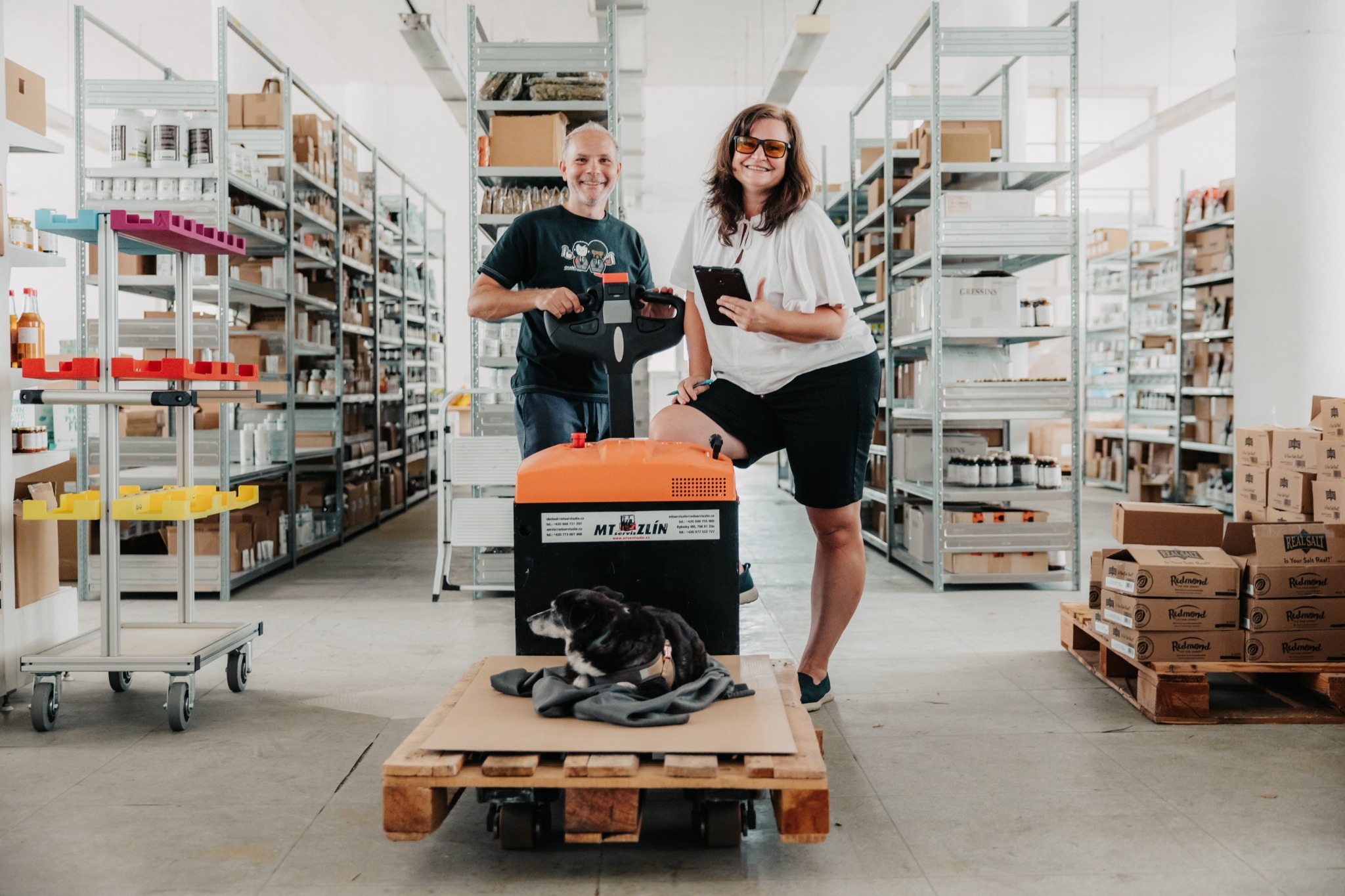
- We are Jana and Honza, and we spent almost twenty years living in London. Breakfast cereals were part of everyday life there, yet finding organic options that met our standards took some searching. Read our story.

Questions about Turtle Walnut & Chocolate Granola
How can oat granola be gluten-free?
This recipe uses gluten-free rolled oats. It is not oat-free or grain-free.

Does it contain added sugar?
Yes. It contains agave syrup and unrefined cane sugar in the chocolate, with 13.4 g total sugars per 100 g.
How much chocolate and walnut does it contain?
Chocolate makes up 5.9% of the recipe and walnuts 4.5%. Cocoa nibs are a separate ingredient.
Is it vegan?
Yes, the recipe is plant-based. If you serve it with milk, yoghurt or extra chocolate, those ingredients also determine whether the finished dish is vegan.
Can it contain soya or other nuts?
Yes, it may contain traces of soya and other tree nuts. Walnuts are an intentional ingredient.
Does granola need cooking?
No, it is ready to eat. It softens gradually in milk or yoghurt; add it just before eating to keep the crunch.
Can I use it in a no-bake dessert?
Yes, as a layer in a dessert glass or in the granola cups above. It softens when chilled with yoghurt, so reserve some for a final crunchy topping.
How should I store an opened pack?
Keep it tightly sealed in a cool, dry place. Follow the best-before date and storage guidance on your pack.
Additional parameters
| Category: | Granola & Crunchy Muesli |
|---|---|
| EAN: | 5425038430271 |
| Net weight: | 350 g |
| Brand: | Turtle |
| Brand origin: | Belgium |
| Chocolate content: | 5.9% |
| Walnut content: | 4.5% |
| Sugars per 100 g: | 13.4 g |
| Fibre per 100 g: | 8.1 g |
| Saturates per 100 g: | 3.9 g |
| Organic: | yes |
| Gluten-free: | yes |
| Suitable for vegans: | yes, by recipe |
| Contains: | oats (gluten-free), walnuts |
| Possible traces of allergens: | other tree nuts, soya |
| Storage: | cool and dry; reseal after opening |
| Manufacturer: | Turtle sprl Monastery Street 12 1000 Brussels, Belgium |
| The item has been sold out… | |
Product rating
Be the first who will post an article to this item!
Discussion
Be the first who will post an article to this item!

Turtle is an innovative brand that delivers healthy, quality breakfast products with an emphasis on clean ingredients and sustainability. Their range includes organic cereals, porridges and granolas without artificial additives, refined sugar and genetically modified ingredients. The brand's philosophy is based on simplicity, authentic flavours and maximum preservation of the nutritional value of the ingredients.
Turtle prides itself on its eco-friendly approach - their packaging is recyclable and production respects the principles of sustainability. Its commitment to quality and responsibility to nature makes Turtle a popular choice among customers looking for healthier alternatives to traditional breakfast products.

Renowned breakfast products thanks to:
- Pure ingredients - no artificial additives, refined sugar or GMO ingredients.
- Carefully selected ingredients - from organic farming, which retain their authentic taste and nutritional value.
- Environmental responsibility - packaging and responsible production are proof of their commitment to protecting the environment.
- Allergen-free - offers gluten-free, vegan and protein options, so everyone who cares about a healthy lifestyle will enjoy it.

Granola
Porridge and flakes
Chocolate cereal
Cereals
Who is behind the Turtle brand
Behind the Turtle brand is a team of health food enthusiasts who believe that breakfast should not only be tasty, but also nutritious and made with respect for nature. Inspired by the simplicity and quality of traditional recipes, the brand founders decided to create a range of cereal products that combine pure organic ingredients, great taste and sustainability.
The aim was to offer an alternative to conventional breakfast products, which often contain unnecessary additives, refined sugar and artificial flavourings.
Turtle is based on the philosophy of "slow food", i.e . conscious eating with an emphasis on the quality of ingredients and their natural processing. The brand name symbolizes patience, honesty and consideration - values that are reflected not only in the products themselves, but also in the entire approach to production and business. As a result, Turtle has earned the trust of customers across Europe and is constantly expanding its range with new, innovative products that make breakfast a real treat.
Turtle brand vision
Turtle' s vision is clear - to deliver breakfasts that are not only delicious, but also healthy, nutritious and made with the planet in mind. They want to inspire people to better eating habits by offering products without unnecessary additives, refined sugar and chemicals.
Every step of production, from the careful selection of raw materials to eco-friendly packaging, reflects their commitment to sustainability and quality. At the same time, they emphasize an ethical approach to production and fair cooperation with suppliers who share their values.
Their goal is not only to produce quality products, but also to contribute to a positive change in the way people think about food and its impact on the world.


What inspires the founders
Turtle is a brand that embodies everything that goes into a great breakfast - simple, clean and delicious products. Their team focuses on creating innovative recipes and improving traditional breakfast dishes to make them healthier and more nutritious.
They were the first to market porridges, which gradually created a whole new segment in some European countries. They enrich classic recipes with modern elements and look for new ways to combine ingredients and discover new flavours.
Each Turtle product is designed with versatility in mind, but always with carefully selected organic ingredients that guarantee high quality, healthful ingredients and great taste.
How did this story begin?
The founders were looking for organic, no-sugar-added breakfast cereals - and couldn't find them. It was only pregnancy and the birth of our child that made us think even more deeply about what we actually eat and what we want to offer our family. At the time, both Thilo and Laurence were busy with work, but maternity leave proved to be just the right moment to launch Turtle - a brand that brings better breakfast alternatives to those looking for clean ingredients and real taste.
The name Turtle was chosen after the well-known story of the tortoise and the hare. While the hare pushes forward and tires quickly, the tortoise goes slowly but steadily - and eventually wins. It works the same way with the energy from whole grain oats, which is released gradually and gives the body a steady strength for the whole day.
Today, they are grateful to be able to share their love of breakfast with hundreds of thousands of you each month. They're always looking for new ways to bring you even better products and inspiration for breakfasts you'll love. Because a good day starts with a great breakfast - and they always want yours to be special.

Why does Turtle rely on organic farming?
All Turtle products come from organic farming, which is better for nature and human health. Unlike conventional production, it minimises the use of chemicals, promotes natural soil fertility and protects groundwater. As a result, bees can continue to pollinate, the landscape remains diverse and consumers can enjoy a breakfast free of unwanted toxins and pesticides.
Why Turtle chooses organic farming
- It preserves soil fertility for future generations.
- It protects the purity of drinking water.
- Reduces the amount of pesticides and toxic substances in food.
- It promotes biodiversity and contributes to the sustainability of the planet.
- It does not contain any genetically modified (GM) ingredients.
From the very beginning, Turtle has held the BE-BIO-001 organic certification, confirming its commitment to sustainability and the highest quality.

Fair production and healthy food

Fair Production: a responsibility that makes sense
Turtle is committed to sourcing ingredients in a fair and reasonable manner because it believes that quality products start with honest supplier relationships.
Proximity
- They buy raw materials from farms close to their production facilities, which allows for a long-term and stable cooperation between farmers and producers.
- This approach promotes not only the freshness of raw materials but also the sustainability of local communities.
Fair access
- Every raw material is purchased in accordance with the high social standards set by organizations such as BSCI (Business Social Compliance Initiative), SA8000 (Social Accountability) and ILO (International Labour Organization).
All of Turtle' s suppliers are members of Sedex, which ensures fair living and working conditions for all those involved in growing cocoa, sugar cane and other ingredients that brands cannot grow directly in their area.
Healthy and nutritious food: start the day with energy that lasts
Breakfast should provide not only immediate energy, but also a long-lasting feeling of satiety and vitality. The right combination of macronutrients is the key to giving your brain and body everything they need to function optimally.
Reach for breakfast foods that contain a balance of carbohydrates, protein, healthy fats and fibre. Carbohydrates give you quick energy, while protein gives you a steady source of energy throughout the day.
Taste is the foundation of food enjoyment
This enjoyment has a positive effect on our health. It is scientifically proven that enjoying food supports digestion, improves the relationship with food and can help overcome problems such as eating disorders.
Therefore, it is not only important what you eat, but also how you eat it.


Sustainable packaging: Protecting freshness and being responsible for the planet
Turtle' s goal is to use packaging that preserves the freshness and taste of their products while minimizing the negative impact on the environment.
The cardboard boxes are made from 80% recycled fibres, and the outer packaging for transport is completely recyclable.
While plastic is not ideal, it is essential for preserving freshness and protecting against moisture, greatly reducing food waste. This plastic is recyclable, which means that by reusing it, the amount of new plastic can be reduced.
They use eco-friendly bubbles made from degradable vegetable starch to ship orders.
History of the Turtle brand: A Love Story since 2014
2014-2015 - The idea for Turtle was born this year during Laurence's first maternity leave. A year later, in 2015, Turtle sold its first porridge.
2018 - Turtle is growing and evolving! The brand has partnered with a leading Belgian design agency to create colourful and fun new packaging. It's time for a change of look!
2019 - Working from home was great, but when the boxes started reaching the ceiling, they decided to open a real office.
2020 - granolais coming! And also COVID-19... A new challenge: sending products to customers working from home. Laurence, like many parents, spends three months at home with her children. But sales are skyrocketing!
2021 - The Turtle brand has always aimed to produce healthy products. Laurence and Thilo created
Today - Since its inception, Turtle has enjoyed tremendous success, and this is just the beginning! Laurence and Thilo still put their whole heart into their project, driven by their love of good food.

The Turtle brand creates healthy and tasty products with quality ingredients from organic farming, focusing on sustainability and fair working conditions for all suppliers.
See for yourself.
Who Turtle products are for

Celiac disease
People with high cholesterol
Families with children
Vegans
Keto lifestyle
Turtle Brand Commitments

Quality
Sustainability
Nutritional value
Innovation
Step with the times


