Glass Water Bottle Flower of Life cork cover • water restructuring • programmed glass • 0.5 l
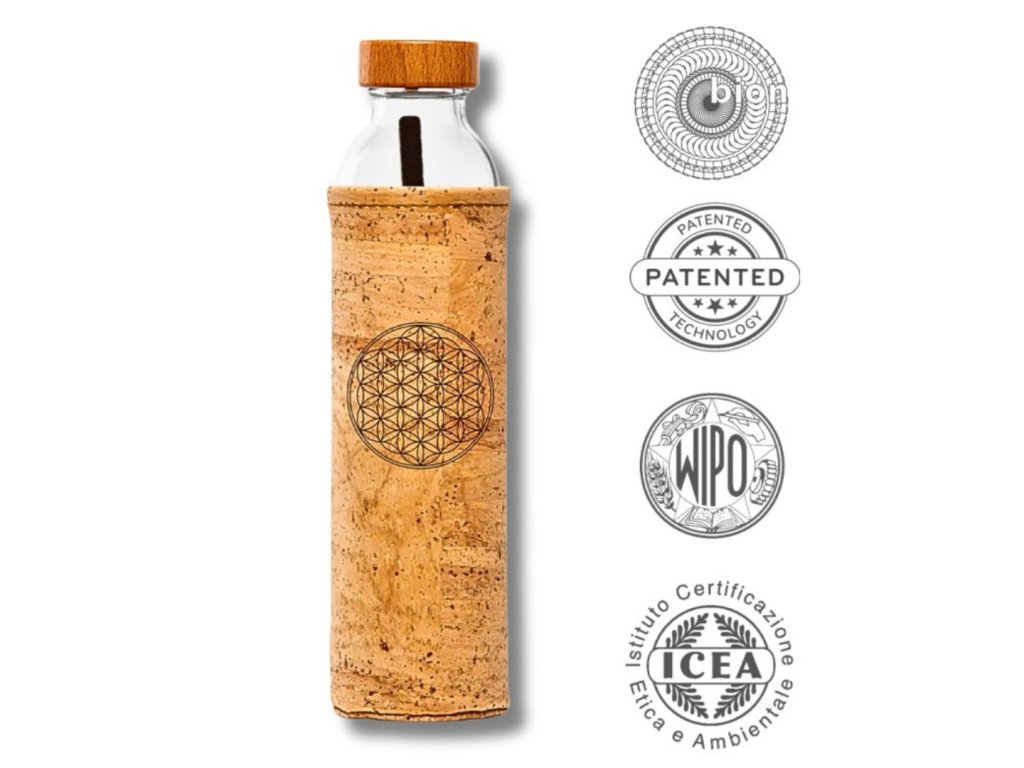
Glass Water Bottle Flower of Life (500 ml) is not an ordinary glass bottle. The key difference lies in the material: FLASKA uses the patented “programmed” glass Glass & Vibe technology, which the manufacturer describes as adjusting the structure of water within a few minutes (they recommend waiting 5 minutes and shaking the water).
In practice, people often mention a smoother, more balanced taste, even with tap water – which is also why FLASKA is priced differently from standard glass bottles. The cork sleeve improves grip and enhances the appearance of the bottle, the wide mouth makes filling and hand cleaning easier, and the wooden cap ensures secure closure. The bottle is not dishwasher safe.

Glass Water Bottle Flower of Life – Flaska
Glass water bottle by Flaska made from programmed glass is designed for everyday use as a glass alternative to plastic bottles at home. The manufacturer links programmed glass technology with the perception of a smoother, more balanced taste of water.
European glass is chemically inert and naturally BPA-free, so it does not absorb odours or flavours. The cork sleeve is made from a natural material, feels pleasant to the touch and appeals to those who prefer a natural-looking bottle and pay more attention to environmental impact.
TPS technology (described by the manufacturer as “programming silicon in the glass”) is said by the brand to transfer a stored pattern into water and is compared to the properties of spring water. Users often describe a smoother taste perception; however, this is a subjective experience based on the manufacturer’s claims.
A reusable glass bottle supports a more sustainable everyday drinking routine and reduces the need for single-use packaging. The product is made in the EU with an emphasis on material quality and long service life.
Read more on the topic
Suitable for
Glass Water Bottle Flower of Life – key benefits
- Smoother-tasting water, which users often describe in connection with the programmed glass technology as presented by the Flaska brand.
- TPS programmed glass – according to the manufacturer, a specific pattern is embedded in the glass to “tune” the structure of water.
- Cork sleeve made from a natural material, pleasant to the touch, for those who prefer a natural-looking bottle and consider environmental impact.
- BPA-free and without plasticisers – glass is inert and does not absorb odours or flavours from drinks.
- Reliable sealing – a well-fitting cap helps prevent leaks when carried.
- Easy care – the practical neck and recommended hand washing make cleaning easier without retaining aromas.
- Reusable bottle that helps reduce single-use plastics.
- Product documentation – BION certification related to water structure is available, along with a declaration of conformity for the cork cap for food contact.
You can also mix functional drinks into the “restructured water” in this bottle. A great match is Restore® Daily Electrolytes from Himalayan salt – unflavoured by Hunter & Gather – a balanced ratio of sodium, potassium and magnesium, completely sugar-free and without sweeteners.
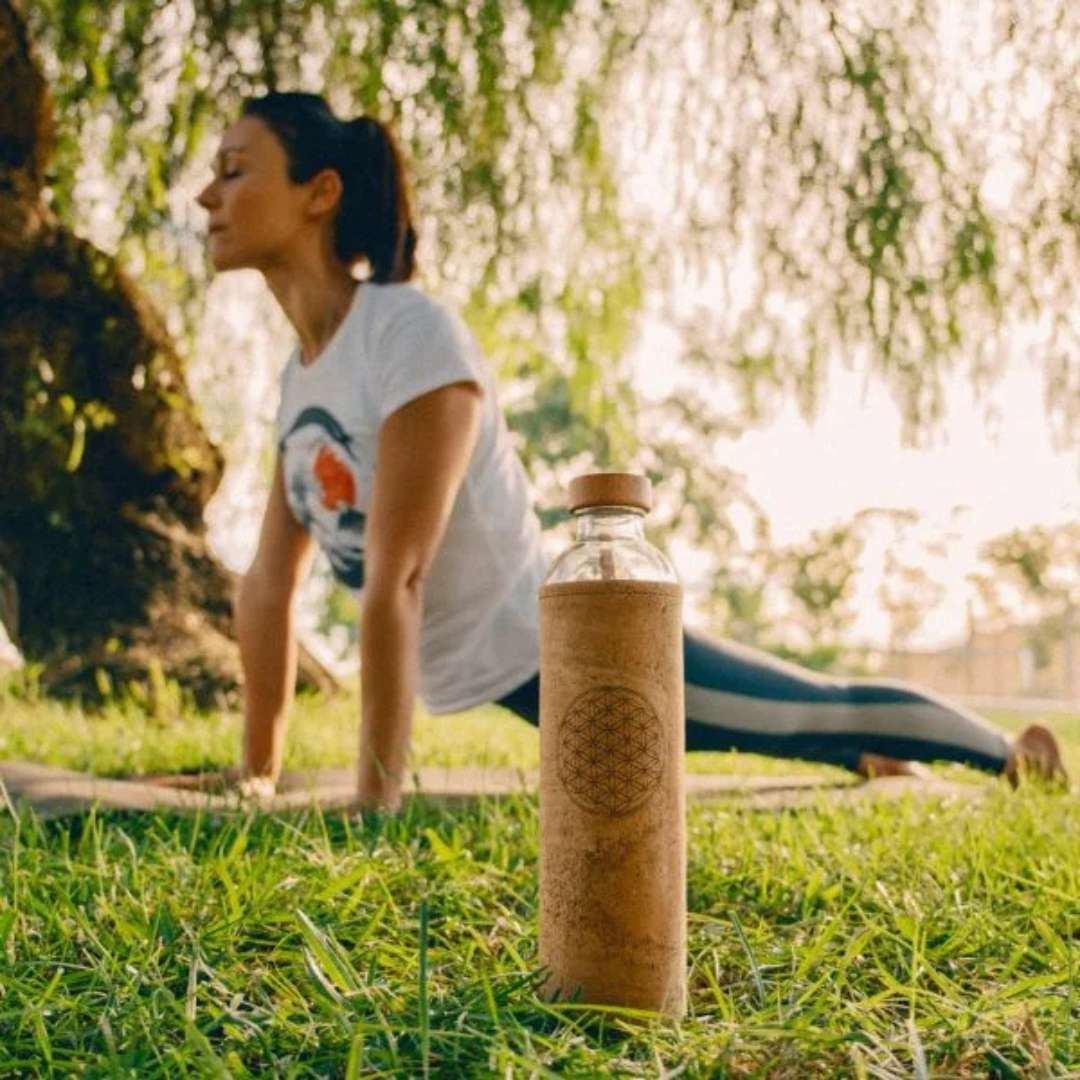
How are Flaska bottles different from “ordinary” bottles?
Compared to plastic bottles, Flaska offers the benefits of glass: it is chemically stable, so it does not retain odours or flavours and does not absorb colour from drinks.
Glass is also naturally BPA-free and without plasticisers, while plastic may, with long-term use, absorb smells or release substances into beverages.
From a hygiene perspective, glass is easy to clean and tolerates hot water and thorough mechanical cleaning with a brush, without forming a surface film. Plastic, on the other hand, is more easily scratched, and micro-scratches can reduce cleanability and hygiene.
Over its life cycle, a glass bottle – when handled with care – has a long service life and is fully recyclable, reducing the need for single-use packaging. Plastic may be lighter, but usually has a shorter usable lifespan and loses flavour neutrality over time.
In practice, glass is heavier and more fragile, but Flaska balances this with accessories. Cork or neoprene sleeves and bottles in several sizes are available, so you can easily choose a version for work, sport, travel and home serving.
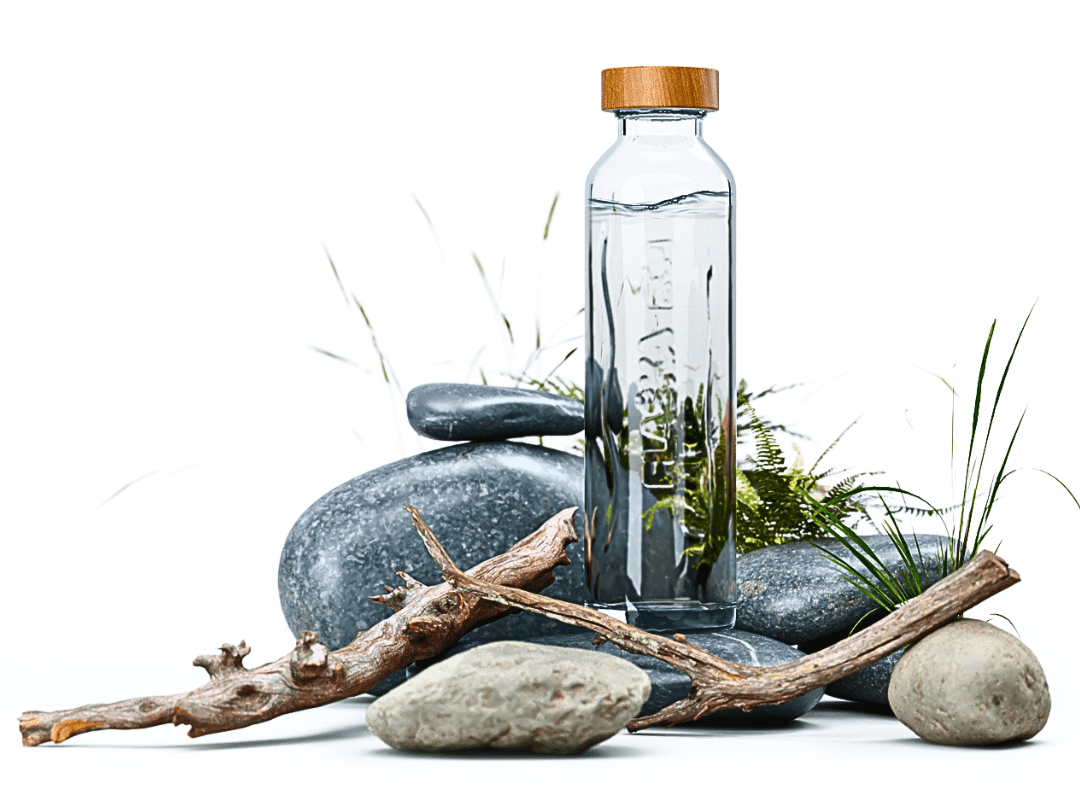
Who are Flaska bottles for and where can you use them?
Flaska bottles are suitable for everyday hydration at home, in the office, at school and during meetings. They work great for sports and leisure time – to the gym, for yoga, hiking and cycling. Flaska also offers bottles for children that help maintain a regular drinking routine at school and activities.
They are practical for travel and daily commuting – in a backpack or car, on a trip or in the city. You can easily refill the bottle at drinking fountains or at home before leaving, so you have water always at hand.
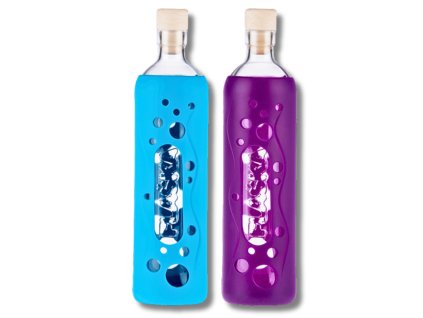
Flaska bottles are produced in various designs with an integrated sleeve, so you can choose a style that matches your taste and preferences. The range includes versions with cork, neoprene and silicone covers, in a variety of colours and motifs for children and adults. The sleeve improves grip and enhances the appearance of the bottle; neoprene sleeves are additionally removable and washable, while cork and silicone sleeves can be easily removed and cleaned with a damp cloth.
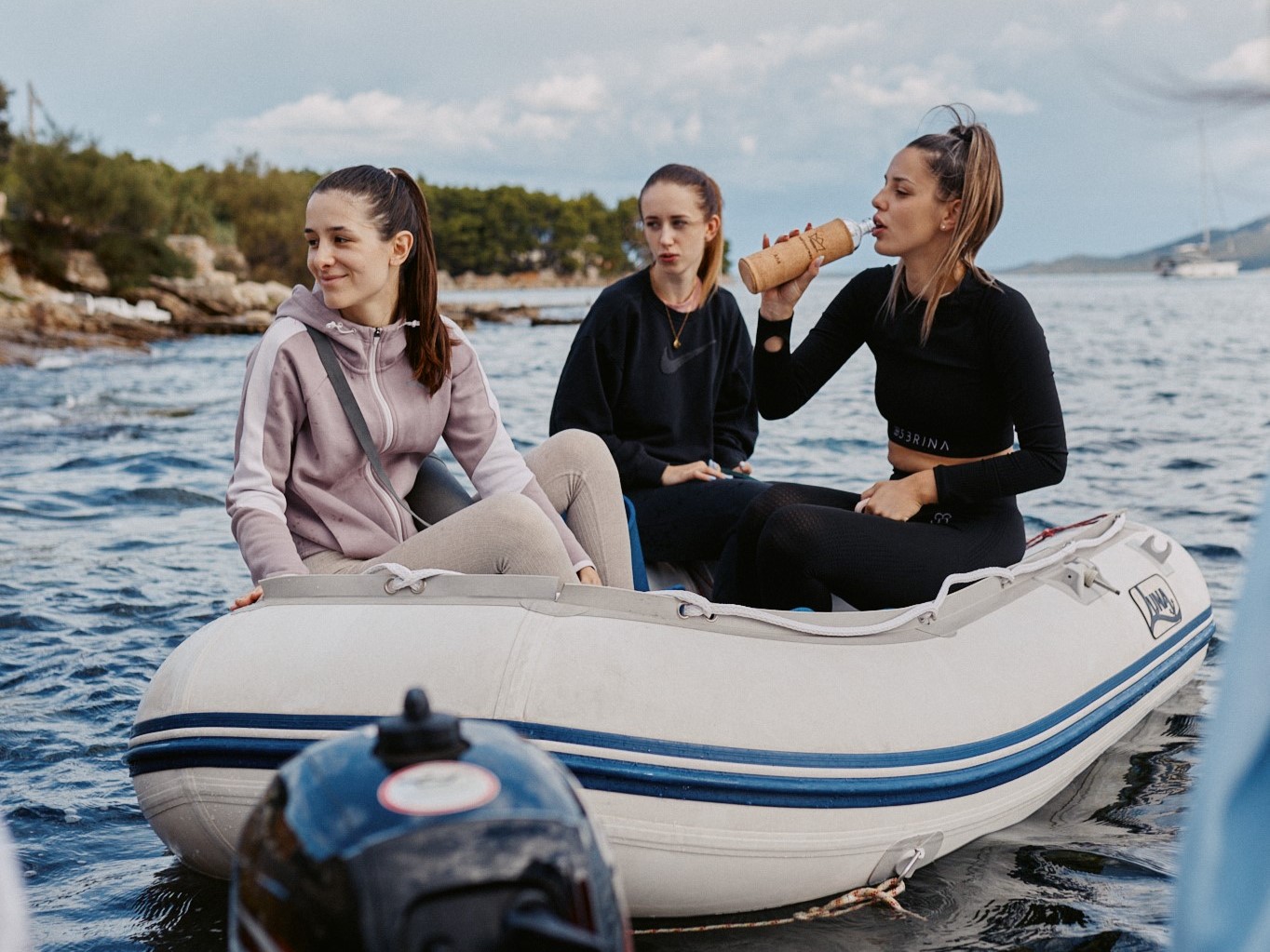
Why choose Flaska
Flaska bottles are reusable glass bottles that keep water flavour-neutral and free from unwanted odours. Glass is inert and naturally BPA-free, so it does not react with beverages and does not release substances into them.
The brand’s identity also includes an approach the manufacturer refers to as “programmed glass” – their own way of focusing on quality and the perception of water.
Flaska bottles fit easily into everyday hydration at work, at home, while studying and on the go. Thanks to the comfortable neck and quality cap, they are easy to clean and pleasant to drink from.
The brand offers several bottle sizes and various design options with a cork, neoprene or silicone sleeve. Sleeves improve grip and enhance the bottle’s appearance; neoprene sleeves are also removable and washable, while cork and silicone sleeves can be easily removed and cleaned.
For a long service life, hand washing with a mild detergent and regular airing of the cap are recommended. Reusing a glass bottle helps reduce single-use plastic packaging.

Taste purity
Glass bottles are inert – they do not react with beverages, do not absorb odours or flavours, and do not stain.
BPA-free and without plasticisers
Glass is naturally BPA-free and free from plasticisers, so you avoid the typical migration of substances from plastic into drinks.
Sustainable choice
Reusable bottle with a long service life and a fully recyclable material reduces single-use packaging.
Comfort with accessories
The range includes bottles with a cork sleeve for a more secure grip, as well as variants with a neoprene sleeve and other practical features.
Easy care
Glass is easy to clean and tolerates hot water; with hand washing, no aromas or colourants remain in the bottle.
Versatile use
For the office, school, sports, travel and home serving – water is always at hand and tastes the same.
Materials and workmanship
Bottle body is made from thick-walled European glass (so-called TPS programmed glass), which is chemically inert and naturally BPA-free and without plasticisers; it does not absorb odours or flavours. The manufacturer describes programmed glass as glass into which a specific “vibrational” pattern is embedded during production, associated with the perception of “tuned” water. The surface may feature a laser-engraved motif (e.g., the geometric “Flower of Life” pattern).
The sleeve is made from natural cork fabric, pleasant to the touch, supports a comfortable grip and gives the bottle a natural, understated look. The cap is wooden or cork with a seal for reliable bottle closure and everyday carrying. All components intended for contact with water meet food-contact requirements.
Each piece undergoes hand assembly and inspection. To preserve appearance and function, the manufacturer recommends hand washing and avoiding the dishwasher, microwave and extreme temperature shocks.
Use and care
- Fill the Flaska bottle with tap water, wait 5 minutes, briefly stir the water and enjoy the improved water structure thanks to Glass & Vibe technology (manufacturer’s claim).
- For reliable sealing, fit and firmly screw on the wooden cap to prevent spills.
- Clean the bottle by hand using a soft brush and a mild dishwashing liquid.
- Do not use a dishwasher; wash by hand only.
What to add to this bottle?
- ✔︎ KAYTEA Tea with electrolytes - Lemon & Maté – refreshing electrolyte support with gently uplifting maté, ideal in a glass bottle for everyday hydration.
- ✔︎ Jigsaw Adrenal cocktail with vitamin C powder – a blend of sodium, potassium and vitamin C for morning hydration and natural energy.
- ✔︎ AlmaWin Dishwashing detergent - Lemongrass – gentle hand washing for glass without harsh ingredients, helps maintain the bottle’s taste neutrality.
- ✔︎ Eco sponges for dishes - 2 pcs – a three-layer eco sponge for gentle cleaning of glass without scratching; ideal care for the bottle and cap.
FAQ
What is Glass & Vibe technology and how should the bottle be used?
The manufacturer states that a vibrational program is embedded in the glass, intended to “tune” the water in about 5 minutes. Procedure: fill the bottle, wait, gently swirl the water and drink. This principle should be understood as a brand claim, not a health effect.

Is Flaska BPA-free and what materials is it made from?
Yes. Glass is naturally BPA-free and without plasticisers and is inert (it does not react with beverages). Accessories mainly include cork and neoprene sleeves for protection and comfortable carrying.
Can I wash the bottle in a dishwasher?
Not recommended. Care is manual – use a soft brush and a mild detergent. This helps the bottle and sleeve maintain a longer service life.
What about hot water – can I pour hot drinks into the bottle?
Hot drinks may reduce the declared “structuring” effect. Recommendation: prepare hot drinks separately and allow them to cool, or use special cups/glasses designed for hot beverages (the “tuning” information is a manufacturer’s claim).
How durable is the bottle and what should I avoid?
Glass is robust, but it remains a fragile material. We recommend a protective sleeve, avoiding drops and impacts, not using it in a microwave, and avoiding extreme temperature shocks.
What sizes and accessories are available?
The brand offers several bottle sizes and a wide range of accessories. Available are replaceable sleeves (cork, neoprene), replacement caps and other accessories for everyday use.
Additional parameters
| Category: | Eco homeware |
|---|---|
| EAN: | 3830053621061 |
| Manufactured by: | Flaška d.o.o. Begunje 82a SI-4275 Begunje Slovenija, EU |
| Country of origin: | Slovenia |
| Volume: | 500 ml |
| Cover: | Cork |
Meet Flaska! The programmed glass water bottle
Water structuring with Flaska
Be the first who will post an article to this item!
Be the first who will post an article to this item!
Zakladatel slovinské značky Flaska, Maks Vrečko, je skutečný inovátor. Na nápad, který za Flaskou stojí, přišel při pěstování jahod. Pomáhal totiž manželce na jejich rodinné farmě. Protože ho typické zemědělství nezajímalo a klasické zemědělské technologie moc neznal, začal se zajímat o různé netradiční přístupy. V roce 2003 se díky tomu seznámil s procesem restrukturalizace vody. Rozhodl se provést vlastní pokus - polovinu pole zaléval restrukturalizovanou vodou a druhou polovinu normální vodou.
Nějakou dobu nebyly patrné žádné výrazné rozdíly, ale když nastal čas sklizně, rychle se ukázalo, že voda hrála důležitou roli. Jahody zalévané restrukturalizovanou vodou byly znatelně pevnější. Trvanlivost plodů se prodloužila a úroda na části pole, která byla zalévaná restrukturalizovanou vodou, byla o 18,1 % vydatnější. Na konci sezóny byly rostliny v této části výsadby vitálnější a méně napadené chorobami.
V následujících letech pak Maks v experimentech s restrukturalizovanou vodou pokračoval. Ze skeptika se stal nadšencem této technologie, která je známá již téměř 90 let, od objevů Viktora Schaubergera, průkopníka strukturování vody. Maks říká, že když nad tím zpětně přemýšlí, mělo to být naprosto logické, že zlepšení struktury vody povede i ke zlepšení jahod, vzhledem k tomu, že 89 % plodu jahod je tvořeno vodou. V té době ho to prý ale vůbec nenapadlo.
K údivu mnohých Maks v roce 2009 přestal pěstovat jahody. Měly vynikající kvalitu, odbyt byl skvělý a všichni byli spokojeni. Ale život mu říkal, že se musí poohlédnout po nových výzvách. Začal nabízet technologii strukturování vody v zemědělství. Přes vynikající výsledky testů (při pěstování ovoce, zeleniny, výrobě mléka, chovu drůbeže atd.) nebyl trh ještě připraven přijmout "neviditelnou" technologii, přestože její výsledky byly zcela zřejmé.
Po náročném roce a půl dostal nápad implementovat technologii strukturování vody do lahve pro každodenní použití. V listopadu 2009 byla spuštěna testovací série a po kladném ohlasu byla zahájena skutečná výroba. A tak se zrodila - Flaska! Na slovinský trh vstoupila 10. března 2010.
Věci se začaly hýbat kupředu rychlostí blesku - tým Flasky se rozrůstal, a brzy uváděli na trh nové modely a velikosti lahví a expandovali na nové světové trhy. Vypadá to jako pohádka, ale v reálném životě Flasku také čekaly těžké časy, zejména v letech 2012 až 2014. Toto období překonali jen díky společné práci a spoustě pozitivní energie všech zaměstnanců a partnerů. V následujících letech pak vyvinuli další naprogramované výrobky - džbán Vodan, Doggy Flasku pro psy a sklenici na pití Sirius.
Flaska nadále zdokonaluje proces restrukturalizace vody TPS. Jejich filozofie restrukturalizace vody se liší od většiny ostatních, které tuto technologii nabízejí. Pomáhají vodě vrátit se k její pramenité struktuře. Společnost Flaska zastává názor, že všichni obyvatelé naší planety by měli pít vodu co nejlepší kvality. Výrobou Flasky tak nejen zvyšují obecné povědomí o pití kvalitní vody, ale přispívají ke snižování vytváření plastového odpadu jednorázovými plastovými lahvemi.
Flaska je důkazem toho, že máme moc měnit svět prakticky každým douškem vody, kapku po kapce.