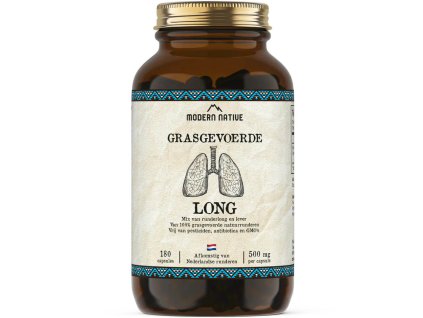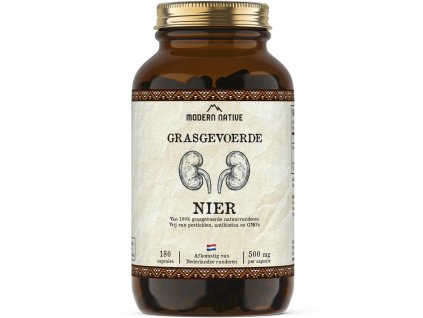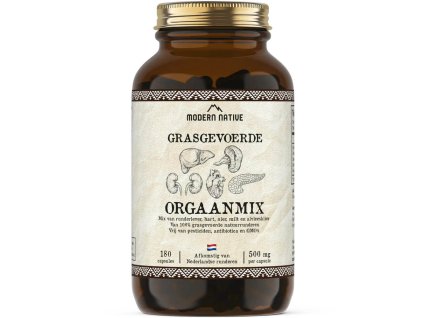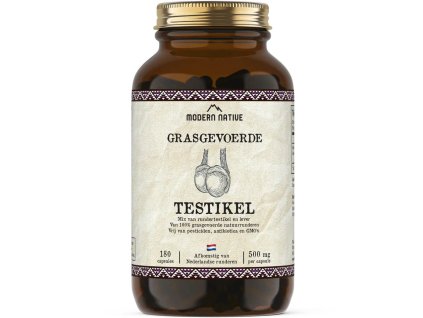
Grass-fed Beef Bone Marrow ready to use • rich in natural fats • source of collagen & vitamins A and E • transparent origin • 180 g
Are you missing a quality source of fats and micronutrients that ordinary butter or vegetable oils do not provide? Modern Native beef bone marrow is a traditional, nutrient-rich fat containing collagen, vitamins A and E, and a distinctive profile of fatty acids. Unlike lard, beef tallow or ghee, it is not just a source of energy but also delivers micronutrients typical of organ-based nutrition. It comes from 100% grass-fed cattle from Ireland, contains no hormones, pesticides or GMOs, and is ready for immediate use. Once opened, store refrigerated and ideally consume within 4 weeks.
Why we chose Modern Native for PraveBio.cz
Modern Native is a Dutch brand built around organ-based nutrition and traditional animal-derived ingredients, with traceable sourcing and clean formulations as non-negotiables. Their raw materials aren’t hidden behind vague “EU origin” labels — you can track where they come from, whether it’s cattle from Ireland, the Netherlands or New Zealand, or ingredients like oysters and raw milk.
No fillers, no unnecessary additives — just products designed to preserve the natural nutritional profile of the ingredients. That level of transparency is exactly why the brand belongs in our curated selection at PraveBio.cz.

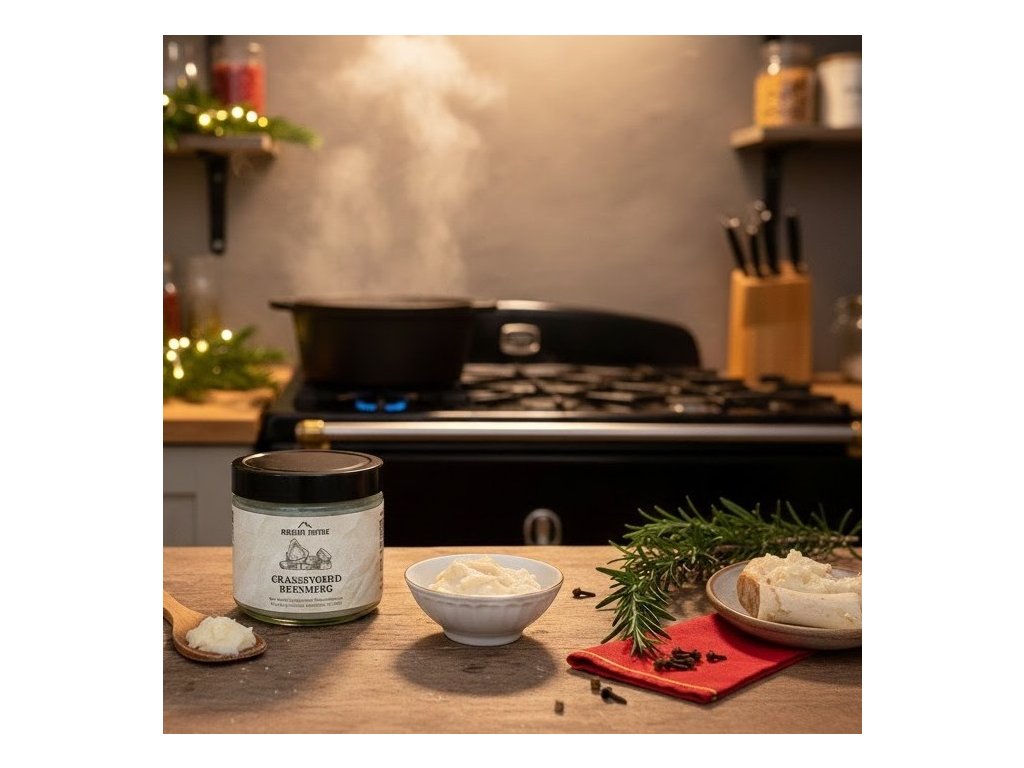
Grass-fed beef bone marrow: why it belongs in your kitchen
Beef bone marrow earns its place in the diet for reasons that go well beyond “just another cooking fat”. For generations it mattered because it brings together dense energy, real satiety, and the kind of nourishment that modern diets often miss.
What makes it a “functional” food
Nutritionally, it’s a concentrated source of natural animal fats that delivers steady energy and makes meals feel complete. Fats also play a key role in the absorption of fat-soluble vitamins and help keep you full for longer. That’s why marrow works best in small amounts — it’s about function, not volume.
Marrow naturally contains compounds typical of internal animal tissues — including collagenous and gelatin-rich components, plus naturally occurring vitamins A and E, and trace amounts of minerals such as iron, zinc and selenium. Exact levels vary by animal, diet and batch, but this overall profile is precisely why marrow has long been treated as a prized part of the animal — and why many animals instinctively go for it first.
What bone marrow means for adults
For many adults — especially those drawn to ancestral eating or a nose-to-tail approach — marrow isn’t “a fat”, it’s one of the most nutrient-dense, traditional cuts of the animal, historically valued because it delivers a lot in a very small serving.
Biohackers often rate marrow because it ticks several boxes at once: high energy density in a small portion, a profile associated with internal fat tissues, and genuine kitchen usefulness. A single teaspoon can noticeably boost satisfaction, deepen flavour, and help you stay full longer — without the nagging urge to keep snacking.
Marrow shines when it’s used as part of normal cooking — stirred into something hot, spooned over a finished dish, or used to enrich a pan sauce. That’s the point: it’s not a supplement. It’s proper food, and it fits a long-term, sustainable way of eating.
What bone marrow means for children, from a nutrition perspective
In children’s nutrition, high-quality fat isn’t optional — it’s foundational, particularly during growth. Fat is not “extra” for children; it’s a building and energy source that supports the body as it develops. Paediatric nutrition guidance consistently emphasises that children need sufficient quality fats not only for energy, but also to support the development of tissues and the body’s ability to use nutrients from food.
Marrow fits this picture as a natural animal fat that was part of traditional diets long before industrially processed oils and “light” substitutes entered the mainstream. Fats are also essential for absorbing fat-soluble vitamins — particularly vitamins A, D, E and K — which are commonly discussed in relation to growth, bone development and overall body structure.
Another practical benefit: quality fat improves satiety. Meals “hold” better, and children are less likely to be hungry again shortly after eating — which often means fewer swings towards sweets or quick refined carbohydrates. It’s not about large portions; it’s about quality and consistency.
Used in normal kitchen amounts, bone marrow can be a straightforward part of warm meals for children. It’s a normal ingredient that makes sense whenever your aim is nourishing, filling, real food.
Why the jar format is so practical
Traditionally, extracting marrow meant long simmering, hours in the kitchen, messy pots, and plenty of waste.
Today, thanks to the Dutch brand Modern Native, you get it ready in a jar — ready to cook with and finish dishes, without leftover bones, greasy stockpots, oily washing-up, or a kitchen that looks like a workshop.
How to use it in the kitchen
- On steak and meat: spoon a small amount onto the finished meat and let it melt just before serving (much like butter).
- In pan juices and sauces: stir into the juices in the pan or a reduction — it rounds everything out and adds depth.
- On roasted vegetables: toss with carrots, cauliflower or potatoes before roasting (it behaves similarly to beef tallow).
- On bread: a thin layer on warm toast or sourdough with a pinch of salt.
Tip: start small — bone marrow has a naturally bold flavour.
Once opened, keep refrigerated, seal well, and ideally use within 4 weeks.
Bone marrow from an expert perspective
Bone marrow is a specialised tissue found inside bones. In medical terms there are two main types: red marrow (linked to blood cell production) and yellow marrow, which consists largely of fat tissue. It’s this fat-rich “yellow” marrow that’s used in cooking and ends up in the jar. (Expert context: NCI, Cleveland Clinic.)
Physiologically, it isn’t the same as ordinary subcutaneous fat. Bone marrow adipose tissue is described in the scientific literature as metabolically active and functionally distinct from the fat the body stores under the skin or around organs. That’s one reason marrow appears in modern nutrition conversations focused on food function, not just calories.
Nutritionally, marrow is first and foremost a concentrated fat, alongside compounds typical of internal animal tissues. This includes collagenous and gelatin-rich components and other structural elements that are far less present in lean muscle meat. Historically, that’s exactly why marrow was treated as one of the most valuable parts of the animal.
With micronutrients — such as vitamins A and E — it’s important to be precise: their presence in marrow is natural, but amounts can vary by animal, feeding, and batch. Without laboratory analysis, it isn’t appropriate to promise specific nutrient levels or health effects. From an evidence-first viewpoint, marrow matters most as a functional food, not as a targeted vitamin source.
From a culinary standpoint, the takeaway is simple: marrow isn’t “something extra for soup”, but a proper cooking fat. It melts easily, carries seasoning well, and naturally amplifies umami — much like finishing a dish with quality butter, just with a different flavour character.
Approved health claims (only if the vitamin is present in a relevant amount)
Note: Nutrition and health claims can only be used when the product meets legal requirements for a “significant amount” of the substance and this can be substantiated (typically via nutrition data and/or laboratory analysis).
Vitamin A: EFSA recognises the claim “vitamin A contributes to the normal function of the immune system” and also supports maintenance of normal skin, mucous membranes and vision.
Vitamin E: EFSA recognises the claim “vitamin E contributes to the protection of cells from oxidative stress”.
Bone marrow – key facts
| Item | Details |
|---|---|
| What it is | 100% beef bone marrow in a jar (the fat-rich part of marrow). |
| How to use it | As a cooking fat — for the pan, sauces, finishing meat, or on bread (see tips above). |
| Ingredient origin | Ireland (grass-fed cattle). |
| Storage | Once opened: refrigerate, seal well, ideally use within 4 weeks. Note: what matters most is storage and handling after opening. |
Typical components of bone marrow
Exact proportions vary by raw material and batch. Below are examples of compounds commonly associated with bone marrow.
| Category | Examples |
|---|---|
| Vitamins | Vitamin A, vitamin E |
| Structural compounds | Collagen, glucosamine, chondroitin, hyaluronic acid |
| Fatty acids | e.g. stearic, palmitic, palmitoleic, linoleic, myristic |
Why bone marrow costs more than everyday cooking fats
The price of beef bone marrow can be surprising, especially when you compare it with ghee, beef tallow or pork lard. The difference usually isn’t down to one single factor — it’s the sum of practical realities from raw material to finished jar.
1. There’s less marrow per bone than you’d expect
Bones that contain marrow are large and heavy, but the marrow itself is only a small fraction of their weight. To produce the same amount of finished product, more kilograms of bones typically need to be processed. By contrast, ghee starts with butter — widely available and uniform — and tallow and lard come from fat tissue that’s far more abundant during butchery.
2. Processing is more labour-intensive than most fats
Marrow sits inside the bone. Before it can go into a jar, it has to be mechanically extracted and then cleaned and prepared to be kitchen-ready. Much of this is manual work, and you also end up with material that cannot be sold as the finished food product (for example split bones, small fragments, or parts that don’t meet food-grade requirements).
Those remnants then have to be separated, handled hygienically, and processed or disposed of under food-industry rules. That’s extra time and cost that simply doesn’t exist to the same extent with fats like ghee, lard or tallow.
3. Jarred marrow isn’t a mass commodity
Ghee has a broad market and is often produced at scale. Beef tallow and pork lard are common by-products of meat processing — and in the Czech Republic, lard is especially popular because it’s cheap, easy to buy, and many households use it for frying and baking.
Bone marrow sold as a ready-to-use product is different — it’s more of a specialty ingredient, with supply limited by the raw material and the extraction process.
4. Grass-fed sourcing costs more from the start
If the marrow comes from grass-fed cattle (or certified systems), costs are typically higher at the raw-material level. With ghee, lard and tallow, there are plenty of standard, large-scale options — with marrow, premium parameters tend to show up in the final price more sharply.
5. Marrow has become a sought-after chef’s ingredient
In recent years bone marrow has returned to modern cooking: it’s valued for its umami depth and distinctive flavour, and it appears in recipes and restaurant menus. This doesn’t explain every cost line on its own, but it does create a premium demand — people are willing to pay more for something that isn’t available everywhere.
6. Bone marrow isn’t the same product as pork lard
Pork lard is popular in the Czech Republic largely because it’s affordable, widely available, and many families have cooked with it for years — including for frying. From a production perspective it’s a different category: lard is rendered from fat tissue that’s usually plentiful, which makes processing relatively straightforward.
With bone marrow, the bottleneck is simple: there’s less of it per animal, it’s hidden inside the bone, and it must be extracted and prepared to be jar-ready. That reality shows up in the price.
Summary
Jarred bone marrow tends to cost more than ghee, lard or tallow because extraction and preparation are more labour-intensive, the market is smaller (so there’s less scale to drive the price down), and grass-fed sourcing increases raw-material costs.
Frequently asked questions
What is beef bone marrow and what do you use it for?
Beef bone marrow is the fat-rich tissue inside bones. In the kitchen it works as a cooking fat — much like butter, ghee or beef tallow.
People use it in the pan, in sauces, on roasted vegetables, and especially as a finishing fat — a small spoonful over hot meat or stirred into a side dish makes a noticeable difference.
What does beef bone marrow taste like?
Soft, buttery and deeply umami. When warmed it melts easily and “rounds out” sauces and pan juices in a similar way to finishing a dish with butter.
Is beef bone marrow suitable for children?
Yes. Used in normal kitchen amounts, bone marrow can be part of a child’s diet just like other quality fats — stirred into a sauce, mixed into mashed potatoes, or spooned over warm meat.
If your child has specific dietary restrictions (for example a medically advised low-fat diet, gallbladder/bile issues, digestive conditions, or a diet set by a clinician), it’s sensible to discuss it with your paediatrician. For healthy children, it’s a normal food ingredient.
If you avoid highly industrial refined oils and want alternatives, marrow can be one option — both for flavour and cooking performance.
How much marrow is “about right”?
Marrow is flavourful and energy-dense, so you usually only need 1 teaspoon per portion (for finishing) or 1–2 teaspoons for a pan/sauce, depending on how much you’re cooking.
Simple rule: start small and add to taste — marrow carries a lot of impact in a little volume.
What is marrow’s smoke point? Is it suitable for high heat?
With bone marrow, smoke point can vary in practice depending on purity and whether there are tiny solid particles present — in general, smoke point drops when there are more free fatty acids or impurities.
Practical kitchen rule: marrow is excellent for medium heat, roasting, and especially finishing hot dishes. For very high-heat frying or a hard sear, choose a fat with a clearly high smoke point, typically ghee (often quoted up to around 485°F / 252°C) or quality beef tallow or pork lard.
How do I recognise high-quality jarred bone marrow?
With jarred marrow, three things matter: 100% marrow with no additives, clear origin of the raw material, and correct storage.
After opening, real-life handling counts: use a clean spoon, return it to the fridge quickly, and seal tightly — it helps the fat keep its flavour and quality.
Does bone marrow contain allergens or gluten?
This product is 100% beef bone marrow. It’s not a grain or a dairy product, so it does not typically contain gluten or milk components. If cross-contamination is a concern, always follow the manufacturer’s label information.
How does marrow differ from common industrial seed oils (rapeseed/canola, sunflower, soya)?
Bone marrow and common industrial oils (such as rapeseed/canola, sunflower or soya) differ in both origin and processing.
Industrial seed oils are typically refined, produced from large quantities of plant material using heat and processing designed to deliver a neutral flavour and long shelf life. They work in the kitchen, but they’re usually a carrier — not an ingredient that adds depth.
Bone marrow, by contrast, is a natural animal fat without refining, with a distinct flavour and reliable behaviour in hot cooking. It’s usually used in smaller quantities — as part of a dish or to finish, much like butter.
If you avoid refined industrial oils, you’ll typically reach for fats that people have used traditionally (including at higher heat): ghee, lard or beef tallow, and sometimes coconut or avocado oil. Bone marrow sits naturally in that lineup as a flavour-forward animal fat for cooking and finishing.
How long does it keep, and how should I store it?
Unopened: in the past, the manufacturer listed a longer shelf life (often around a year when stored correctly in the fridge). Over time it became clear that some customers stored or handled the product poorly after opening; the fat then went rancid and unnecessary complaints followed. That’s why Modern Native now uses a more conservative recommended period. This isn’t a change in quality — it’s a practical guideline for real home kitchens.
Practical tips: always use a clean spoon and don’t leave the jar at room temperature longer than necessary. If the fat develops a clearly rancid smell or an unusually sharp odour, it’s a sign it’s past its best — much like homemade lard.
Additional parameters
| Category: | Healthy fats |
|---|---|
| EAN: | 8720589464520 |
| Best Before: | 17.02.2026 |
| Suitable for: | Gluten Free-Sugar Free-Soy Free-Low Carb-Keto-Paleo-Carnivore |
| Why buy: | A Dutch company dedicated to crafting premium-quality dietary supplements from concentrated and freeze‑dried organs. Their products harness the ancestral wisdom of whole‑food nutrition and bring it into the modern world — to support your vitality, balance, and long‑term health in the most natural way possible. |
| Manufactured by: | Modern Native B.V. Flevolaan 10, 9501 VG, Stadskanaal, The Netherlands |
| Country of origin: | Netherlands |
Be the first who will post an article to this item!
Be the first who will post an article to this item!
Our ancestors lived differently from us. Traditional societies have been eating organ meat for centuries. They did it for a reason. Intuitively, they knew it was good for them. They knew that organ meats were the source of the most important nutrients. Similarly, in nature many predators go after organ meat first and muscle meat second.
We hardly eat organs these days. It's an ancient tradition that has faded away. Modern Native's mission is to bring the wisdom of our ancestors back to the modern world for optimal health, strength and happiness.
There is no organ meat like meat
Not all organs are the same. When looking for quality (organ) meat, it is important to check several points:
- 100% grass-fed cattle
- Without hormones
- Pesticide and GMO free
- Animals live stress-free and completely in the wild
The term "grass-fed" doesn't tell the whole story. The cow may be partially outside in the summer eating fresh grass, while most of the time she is in the barn and fed concentrate. 100% grass-fed, that's the Modern Native way of doing things. They only work with farmers whose cattle meet the above points. The organs are obtained from cattle in the Netherlands.
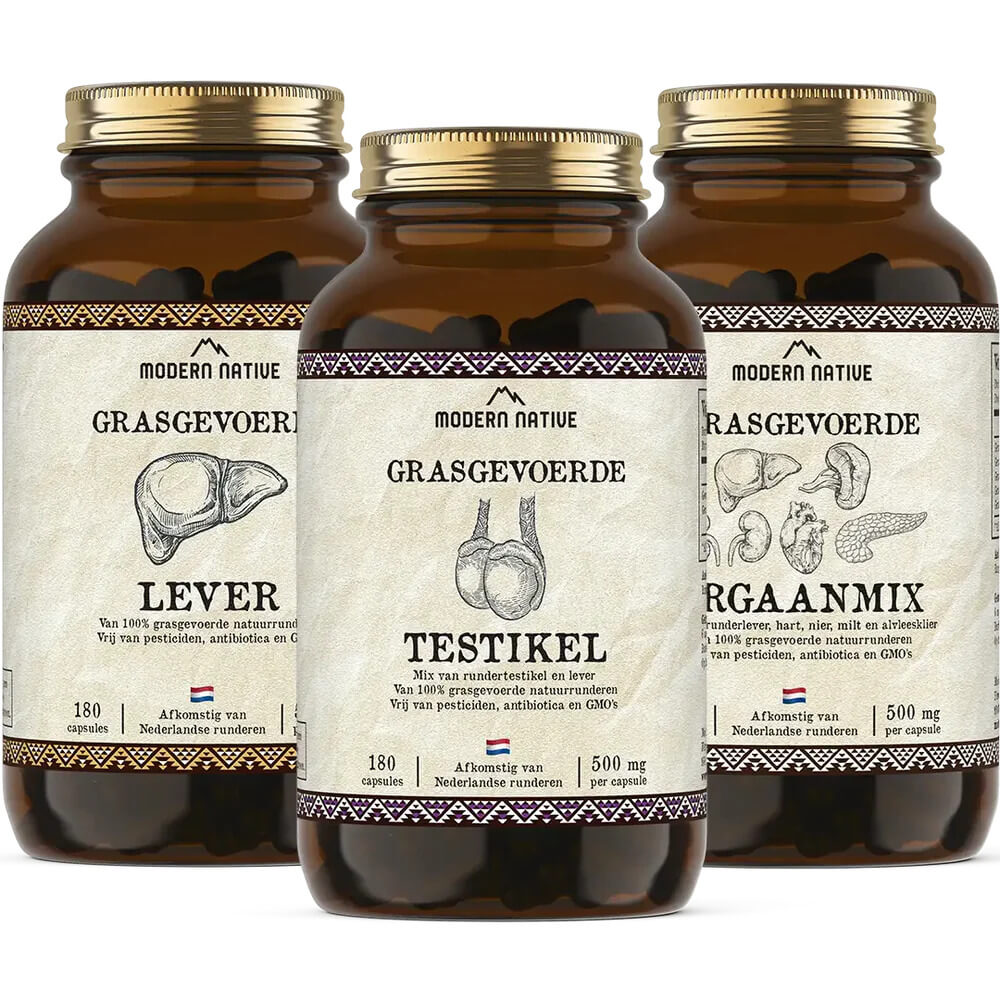
Why local cattle?
- It maintains the health of local natural farmers and creates jobs in the industry, thus creating more natural farmers in the Netherlands.
- Where there is more demand, there will be more supply. This will eventually allow the price of quality meat, including organ meat, to fall.
- More local natural farmers means fewer traditional herds (mass production) and happier cattle.
- Money spent on local farms stays in the economy, which has a domino effect and creates more jobs.
- Shorter distribution chains reduce unnecessary transport.
- When there are more natural livestock, healthier soil is created.
- Naturally grazing cattle return nutrients to the soil through the urine and manure they excrete.
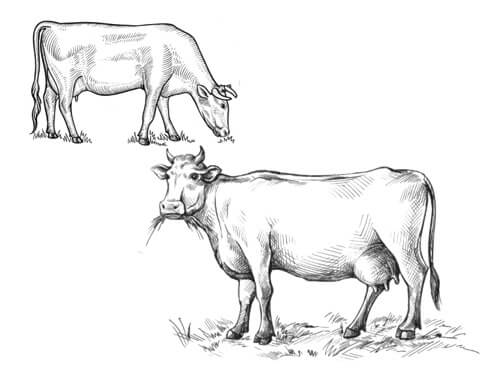
Method for Modern Native accessories
- It comes from 100% grass-fed cattle.
- No hormones.
- Pesticide and GMO free.
- The animals live stress-free and completely in the wild.
Why eat organ meat?
Beloved by our ancestors
Traditional peoples, Native Americans, and ancient ancestors believed that consuming the organs of a healthy animal would promote the health of the individual's organ. They ate "from head to tail", i.e. everything from the animal, because they intuitively knew how nutritionally rich the meat from the organs was.