
Trans Resveratrol – 60 Capsules extract of Japanese knotweed • at least 98% trans-resveratrol in the extract • plant-based HPMC capsules • food supplement
Japanese knotweed provides the trans-resveratrol. Alongside this plant polyphenol: zinc and vitamins B1 and D3. Zinc contributes to the protection of cells from oxidative stress and, with vitamin D, to normal immune function. Vitamin B1 supports normal energy-yielding metabolism and normal nervous system function.
- Formula details: Japanese knotweed extract, standardised to at least 98% trans-resveratrol.
- In-house development and production: L Cell develops and manufactures its supplements in its own laboratory in Vilnius, Lithuania.
- Independent lab testing: L Cell commissions regular independent tests for declared ingredient levels, heavy metals and other contaminants.
- 1–2 capsules daily with breakfast. Approximately 30–60 days per pack, depending on the dose. Hypromellose (HPMC) capsules, made without gelatine. The stated health benefits apply to a daily dose of 2 capsules.


Trans-resveratrol capsules: Japanese knotweed extract with zinc and vitamins
Why don’t we describe health effects for resveratrol itself? The permitted benefits stated here concern the added zinc and vitamins B1 and D. An ingredient list or scientific study alone does not justify a health claim for a supplement. Our FAQs explain how research differs from an authorised claim.
L Cell sources its trans-resveratrol, a plant polyphenol, from Japanese knotweed extract. The formula also contains zinc and vitamins B1 and D3. Zinc contributes to the protection of cells from oxidative stress and, alongside vitamin D, to the normal function of the immune system. Vitamin B1 contributes to normal heart function and normal energy-yielding metabolism. These benefits refer to the added nutrients at a daily dose of two capsules.
Who might prefer capsules?
- If you want a pre-measured amount. Take the capsules with breakfast and swallow with water.
- For vegans and vegetarians. The shells are made from hypromellose (HPMC), without animal gelatine.
Take 1–2 capsules daily, ideally with breakfast, and swallow with water. There is no powder to measure or food to prepare for mixing. See how to use and the FAQs for further details.
Two capsules contain 600 mg of extract with at least 98% trans-resveratrol. The extract’s weight is not the same as its trans-resveratrol content. Added nutrients are listed separately.
The 60-capsule pack lasts approximately 30–60 days. That is around a month at two capsules daily, or two months at one.
Important information
- Do not exceed the recommended daily dose.
- Food supplements should not replace a varied diet. A varied, balanced diet and a healthy lifestyle are important for good health.
- Keep out of the reach of young children.
- If you take medication, are pregnant or breastfeeding, speak to your doctor or pharmacist before use. Show them the full ingredient list and details of any other supplements you take.
- Do not use this product during pregnancy or breastfeeding.
What makes the capsule format different?
Compare preparation, extract content and the number of daily doses. Pack size alone will not tell you how much of an ingredient you take when following the directions.
- Japanese knotweed. The source of this botanical extract; this is not grape powder.
- At least 98% trans-resveratrol in the extract. This specifies the proportion of the selected compound in the raw material.
- 600 mg of extract in two capsules. One capsule contains half that amount.
- Zinc. At a dose of two capsules, it contributes to the protection of cells from oxidative stress.
- Vitamins B1 and D3. Further ingredients in the formula, with their roles explained below.
- HPMC shells. The capsules contain no gelatine.
- Approximately 30–60 days per pack. Depending on the number of capsules taken within the stated directions.
- Independent laboratory testing. Results apply to the sample and tests specified in the report.
Prefer not to swallow capsules? L Cell resveratrol powder can be mixed into food. Two scoops contain 800 mg of extract, whereas two of these capsules contain 600 mg. Compare the composition before converting between capsules and scoops.
What is trans-resveratrol, and where does this extract come from?
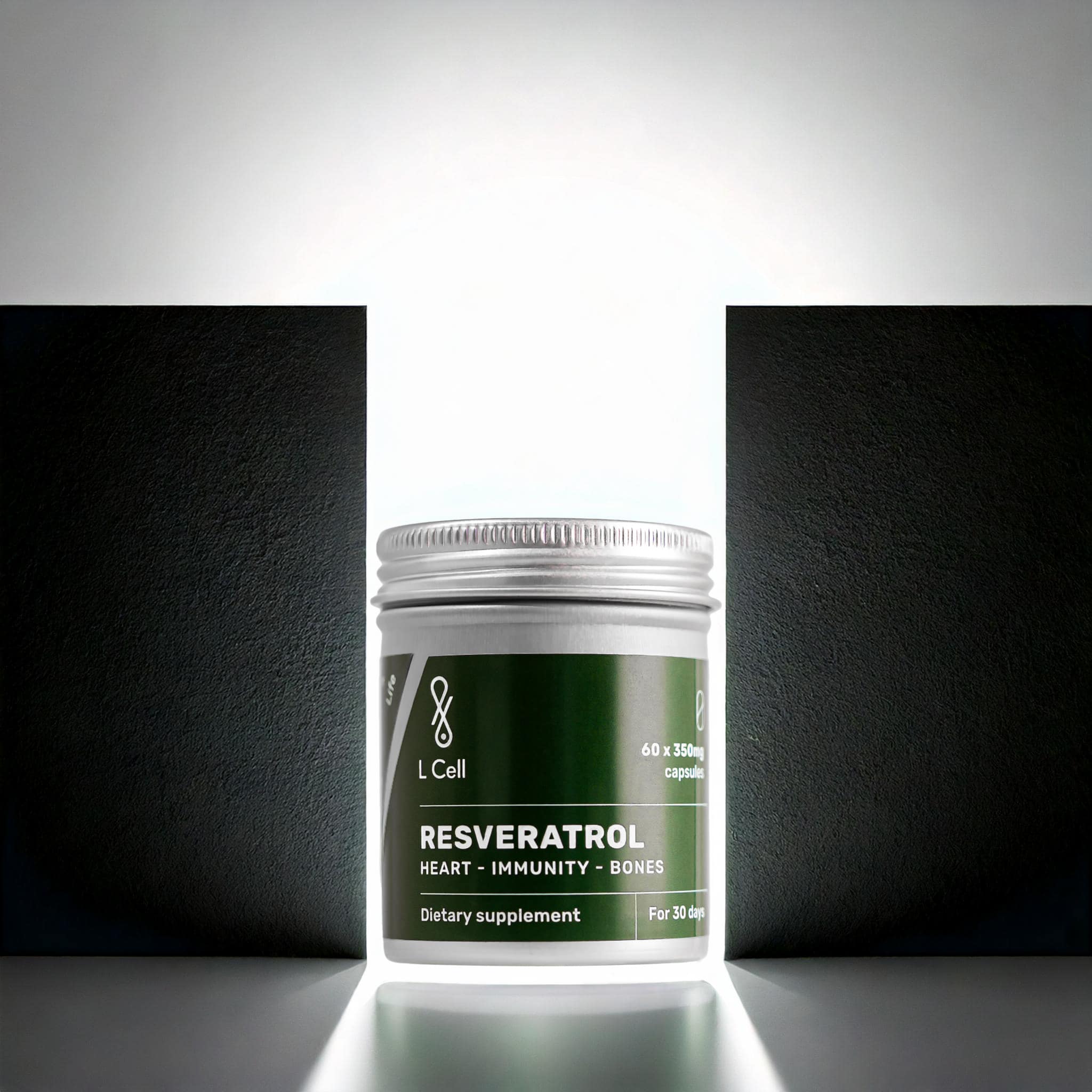
Resveratrol is a plant polyphenol in the stilbenoid family. It occurs naturally in grapes and some other foods. This supplement uses Japanese knotweed extract, also identified by the botanical name Polygonum cuspidatum.
‘Trans’ describes the molecule’s spatial arrangement. Resveratrol has trans and cis forms. Knowing which form a supplement declares helps you compare products, but ‘trans’ alone says nothing about the dose or a greater effect.
At least 98% means at least 98 mg of trans-resveratrol in every 100 mg of extract. On that basis, 600 mg of extract provides at least 588 mg of trans-resveratrol. This is a calculation from the declared composition, rather than a separate laboratory result for this pack.
When comparing supplements, check the plant source, the proportion of the selected compound and the amount per daily dose. The extract’s percentage does not describe the percentage your body absorbs. Nor does an ingredient quantity establish how quickly you might notice a change.
How do L Cell, Purovitalis and grape-based Resvital differ?
Interested in another way of processing the same plant compound? Purovitalis resveratrol contains 250 mg of trans-resveratrol per capsule. Its liposomal formula uses micronised material alongside MCT and sunflower lecithin. Micronisation changes particle size; lecithin and MCT are additional formula ingredients. The technology’s name alone is not a numerical measure of improved absorption.
For a supplement made from dried grapes, take a look at Resvital by North American Herb & Spice. It uses red sour grape powder. Its weight refers to the grape material, which cannot be treated as the same quantity of pure trans-resveratrol or a 98% knotweed extract.
L Cell combines a standardised extract with zinc and vitamins B1 and D3. A shared ingredient name is only the starting point for comparison. Check the amount of the specific compound, the complete formula, the directions and the number of daily doses. These are alternatives to compare, rather than a recommendation to take them all together.
Why add zinc and vitamins B1 and D3?
- The mineral and two vitamins have roles of their own alongside the plant extract. Zinc contributes to the protection of cells from oxidative stress. Along with vitamin D, it also contributes to the normal function of the immune system.
- Vitamin B1 contributes to normal heart function and the normal functioning of the nervous system. It also contributes to normal energy-yielding metabolism. These functions belong to vitamin B1; they cannot automatically be attributed to resveratrol.
- Vitamin D also contributes to the maintenance of normal bones and normal muscle function. This formula uses vitamin D3. The added ingredients therefore have their own roles, but an ingredient list does not establish that they amplify the plant extract’s effects.
- Two capsules provide 1.5 mg of zinc, 0.165 mg of vitamin B1 and 0.75 µg of vitamin D3. Each supplies 15% of its nutrient reference value (NRV). One capsule provides half, or 7.5% NRV. The stated health benefits refer to a dose of two capsules.
- If you take several supplements, add up their zinc and vitamin content. Equal NRV percentages do not mean equal weights, because each nutrient has a different reference value. No NRV has been established for trans-resveratrol.
Biohacking: food, movement and daily habits
Biohacking uses science, technology and changes to everyday habits to explore how the body and mind function. It can include adjustments to diet, sleep and exercise, meditation, breathing exercises or tracking selected measurements. Supplements are only one part of that wider picture.
What does biohacking involve?
- Food: a varied diet, regular eating habits and an understanding of nutrient intake.
- Sleep and rest: keeping track of sleep duration, bedtimes and time to rest during the day.
- Movement: regular activity that suits your fitness and circumstances.
- Tracking: a diary, app or wearable device to record habits and how they change.
Keeping a record helps you see what has changed in your routine. Alter your diet, exercise and several supplements at once, and it becomes harder to identify what made a difference. Consistency and a clear record of what you take are useful starting points.
Where do supplements fit in?
Compare ingredients, quantities and directions, rather than relying on a product name alone. With L Cell supplements, look at the main ingredients, added vitamins and minerals, powder or capsule format, and laboratory documentation. A varied, balanced diet and a healthy lifestyle remain the foundation.
PraveBio also stocks brands with different specialisms. NoordCode offers functional foods and supplements, including MCT oils, collagen and electrolytes.
Jigsaw Health is an American family business founded in 2005 by Pat Sullivan and his son, Patrick Sullivan Jr. Magnesium and other mineral supplements feature prominently in its range.
BiOptimizers makes food supplements, including enzyme formulas such as the MassZymes digestive enzyme range. Each brand and product has its own composition, so compare the specific formula you are considering.
L Cell: its own laboratory and independent checks
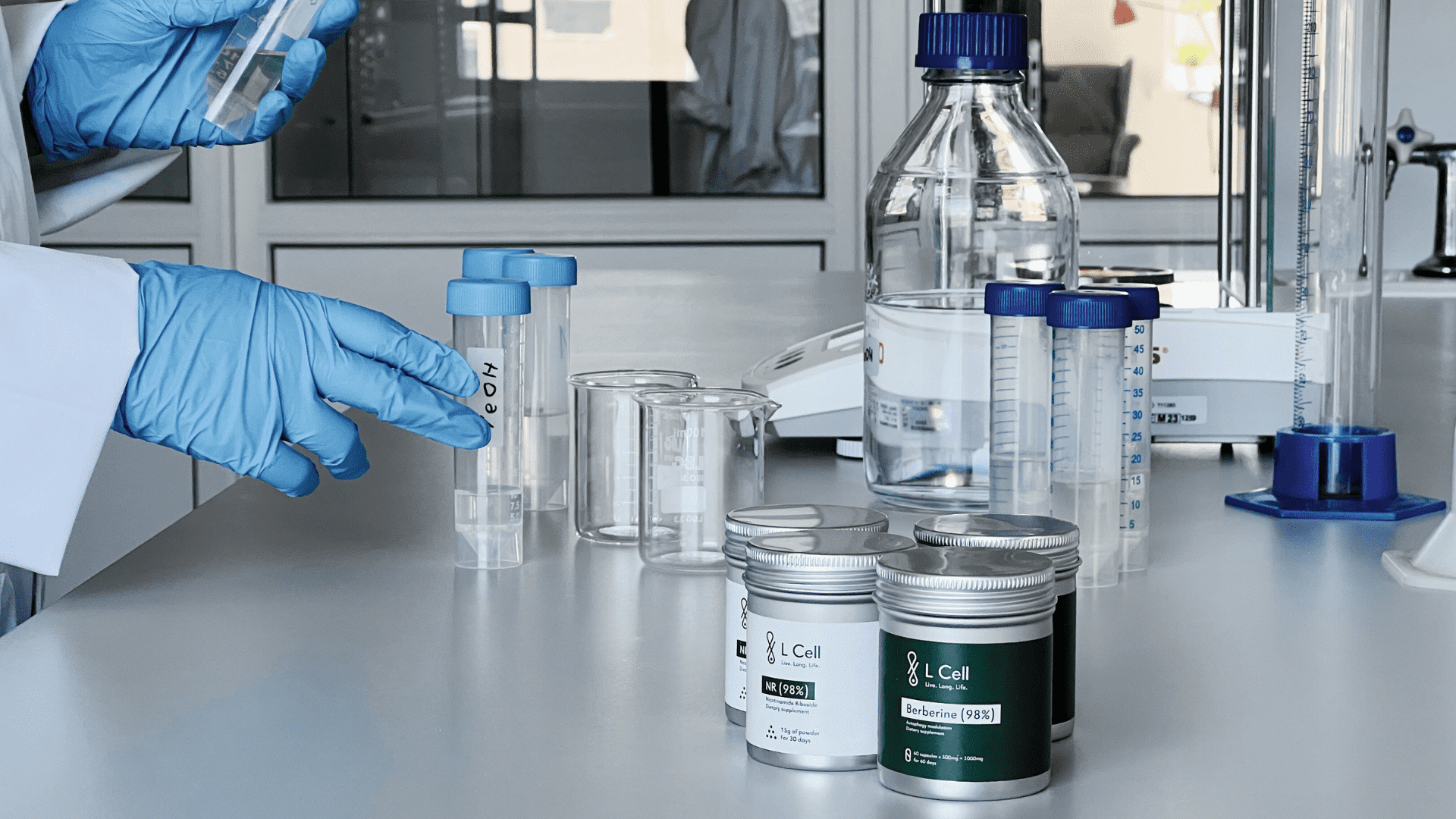
L Cell develops and manufactures food supplements. The brand identifies its own laboratory in Vilnius, Lithuania, as the place where its formulas are made. That gives customers a traceable production location and a clearer picture of the company behind the range.
The range includes glycine with NAC, botanical extracts containing quercetin or resveratrol, and mineral supplements. Many products come as both powders and capsules. Choose the format that suits your routine, while checking the specific ingredients and daily dose for each pack.
Independent laboratories regularly check declared content and unwanted substances, including heavy metals and mycotoxins. Content testing measures the substances analysed; contaminant testing looks for unwanted impurities. Results apply to the sample and tests identified in the laboratory report.
The brand’s documentation also includes GMP and ISO 22000:2018 certificates issued to Longevita Lab and H Drop B.V. Their stated scope covers the development and sale of food supplements and snack foods. They document defined procedures and management systems; ingredient quantities require separate analytical testing.

In-house development and manufacture
L Cell identifies its own Vilnius laboratory as the site where it develops and makes supplements. You can trace the range beyond the brand name to a specific production location.
Powders or capsules
Many formulas are available in both formats. Choose between mixing into a drink and swallowing capsules, then check each ingredient amount against the recommended daily dose for that particular product.
Independent laboratory testing
Analysis covers declared ingredients and unwanted impurities. The report identifies what was measured and which sample was tested, giving you specific information about the material examined.
GMP and ISO 22000:2018
The published certificates cover the stated scope of development and sales. ISO 22000:2018 concerns food safety management systems; a laboratory analysis provides the separate evidence for ingredient quantities in a tested product.
Ingredients
Japanese knotweed extract (containing at least 98% trans-resveratrol), zinc, thiamin (vitamin B1), vitamin D3, capsule shell: hypromellose (HPMC).
Amounts per two-capsule dose
| Ingredient | Amount in two capsules | |
|---|---|---|
| Japanese knotweed extract (98% trans-resveratrol) | 600 mg | * |
| Zinc | 1.5 mg | 15% |
| Thiamin (vitamin B1) | 0.165 mg | 15% |
| Vitamin D3 | 0.75 µg | 15% |
* No nutrient reference value has been established. NRV = nutrient reference value. One capsule provides half the amounts shown. The health claims refer to a dose of two capsules.
How to use
- 1–2 capsules daily, ideally with breakfast.
- Swallow with water.
- The pack lasts approximately 30 days at two capsules daily, or around 60 days at one capsule daily.
No measuring or mixing is needed. If you prefer to add your supplement to food, see the resveratrol powder and its own directions. Two scoops contain 800 mg of extract, while two of these capsules contain 600 mg, so check the daily-dose quantities when changing format. Opening the capsules is not part of the stated method of use.
Storage
- Keep in a cool, dry, dark place, out of the reach of young children.
- Close the container after use and protect the contents from moisture. Check your pack for the best-before date.
Resveratrol capsules: your questions answered
Why don’t you make health claims for resveratrol itself?
Research into an ingredient and the rules governing its sale serve different purposes. Studies examine particular preparations, doses and groups of people. A publication alone does not authorise its findings to be used as health claims for every supplement.
We therefore distinguish the plant ingredient from the roles of the added nutrients. Permitted claims for zinc and vitamins B1 and D can be used when their conditions are met. Here, they refer to two capsules daily. Those functions do not automatically apply to resveratrol, nor do they establish a stronger effect for the combination.

What is the difference between resveratrol and trans-resveratrol?
Trans-resveratrol is one spatial form of resveratrol. The terms trans and cis describe the molecule’s arrangement. L Cell declares the trans form from Japanese knotweed.
This identifies the specific form of the compound, but not the quantity in a capsule or scoop. To compare supplements, also check the amount per daily dose and whether a number refers to the compound itself or the whole extract.
Does 600 mg of extract mean 600 mg of pure trans-resveratrol?
No. The 600 mg is the weight of Japanese knotweed extract in two capsules. The declared minimum of 98% describes how much of that extract is trans-resveratrol. Calculating from this percentage gives at least 588 mg of trans-resveratrol.
The remaining extract is not an additional dose of trans-resveratrol. Zinc and vitamins B1 and D3 are listed separately in the table. The standardisation percentage does not describe how much of the dose your body absorbs.
Do L Cell powder and capsules have the same composition?
They use the same type of main botanical ingredient and declare equal amounts of the added nutrients at two scoops or two capsules. Their extract quantities differ: two scoops contain 800 mg, while two capsules contain 600 mg.
Stir the powder into food, or swallow the capsules with water. Compare the powder format too. Follow each product’s own directions when changing format: two capsules and two scoops are not equal doses of extract.
When should I take resveratrol, and how long does a pack last?
Take 1–2 capsules daily, ideally with breakfast, and swallow with water. The table shows quantities at the upper end of those directions: two capsules.
At two capsules daily, a pack lasts approximately 30 days; at one capsule, around 60 days. A smaller dose also provides half the amount of each ingredient. The health claims therefore refer to two capsules and do not automatically apply to one.
What are the capsule shells made from, and do they contain gelatine?
The shells are made from hypromellose, or HPMC, without animal gelatine. L Cell labels this format as vegan. HPMC is the shell material, not another source of resveratrol.
When comparing capsules, consider the shell and its contents separately. A plant-based shell does not tell you the quantity of extract or establish a supplement’s effects.
Can I open the capsules and add the contents to food?
The directions for this format are to swallow the capsules with water. Opening them is not part of the stated method of use.
If you prefer not to swallow capsules, resveratrol powder is intended for mixing. It has its own scoop and a different amount of extract per daily dose. Follow the directions on the relevant pack when changing format.
Why are zinc and vitamins B1 and D3 included alongside the extract?
These ingredients have functions of their own. Zinc contributes to the protection of cells from oxidative stress and, alongside vitamin D, to the normal function of the immune system. Vitamin B1 contributes to normal heart function, the normal functioning of the nervous system and normal energy-yielding metabolism.
Two capsules provide 15% NRV for each added nutrient. One capsule provides half. These figures explain the contribution of the added nutrients; they do not establish increased absorption or an amplified effect for resveratrol.
Can I take resveratrol with medication or during pregnancy?
Speak to your doctor or pharmacist before use if you take medication. Potential interactions need to be assessed against your particular treatment. Show them the complete ingredients, daily dose and details of any other supplements you take.
Do not use this product during pregnancy or breastfeeding. A supplement does not replace treatment, and you should not change prescribed medication because of it. Plant origin alone does not establish whether a product is suitable for you.
What do L Cell’s laboratory reports and certificates establish?
Ingredient analysis and contaminant testing answer different questions. One measures specified compounds; the other looks for substances such as heavy metals or mycotoxins. The results apply to the sample and scope of testing stated in the report.
Management-system certification is not a clinical trial of a supplement’s effects. Check which company, activity or sample each document covers. The section about L Cell explains these distinctions in more detail.
Additional parameters
| Category: | Supplements |
|---|---|
| EAN: | 4779060270260 |
| Product type: | Food supplement |
| Format: | Capsules |
| Contents: | 60 capsules |
| Recommended daily dose: | 1–2 capsules |
| Number of daily doses: | 30 (2 capsules daily) / 60 (1 capsule daily) |
| Source of the main ingredient: | Japanese knotweed extract |
| Main ingredients per 2 capsules: | Japanese knotweed extract (98% trans-resveratrol): 600 mg |
| Zinc per 2 capsules: | 1.5 mg |
| Thiamin (vitamin B1) per 2 capsules: | 0.165 mg |
| Vitamin D3 per 2 capsules: | 0.75 µg |
| Capsule shell: | Hypromellose (HPMC), without gelatine |
| Suitable for: | Vegetarian-Vegan-Gluten free-Soy free-Nut free-Sugar free-Lactose free-GMO free-Low carb-Paleo-Keto |
| Manufacturer: | L Cell Ltd. |
| Country of origin: | EU |
| Storage: | Keep in a cool, dry, dark place, out of the reach of young children . |
| Exclusive distributor for the Czech Republic: | Pravé Bio |

Product rating
Be the first who will post an article to this item!
Discussion
Be the first who will post an article to this item!
L Cell is a Lithuanian food supplement brand with its own laboratory in Vilnius. Its range includes botanical extracts, amino acids and mineral supplements, with many products available as both powders and capsules.
Pravé Bio is the exclusive L Cell distributor for the Czech Republic. Our product pages set out the ingredients, quantities per daily dose, directions and available laboratory documents, so you can compare the details of each pack. Read about the maker and its documentation here, or explore the L Cell supplement range to choose a product.
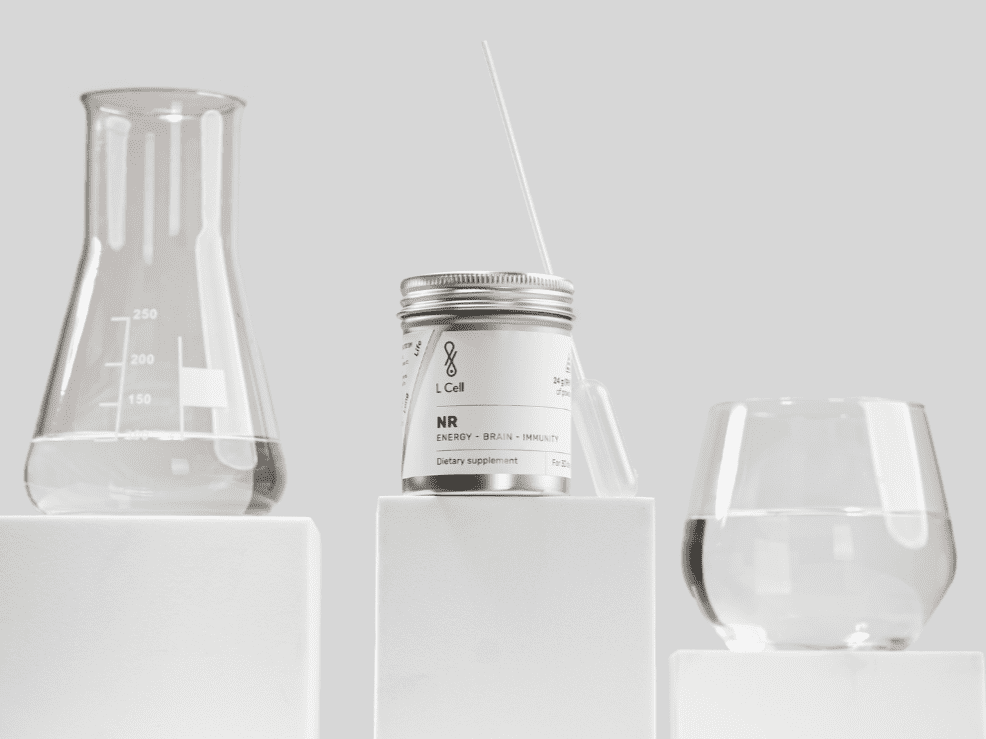
Inside L Cell’s Vilnius lab
- Developed in-house. L Cell develops and manufactures its supplements in its own laboratory in Vilnius, Lithuania.
- Independently tested. The brand regularly commissions checks on declared ingredient content and unwanted substances. Available reports sit alongside the relevant products.
- The full ingredient picture. Our product tables distinguish the main compound from its botanical extract, with added zinc and vitamins listed separately.
- Powder or capsules. Many products come in both formats. Each has its own ingredient quantities, directions and pack size, so you can compare the details before choosing.

Food supplements
Botanical extracts
Amino acids
Minerals
Where L Cell supplements are made
Product development and manufacturing in Vilnius are part of L Cell’s own operation. The brand publishes its laboratory address and information about product testing; each supplement still needs to be considered individually.
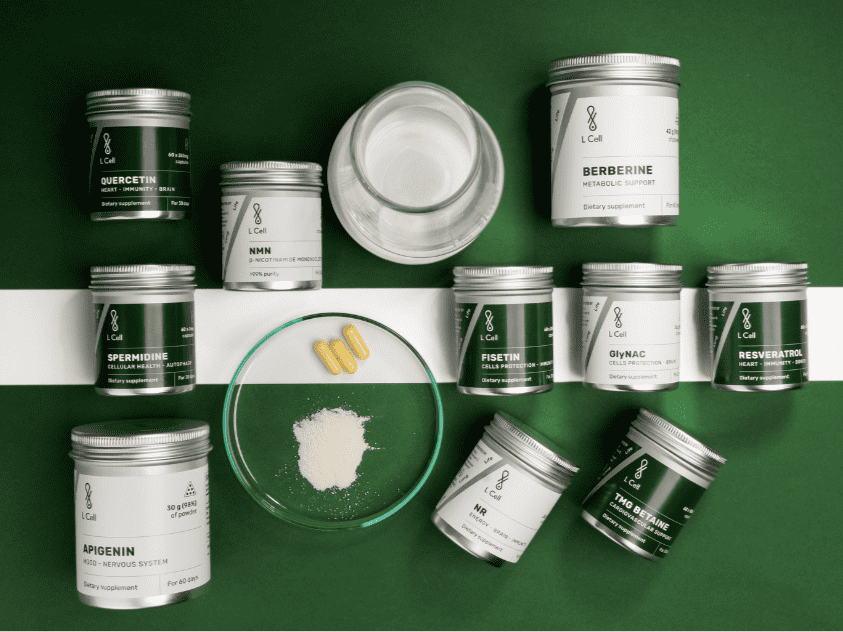
The range includes GlyNAC with glycine and NAC, botanical extracts such as apigenin and resveratrol, and magnesium supplements. These are different ingredients, with distinct compositions and directions.
Research into an ingredient does not establish the effects of every supplement containing it. Our descriptions distinguish ingredient information from health claims applicable to a particular nutrient and dose.
Pravé Bio and L Cell
Pravé Bio, NUZBOZ s.r.o., is L Cell’s exclusive distributor for the Czech Republic. Our shop carries individual L Cell product ranges and their available formats.
We check ingredient identity, quantities and the full ingredient list. For botanical extracts, we distinguish the weight of the extract from the amount of the specified compound within it.
Powders and capsules from the same range may differ. For example, GlyNAC powder and the capsule version have different glycine-to-NAC ratios; the individual product tables show those differences.
Match your question to the exact product. When comparing options, use the product name, format and pack size. For a laboratory report, also check the sample or batch identification.

Laboratory testing and certificates
Ingredient testing and contaminant testing answer different questions. One measures the amount of an analysed ingredient; the other checks for unwanted substances such as heavy metals. The brand’s documentation includes GMP and ISO 22000:2018 certificates issued to Longevita Lab and H Drop B.V. Their stated scope covers the development and sale of food supplements and food snacks.
A management-system certificate does not replace a product analysis. A laboratory result applies to the identified sample, measured substances and method. It does not establish rejuvenation or another health outcome.
Compare like with like: the main ingredient, its amount per daily dose, the other ingredients and the number of doses in the pack.
How to choose from the L Cell range

Main ingredient and what you want to learn about it
Daily-dose quantities, including added nutrients
Format: powder or capsules
Restrictions: allergens, warnings and existing treatment
What our product pages explain

Ingredients and quantities
Directions and storage
Differences between formats
FAQs and available documentation
Product-specific warnings
| Manufacturing company : | L Cell Ltd. |
|---|---|
| Address : | Mokslininkų g. 2 Vilnius LT-08412 Lithuania |
| E-mail : | info@lcell.co.uk |


