
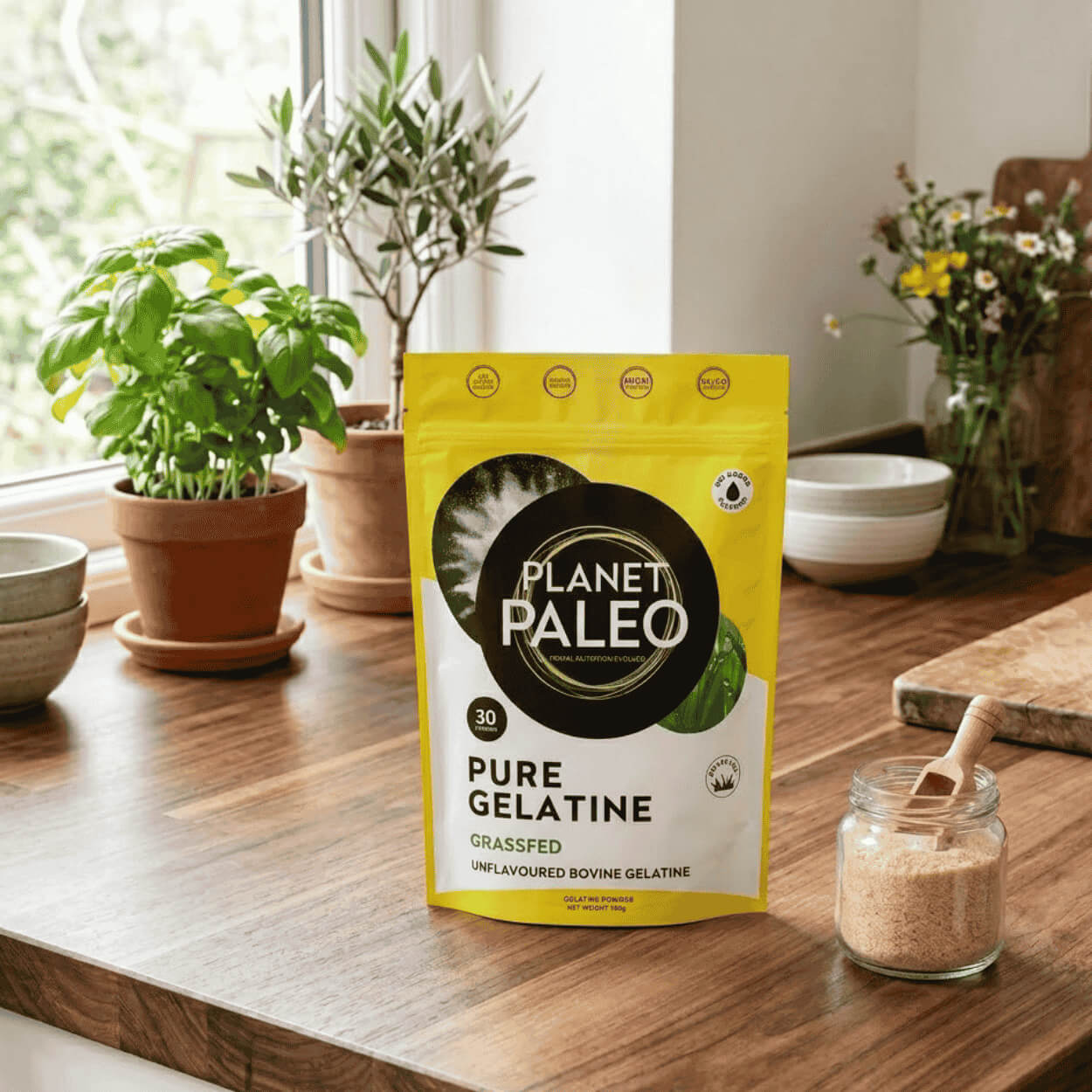
Beef gelatin - Pure from certified free-range cattle, grass-fed only – 300 g
Beef Gelatine - Pure from Certified Free-Range, Exclusively Grass-Fed Cattle - 300 g is pure grass-fed beef gelatine with no flavourings or added fillers. One 10 g serving provides 10 000 mg of type I and III collagen and 9.1 g of protein, making this a single-ingredient gelatine with nothing else added.
The powder can be used to make homemade jellies, gummy sweets and desserts, or to thicken soups, sauces and stews. The 300 g pack provides approximately 30 servings; it contains no binders, fillers, gluten or traces of dairy. There is no plastic measuring scoop in the pack.
Why we added Planet Paleo to the PraveBio.cz range
Planet Paleo is a British brand specialising in collagen (since 2016). Its long-term focus is on traceable ingredient sourcing and a controlled manufacturing process, verified through independent third-party certifications. Its range includes pure beef and marine collagen, organic bone broths and functional collagen blends. The brand was founded by naturopath Ben Shouler in response to private-label products where ingredient sourcing and manufacturing standards are often stated rather than independently verified.
Beef collagen comes from grass-fed farms in Argentina, with independent verification by LIAF Control. Marine collagen is produced in France from white fish sourced from fisheries meeting MSC standards. Organic bone broths come from Scandinavian organic farms meeting KRAV standards and carrying Soil Association Organic certification. The brand also holds Halal certification, which relates to ingredient quality and manufacturing processes, not the method of slaughter. The higher price reflects the use of higher-quality raw materials, with both their origin and the entire manufacturing process independently verified.


Grass-fed beef gelatine: what to look for in a pure single-ingredient gelatine
Beef gelatine is a food ingredient with a natural ability to gel and thicken. When choosing one, the main points to consider are ingredient provenance, purity of the formulation, protein per serving and whether the product is better suited to drinks or kitchen use.
Planet Paleo offers a single-ingredient grass-fed beef gelatine with no sweeteners or flavourings. One 10 g serving provides 10 000 mg of type I and III collagen and 9.1 g of protein, while retaining gelatine's characteristic ability to set when cooled.
This sets it apart from hydrolysed collagen, which is more commonly used in drinks because it does not gel. The result is a single ingredient with a neutral taste and a wider range of kitchen uses, from homemade jelly to thickening sauces, soups and stews.
This version combines a simple formulation, traceable provenance and practical kitchen use. You can browse more Planet Paleo collagens, gelatines and broths here.
Did you know?
Research more often looks at hydrolysed collagen peptides than conventional gelatine. In one randomised double-blind study, women took 1 g or 5 g of collagen peptides daily for 12 weeks, with researchers assessing skin hydration, transepidermal water loss and elasticity, rather than an immediate effect after a few days. PubMed: PMID 33774639
For collagen products, it therefore generally makes more sense to consider the type of ingredient, daily amount, purity of the formulation and consistency of use. With gelatine, it also matters whether you need a gelling function in recipes or easy mixing without setting.
Read more on the topic
Suitable for
Pravé Bio also recommends trying
- Organic Agave Syrup
A mild way to sweeten homemade recipes. Use it in gelatine desserts, fruit jellies and homemade sweets to adjust the sweetness without adding a strong flavour. - Organic Raspberry Jam
A fruit addition for desserts. Works well in layered desserts, gelatine slices and no-bake recipes, adding a more pronounced fruit flavour alongside the gelatine. - Greek Pine Forest Honey
A natural way to sweeten recipes. Works well in gelatine desserts, gummy sweets and fruit mixtures where a little extra sweetness is needed. - Cocoa and Hot Chocolate
For cocoa and chocolate variations. Use it in cocoa jelly, chocolate creams and richer desserts, where gelatine helps adjust the final texture.
Usage tip: With pure gelatine, first decide whether you want the mixture to set or simply thicken the dish slightly. The amount of liquid, temperature and suitable recipe will vary accordingly.
For gelatine desserts, first mix the serving into hot liquid and then allow the mixture to cool. For sauces, soups or stews, a smaller amount is enough to adjust the texture without complicated preparation.
Accurate serving measurement also matters, particularly the first time you use it. This version does not include a plastic measuring scoop, so weighing the serving the first time is usually the best approach for greater accuracy.





Planet Paleo grass-fed beef gelatine: key features
- Single-ingredient formulation – only beef gelatine from a grass-fed source, with no sweeteners, binders or fillers
- 10 000 mg of type I and III collagen per serving – a clearly stated amount of collagen in a 10g serving
- 9.1 g of protein per 10 g – a high proportion of protein in pure gelatine with nothing else added
- Gels and thickens – for homemade jelly, gummy sweets, aspics, soups and sauces
- No gluten or traces of dairy – also free from added flavourings and preservatives
Unlike flavoured blends, this is a pure gelatine for kitchen use that retains its ability to set when cooled. This sets it apart from hydrolysed collagen, which is primarily used in drinks.
It contains a single ingredient, a high proportion of protein and comes from a traceable source. For kitchen use, it offers a straightforward option without unnecessary additives.
In our Pravé Bio online shop, you'll also find other gelatines, collagens and Planet Paleo products, where we focus primarily on the formulation, ingredient provenance and how each product is used.
When does gelatine make more sense, and when is hydrolysed collagen a better fit?
Beef gelatine and hydrolysed collagen come from similar collagen raw materials, but behave differently in the kitchen. When choosing between them, it helps to know whether you need a gelling function or easy mixing without setting.
Gelatine sets after it has been dissolved and then cooled. This makes it useful for homemade jelly, gummy sweets, desserts and aspics, as well as for thickening soups or sauces. This is the main way it differs from standard collagen powders.
Hydrolysed collagen, by contrast, does not gel, so it is generally better suited to water, coffee, smoothies or porridge. For easy day-to-day mixing without changing the texture, pure hydrolysed beef collagen is usually the more practical option.
Type I collagen in the formulation is generally the most abundant type. It is associated with the skin, bones, tendons, connective tissues and teeth, so it is most commonly chosen when the focus is on skin, hair and nails as well as the overall structure of connective tissues. In supplements, it is typically obtained from bovine or marine collagen (marine collagen is generally focused mainly on type I).
Type III collagen complements type I collagen here. It forms part of the structure of the skin, blood vessels and organs and is associated with tissue elasticity. In supplements, it is obtained mainly from bovine collagen.
.png)
Why choose Planet Paleo
Founded on professional experience: Planet Paleo was established in 2016 by naturopath Ben Shouler. The brand draws on expertise in nutrition and herbal medicine, combining modern scientific knowledge with traditional approaches to food.
Ethical sourcing and transparency: all ingredients come from traceable and responsibly managed sources. The products carry certifications confirming provenance and manufacturing standards, including LIAF Grass Fed, Soil Association, MSC and Halal.
Wide collagen range: the range includes grass-fed bovine collagen, organic bone broths, marine collagen and a plant-based Vegan Collagen range. Each product meets strict requirements for quality and ingredient provenance.
Simple formulations and straightforward use: the products contain no artificial additives, chemicals or unnecessary fillers. Simple preparation makes them easy to incorporate into everyday use.
Sustainability at the core: from animal welfare and ingredient sourcing to packaging, Planet Paleo places an emphasis on responsible practices and long-term sustainable production.

Founded by an experienced practitioner
The brand was founded by a naturopath with many years of practical experience. Its products reflect real-world needs in nutrition and a healthy lifestyle.
Certified sources
The collagens come from controlled sources – pastures in Argentina, organic farms in Scandinavia or sustainable marine fisheries in France.
Ethical and sustainable practices
An emphasis on animal welfare, natural diets and organic farming. Production follows natural cycles and principles of responsible farming.
Simple formulations without compromise
No artificial additives, flavourings or synthetic substances. Only high-quality, traceable ingredients with an emphasis on purity and function.
Practical, straightforward use
Easy to incorporate into an everyday diet – in both drinks and meals. The products fit a simple, balanced approach to nutrition.
Focus on regular, long-term use
Planet Paleo products suit regular, long-term use.
Ingredients
Free-range beef gelatine.
Nutrition and additional information
| Formula overview | per 100 g | per 10 g (1 serving) | Role in the formulation |
|---|---|---|---|
| Beef gelatine | 100 g | 10 g | The product's only ingredient, with nothing else added. |
| Type I and III collagen | — | 10 000 mg | The main collagen component of one serving. |
| Protein | 91 g | 9.1 g | Publicly stated protein content of the pure gelatine. |
| Energy | 1548 kJ / 364 kcal | 155 kJ / 36 kcal | Approximate energy value at the recommended serving. |
| Carbohydrate | 0 g | 0 g | No carbohydrates or sugars according to the publicly available label. |
| Fat | 0 g | 0 g | No fat according to the publicly available label. |
| Servings per pack | — | 30 servings per pack | Approximately one month's supply when using 10 g daily. |
| No added ingredients | — | no binders, fillers, gluten or traces of dairy | Simple single-ingredient formulation with no flavourings or processing aids. |
Information reflects the currently available public label and recommended use.
Amino acid profile of the gelatine
| Amino acid | Per 10 g | What its presence tells us about the gelatine |
|---|---|---|
| Glycine | 2 330 mg | A fundamental structural feature of collagen. Approximately every third position in the collagen chain is occupied by glycine. Its very small molecule allows three chains to pack closely together into the characteristic triple helix. This is why glycine is the most abundant amino acid in this gelatine. |
| Proline | 1 370 mg | One of the amino acids characteristic of collagen. Its ring structure restricts movement of the protein chain, which is important for collagen's characteristic three-dimensional arrangement. It makes up 13.7 % of this gelatine by weight. |
| Hydroxyproline | 1 230 mg | A characteristic marker of collagen proteins. It is formed by modification of proline during collagen formation and contributes to the stability of its characteristic structure. The high proportion of hydroxyproline therefore distinguishes collagen proteins from many common dietary proteins. |
| Glutamic acid | 1 000 mg | It makes up 10 % of the profile of this gelatine. Unlike glycine, proline and hydroxyproline, however, it is not an amino acid used to identify collagen – it is commonly found in many other proteins. |
| Alanine | 840 mg | It is one of the more abundant amino acids in the collagen chain. Its 8.4% share shows that the gelatine profile is not made up solely of glycine–proline–hydroxyproline, even though these three are the most characteristic of collagen. |
| Arginine | 770 mg | It makes up 7.7 % of this gelatine. It forms part of collagen's amino acid profile, but unlike hydroxyproline, it is not a specific marker of collagen. |
| Hydroxylysine | 150 mg | Another amino acid derivative characteristic of collagen. In collagen structures, it is formed by modification of lysine; some hydroxylysine residues subsequently take part in bonds and other structural modifications of the collagen molecule. |
| Leucine | 260 mg | Leucine is an essential amino acid and BCAA, but gelatine contains relatively little of it. This illustrates the difference between collagen protein and proteins rich in BCAAs: gelatine is instead characterised mainly by glycine, proline and hydroxyproline. |
| Isoleucine | 120 mg | It is an essential amino acid and BCAA, but accounts for only 1.2 % of this gelatine. Gelatine is therefore not a protein characterised by a high content of branched-chain amino acids. |
| Valine | 220 mg | The third amino acid classed as a BCAA. Like leucine and isoleucine, it is present in much lower amounts than glycine, proline and hydroxyproline. |
| Lysine | 330 mg | An essential amino acid and also the precursor amino acid from which some hydroxylysine residues are formed during collagen production. In the finished gelatine, the manufacturer lists lysine and hydroxylysine separately. |
| Methionine | 90 mg | An essential sulphur-containing amino acid, but present only in a very small amount in the collagen profile – here 0.9 %. This is one reason why gelatine has a different amino acid composition from common sources of complete protein. |
| Phenylalanine | 160 mg | It is one of the essential amino acids that must be obtained through the diet. It is present in this gelatine, but accounts for only 1.6 % of the profile. |
| Threonine | 190 mg | Another essential amino acid. Its low proportion again shows that gelatine is characterised not by a high content of essential amino acids, but by its specific collagen profile. |
| Histidine | 90 mg | It is an essential amino acid, but accounts for only 0.9 % of this profile. In terms of the character of gelatine, it is a minor part of the amino acid spectrum. |
| Aspartic acid | 450 mg | It makes up 4.5 % of the profile. It is a common component of proteins and, unlike hydroxyproline or hydroxylysine, is not characteristic only of collagen structures. |
| Serine | 340 mg | A common proteinogenic amino acid. Its 3.4 % share contributes to the overall profile, but it is not one of the amino acids that gives gelatine its characteristic collagen profile. |
| Tyrosine | 60 mg | Of the 18 amino acids declared by the manufacturer, this is present in the smallest amount. Its low content is another example of how uneven and specific the amino acid profile of collagen protein is. |
As this is a single-ingredient product, the cards below are based not on multiple ingredients but on the first 12 amino acids in the publicly stated profile of this gelatine.
Directions
- To make jelly, stir approximately 10 g of dried gelatine into 600 ml of hot fruit juice until dissolved.
- Pour the liquid into a glass dish and allow it to cool, then place it in the fridge to set.
- For thickening, add 1 heaped teaspoon to stews, sauces or soup.
- As a guide, use 1 teaspoon per 300 ml of liquid.
- The pack contains approximately 30 servings.
- There is no plastic measuring scoop in the pack; for the first use, it is best to weigh the serving.
Important information
- Use according to the recommended preparation instructions.
- This product is not intended as a substitute for a varied and balanced diet or a healthy lifestyle.
- This product is not suitable for vegans or vegetarians.
- Keep out of reach of young kids.
- Store in a cool, dry place.
Every diet has different requirements, so the uses given here are a general guide to working with this gelatine in the kitchen.
As retailers, we are not authorised to provide individual health advice. If you are unsure, speak to a qualified nutrition professional or doctor.
FAQ
What is the difference between gelatine and hydrolysed collagen?
Both ingredients come from collagen and have a similar amino acid profile, but they differ in processing and, most importantly, in how they behave in the kitchen. Gelatine dissolves in warm liquid and forms a gel when cooled. Hydrolysed collagen is broken down further into smaller peptides, mixes easily even into cold drinks and does not gel.
If you want to make jelly, homemade gummy sweets, panna cotta or thicken a sauce, use gelatine. If you want a collagen powder that can simply be mixed into water, coffee or a smoothie without changing the consistency, hydrolysed collagen is more practical.

Is gelatine actually collagen?
Gelatine is made by partially breaking down collagen. It therefore retains the characteristic collagen amino acid profile, with high levels of glycine, proline and hydroxyproline. However, it is not the same as hydrolysed collagen peptides – the different degree of processing is what allows gelatine to form a firm gel when cooled, while collagen peptides do not.
How do I dissolve gelatine properly without lumps?
To make jelly, the manufacturer recommends adding 10 g of gelatine to 600 ml of hot fruit juice and stirring until completely dissolved. Then pour the mixture into a container, allow it to cool and place it in the fridge, where the gelatine will set.
If you find that gelatine forms lumps when cooking, you can also use a standard kitchen method: sprinkle the gelatine evenly over a small amount of cold liquid, allow it to absorb the liquid, then dissolve it in the warm part of the recipe. There is no need to cook gelatine for a long time.
How much gelatine should I use for homemade jelly?
For a standard jelly, Planet Paleo recommends 10 g of gelatine per 600 ml of hot fruit juice. Ten grams is approximately equivalent to one level 15 ml tablespoon.
The final firmness also depends on the amount of liquid and the other ingredients in the recipe. For a softer dessert, you can use less; for a firmer jelly or homemade gummy sweets, the recipe will need to be adjusted accordingly.
Can beef gelatine be used in coffee or another hot drink?
Yes, gelatine dissolves in warm liquid. Bear in mind its main difference from hydrolysed collagen: as the drink cools, the gelatine may begin to thicken or gel.
If you want a collagen powder to add to coffee or cold drinks every day without changing their consistency, hydrolysed collagen is more practical. Gelatine makes more sense where you actually want to use its thickening properties.
Can gelatine be used in soups, sauces and other savoury dishes?
Yes. Planet Paleo also lists gelatine as a thickener for soups, sauces and stews. For general thickening, it recommends approximately 1 teaspoon.
Unlike starch or flour, gelatine creates a different type of consistency: its gelling action becomes much stronger once cooled. For a recipe that will be served cold, it is therefore best to start with a smaller amount.
Does beef gelatine have a strong taste or smell?
Planet Paleo describes Pure Gelatine as unflavoured gelatine with no added flavourings. It can be used in both sweet and savoury recipes, so the final flavour is determined mainly by the dish you add it to.
The formulation is simple: 100% beef gelatine powder from grass-fed cattle, with no other ingredients listed.
How much protein is there in one serving?
One serving is 10 g of gelatine and, according to the label, contains 9.1 g of protein. No fat, carbohydrates or sugars are declared.
A 300 g pack provides approximately 30 servings when using 10 g per serving.
Is gelatine suitable as a replacement for standard protein powder?
It is not a direct replacement for whey, egg or another complete protein source. Although gelatine contains a high proportion of protein, its amino acid composition is very specific to collagen.
It is dominated particularly by glycine, proline and hydroxyproline, while containing substantially lower amounts of some essential amino acids and BCAAs. For example, 10 g of this gelatine contains 2 330 mg of glycine but only 260 mg of leucine. It therefore makes more sense to view gelatine as a specific collagen source of protein, rather than a replacement for all other dietary proteins.
Why does gelatine contain so much glycine, proline and hydroxyproline?
Because these amino acids are characteristic of collagen structure. Glycine occurs regularly at approximately every third position in the collagen chain, while proline and hydroxyproline are associated with its characteristic three-dimensional arrangement.
A 10g serving of Planet Paleo Pure Gelatine contains 2 330 mg of glycine, 1 370 mg of proline and 1 230 mg of hydroxyproline. Together, these provide 4 930 mg, so this group of three amino acids makes up almost half the weight of the entire serving.
What does “grass-fed bovine gelatine” mean?
Bovine gelatine means gelatine of beef origin. The term grass-fed refers to how the cattle are raised and fed.
Planet Paleo states that its bovine collagen ingredients and gelatine come from selected farms in Argentina, where cattle are raised on natural pasture. The manufacturer also states that the supply chain is traceable back to the original farms and subject to third-party verification.
What is the difference between this gelatine and standard supermarket gelatine?
In terms of kitchen use, this is still gelatine that dissolves when heated and sets when cooled. The main difference with this product is its stated ingredient provenance and simple formulation.
Planet Paleo Pure Gelatine contains only grass-fed beef gelatine powder. The manufacturer also states that its bovine ingredients come from Argentinian cattle raised on natural pasture. When comparing gelatines, it therefore makes sense to consider not only price and gelling ability, but also the ingredient source and full ingredients list.
Is Planet Paleo Pure Gelatine organic?
No, the manufacturer does not describe this gelatine as certified organic. Grass-fed and organic are not the same thing. Here, grass-fed describes the origin of the bovine ingredient and how the cattle are raised, rather than organic certification of the finished product.
If a particular certification matters to you, refer to the exact certification stated for the individual product rather than assuming that “grass-fed” means “organic”.
Is this beef gelatine halal?
The manufacturer does not list Pure Gelatine as a halal-certified product. Planet Paleo states explicitly in its FAQ that its halal certification applies to its products with the exception of gelatine and Keto Oil.
If you need gelatine with valid halal certification, we would therefore not consider this particular product halal-certified solely on the basis of its bovine origin.
Is beef gelatine suitable for vegetarians or vegans?
No. Gelatine is an animal protein and this product comes specifically from a bovine source. It is therefore unsuitable for vegetarian or vegan diets.
Can I replace gelatine with hydrolysed collagen in the same recipe?
No, not if you need the recipe to set. Hydrolysed collagen and gelatine have a similar origin and amino acid composition, but different functional properties. Collagen peptides dissolve and remain liquid, while gelatine forms a gel when cooled.
For jelly, homemade sweets, mousses and other recipes that depend on gelling, use gelatine. For drinks or foods where you do not want to change the consistency, hydrolysed collagen is more practical.
Additional parameters
| Category: | Gelatin |
|---|---|
| EAN: | 658556117460 |
| Druh: | Čistá hovězí želatina |
| Active ingredients: | Amino acids |
| Form: | Powder |
| Key Feature: | Single-ingredient, Natural-origin |
| Does not contain: | Sugar-free, Gluten-free |
| For whom: | Unisex |
| Proč koupit: | Nejlepší značka kolagenu na trhu, protože jako jediná má oficiální certifikaci grass-fed od organizace Liaf Control. Grass-fed logo na etiketě výrobku garantuje výrobcovo tvrzení, že se jedná o kolagen z volného chovu od počátku až do konce. |
| Výrobce: | Living Planet Distribution Unit 1 Riverside Bellbrook Business Park Uckfield, TN22 1QQ |
| Země původu: | Velká Británie |
| Vhodné pro: | Bez lepku-GMO Free-Low Carb-Keto-Paleo-Sugar Free |
Product rating
Leave a rating
List of ratings
 Soňa Koucká
 Andrea Š.
 pravebio.cz
(Administrator)
pravebio.cz
(Administrator)
 Sylva Skaličková
 Jitka Janisová
Discussion
Be the first who will post an article to this item!
Planet Paleo is a British collagen supplement brand that since 2016 has been combining modern nutritional science with the principles of a modern paleo lifestyle.
Under the guidance of naturopath Ben Shouler, the brand offers a wide range of bovine, marine and vegan collagens as well as organic bone broth powders made from ethically sourced ingredients, with a strong focus on sustainability and clean formulations without unnecessary additives.
Thanks to certified grass-fed farming, organic standards, MSC and Halal certification, Planet Paleo is one of the most rigorously vetted and most comprehensive collagen brands on the European market.
Honouring tradition, modern research and the planet, Planet Paleo delivers functional collagen nutrition for the everyday support of an active lifestyle.
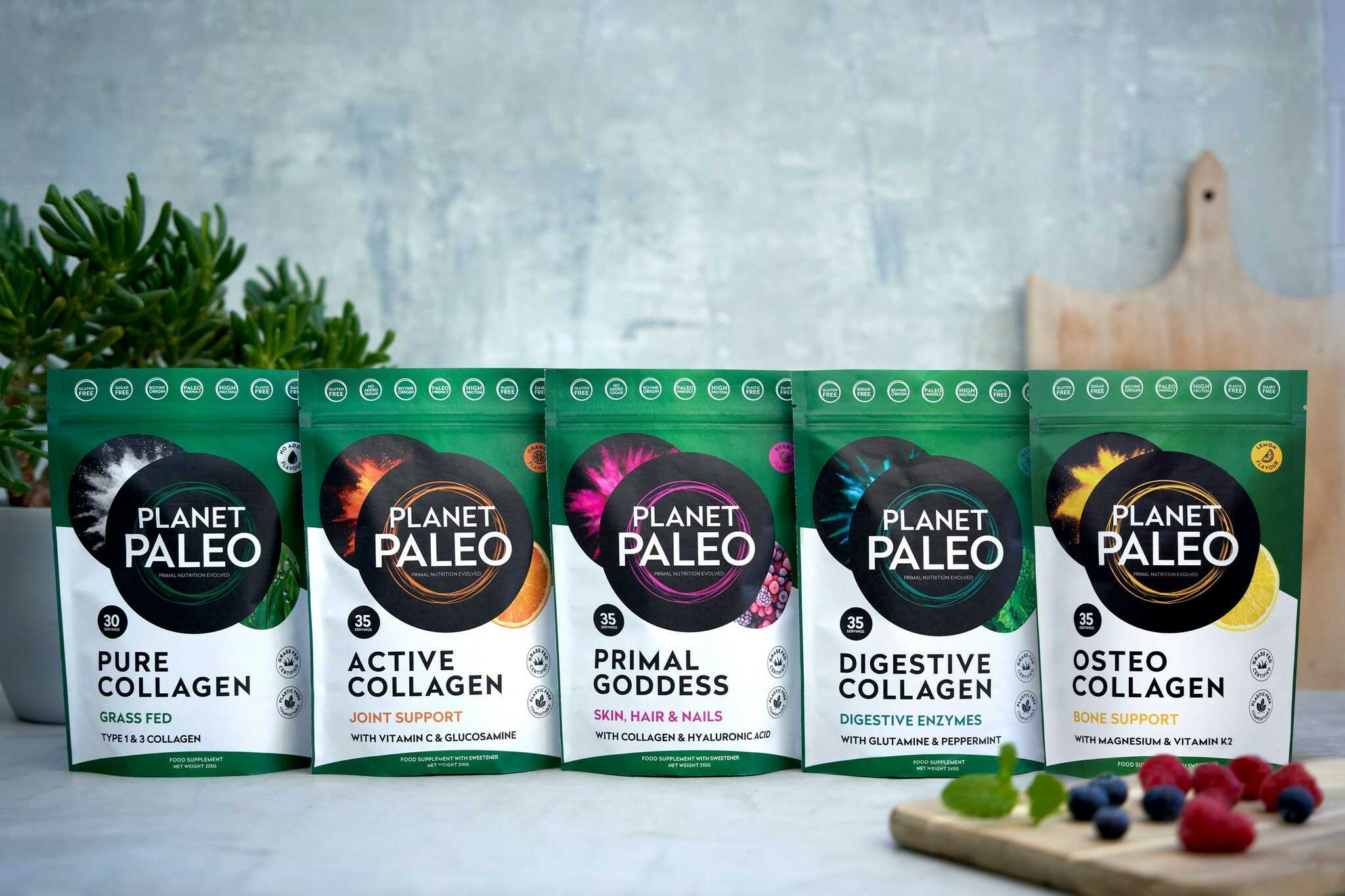
Why Planet Paleo collagens stand out
- Ethical farming and sustainable sourcing: grass-fed, pasture-raised animals and a gentle approach to nature.
- Functional formulations: collagen combined with vitamins, minerals and botanicals for targeted use.
- Transparent formulations: clearly declared ingredient origins, no unnecessary additives, fillers or artificial sweeteners.
- Strict quality control: raw materials and finished products tested for purity and safety.
- Respect for nature and tradition: bringing together traditional broths with modern nutritional science.

Bone broth collagen
Marine collagen
Bovine collagen
Vegan collagen
Who is behind Planet Paleo
Behind the Planet Paleo brand is Ben Shouler, a British nutritional therapist and naturopath who has long been working with natural medicine and functional nutrition. He founded the brand to bring clean, ethically sourced collagens to the market, based on the principles of a modern paleo lifestyle.
Together with a team of experts in nutrition and sustainable sourcing, he oversees grass-fed farming, ingredient quality and the transparent formulations of all products. The goal of Planet Paleo is to offer practical collagen nutrition for everyday life that respects people, animals and the planet.
Ethical collagen sourcing at Planet Paleo
Planet Paleo builds its sustainability on ethical collagen sourcing – their bovine collagen comes from grass-fed and pasture-raised herds, where cattle graze freely on natural pastures and are not fed industrial feed or exposed to growth hormones or routine antibiotics.
Their organic bone broths are made from high-quality beef herds on ecological farms in Scandinavia, certified according to the strict standards of Soil Association and KRAV, which emphasise soil health, animal welfare and a minimal environmental footprint.
Marine collagen from Planet Paleo is sourced from wild-caught white fish from fisheries that meet MSC standards for sustainable management of marine resources, with care for both ecosystems and biodiversity.

Sustainable packaging and comprehensive certifications
The brand also approaches sustainability “from source to packaging” – all Planet Paleo pouches are fully home-compostable, including the closure, and are made from paper, cellulose and corn starch sourced from responsibly managed FSC forests.
Planet Paleo boasts one of the broadest sets of certifications in Europe: LIAF Grass Fed for verified grass-fed farming, Soil Association Organic for organic agriculture, MSC for sustainable fishing and Halal certification across their bovine, marine, bone broth and vegan collagens.
This means customers receive collagen that is not only high-quality and clean, but also maximally transparent in terms of origin, ethics and environmental impact.
What inspired Ben Shouler to found Planet Paleo
Ben Shouler, the founder of Planet Paleo, started out as a nutritional therapist and naturopath who faced his own health challenges and, through personal experience, discovered the power of natural medicine and collagen.
In his clinical practice he saw that the market lacked clean, ethically sourced collagen powders from grass-fed herds that would reflect a modern “paleo” approach while still being easy to use in a busy everyday life.
So in 2016 he founded Planet Paleo and brought together nutrition, herbal medicine and collagen in a coherent range of products that is now one of the most extensive in Europe.
Connection with Mushrooms For Life and Botanicals For Life at PraveBio
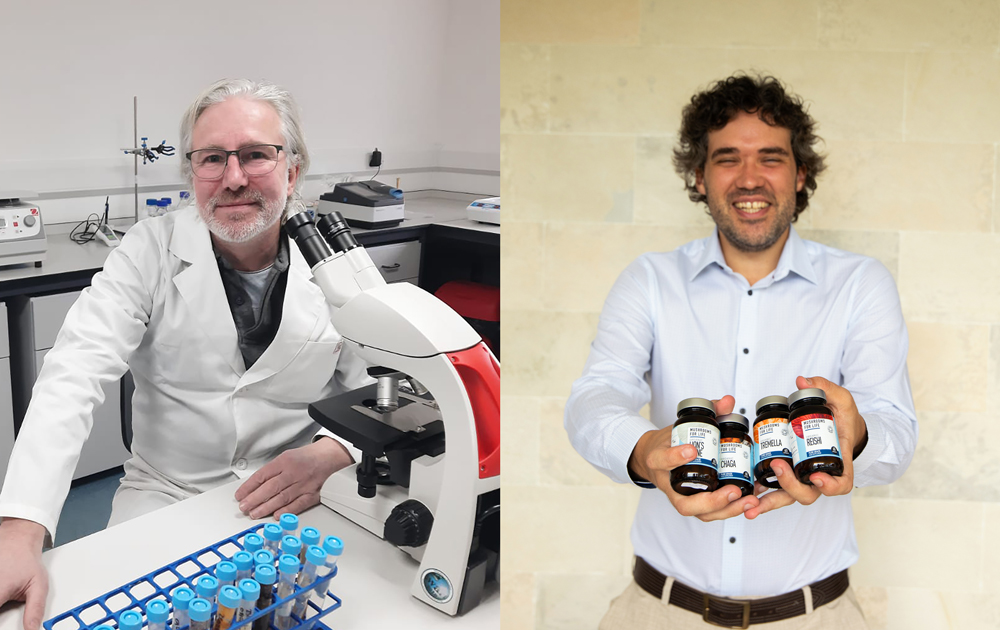
Together with Graham Botfield, Ben Shouler is also behind Mushrooms For Life and Botanicals For Life – the former focuses on organic medicinal mushrooms from carefully selected growers, the latter on highly concentrated herbal tinctures with high bioavailability.
With Mushrooms For Life, the Ben & Graham duo builds on the work of founder Martin Powell and oversees the quality of extracts from traditionally used mushrooms, while with Botanicals For Life they develop tincture formulas that are free from sugar and alcohol, based on gentle extraction and clean ingredients.
On PraveBio you will therefore find not only Planet Paleo collagens but also Mushrooms For Life (e.g. Myco-Zen, Reishi, Lion’s Mane) and Botanicals For Life (herbal tinctures), all sharing the same values: clean ingredients, functional formulations and respect for the traditions of natural medicine.
Planet Paleo – next-generation collagen nutrition
Bringing collagen and broths back into the modern diet
Planet Paleo was created in response to the lack of truly high-quality collagen products in Europe – founder Ben Shouler, a naturopath and nutrition expert, wanted to bring collagen and bone broths back into everyday eating in a format that fits the pace of modern life.
By combining paleo principles, functional nutrition and botanicals, he has created one of the most extensive collagen supplement ranges in Europe – from pure bovine and marine collagens to complex blends with minerals, vitamins and herbs.
Connection with Mushrooms For Life and Botanicals For Life
The same team is also behind Mushrooms For Life and Botanicals For Life, which you will also find at PraveBio – together they create a coherent world of functional nutrition built on medicinal mushrooms, herbal extracts and collagen.
Mushrooms For Life builds on the work of Martin Powell and offers certified organic mushrooms grown in line with traditional Chinese medicine principles, while Botanicals For Life expands the range of high-quality herbal supplements with a focus on clean sourcing and high bioavailability.
This allows Planet Paleo collagen to naturally complement Mushrooms For Life and Botanicals For Life – together they form a well-thought-out system that supports nutrition, vitality and long-term sustainability in a way that aligns with the PraveBio philosophy.

Planet Paleo’s growth – a vision for the future
Looking ahead, Planet Paleo is focusing on further expanding its range of sustainably sourced collagens and bone broths, including new formulations that respond to the needs of modern customers – from active lifestyles to supporting recovery and vitality.
The brand aims to continue strengthening transparency, ethical sourcing and low-impact packaging, deepen its collaboration with partner brands Mushrooms For Life and Botanicals For Life, and educate people on how collagen, mushrooms and herbs can form a practical and sustainable foundation for everyday self-care.
Planet Paleo is built on the idea of bringing collagen and traditional broths back into the modern diet in the form of clean, ethically sourced and functionally designed supplements that respect people, animals and the planet.
Who Planet Paleo products are for

People who care about sustainability
Active people and athletes
Families with children
Fans of keto, paleo and low-carb lifestyles
Customers with special dietary requirements
Planet Paleo’s commitments

Ethical and sustainable sourcing
Quality and purity
Sustainability
Transparency
Heritage


