Freeze-dried Bovine Colostrum from free-range cows fully traceable origin • frozen within 12 hours of collection • no aftertaste • 3 g per serving
Discount reason: Best before date 12/2025
Freeze-dried colostrum usually remains suitable for use even after the best-before date. As a practical guideline, 6–12 months after this date is very often still fine. 1–2 years after the date is also often still usable, although a reduction in potency may occur. What typically declines first is biological activity, not safety.
Freeze-drying (lyophilisation) is the main reason why colostrum retains its quality so well. Compared to spray-drying, it better preserves sensitive components (such as IgG antibodies, lactoferrin and growth factors), prevents heat-related protein damage and removes moisture, which slows degradation and limits microbial growth. Thanks to this, freeze-dried colostrum typically has a long shelf life (most commonly 24–36 months), and any decline in quality after the best-before date is usually gradual rather than sudden.
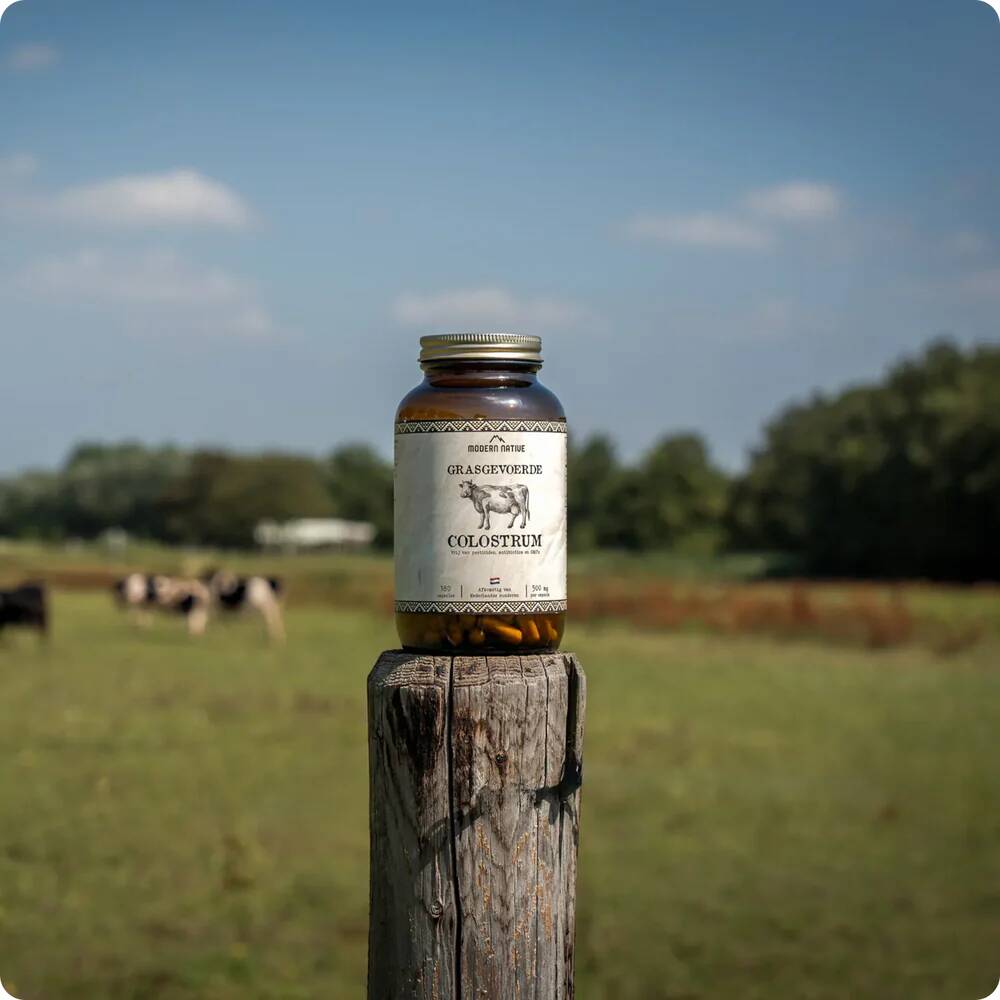
Modern Native Colostrum is a freeze-dried supplement made from first milk of cows from free-range Dutch farms. Collected within 12 hours and gently freeze-dried to preserve bioactive compounds. Each serving provides 3 g of pure colostrum with no aftertaste and no additives.


Why choose this product
Modern Native colostrum is a high-quality bovine colostrum sourced from the first milk of cows raised on open pastures in the Netherlands.
It is collected within 12 hours after the calf is born*, when the natural concentration of functional compounds is at its highest. The colostrum is then processed by freeze-drying (lyophilisation) – a gentle, chemical-free method with no harsh processing.
Colostrum naturally contains immunoglobulins (especially IgG), lactoferrin and growth factors. These are a normal part of mammalian first milk, but compared to regular milk their levels are far more concentrated.
Lower lactose content can be an advantage for people with greater sensitivity.
This product was added to the PraveBio.cz range following a careful assessment of raw material quality, processing technology and transparent production standards.
* It is essential that the first portion of colostrum is intended primarily for calves, as it contains vital nutrients and antibodies that support their immune system and healthy growth.
Colostrum used for food supplements is collected only after calves have received the amount they need. In practice, this means that only surplus colostrum – not consumed by the calves – is used for production, ensuring their health and development are not compromised.
This ethical approach ensures calves receive everything they require, and the remaining colostrum can be used for further processing.
Main benefits
- Collected within 12 hours after birth – when colostrum contains the highest proportion of immunoglobulins (especially IgG), growth factors and lactoferrin.
- Freeze-dried – no added substances, with maximum preservation of bioactive components.
- No chemical additives or sweeteners – pure powder form with no flavourings, fillers or unnecessary ingredients.
- Simple dosing – practical capsules that can be safely opened and sprinkled out (e.g. for children).
- Clear, traceable origin – key suppliers for Modern Native include Zorg & Natuur (Care & Nature), Vlees van Ons (Meat from Us) and Reestdal Rund (Reestdal Beef).*
*Unlike so-called private label brands – you can often recognise them by the fact that one label sells a wide range of unrelated products while specialising in none, and they frequently hide sourcing or provide only vague details – here the origin of the raw material is always clearly stated.
Why local Dutch farms?
Modern Native supplements are sourced from cows that graze freely on Dutch pastures. With a natural environment and high welfare standards, their colostrum retains a strong bioactive profile and an excellent nutritional composition.
- Supporting local farmers – your purchase contributes to the livelihoods of environmentally responsible farms and encourages the growth of organic livestock systems.
- Economic benefit – money stays within the local economy, supporting jobs and a healthier agricultural sector.
- Shorter supply chain – less transport means a lower carbon footprint and fresher raw materials.
- Healthier soil and pastures – ecological farming contributes to better soil quality. Grazing cattle naturally return nutrients back into the land.
More local organic farms means less industrial production – and healthier, better-treated cattle on Dutch pastures.
Who this colostrum is ideal for:
- Informed consumers and biohackers – controlled origin, batches with high IgG content, heat-free processing.
- Families and children – mild taste, naturally lower lactose content, and capsules can be opened and mixed into porridge or a drink (up to 40 °C).
- Athletes and active individuals – functional support for immunity and recovery, with easy dosing throughout the day.
- Sensitive individuals – no added dairy proteins, no whey, and no colourings or artificial substances.
Supplements that pair best with colostrum
- Probiotics – colostrum can support the gut environment for beneficial bacteria and works synergistically with the microbiome.
- Omega-3 (e.g. fish oil), vitamin C, zinc – these supplements may complement colostrum in the context of recovery, immune balance and antioxidant support.
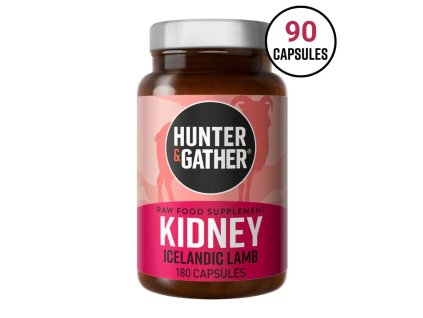
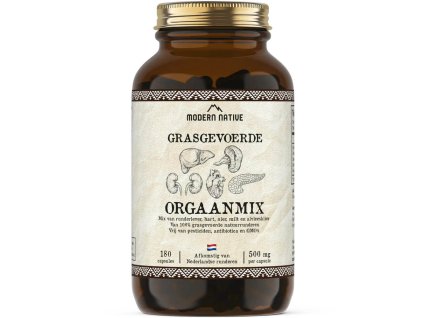
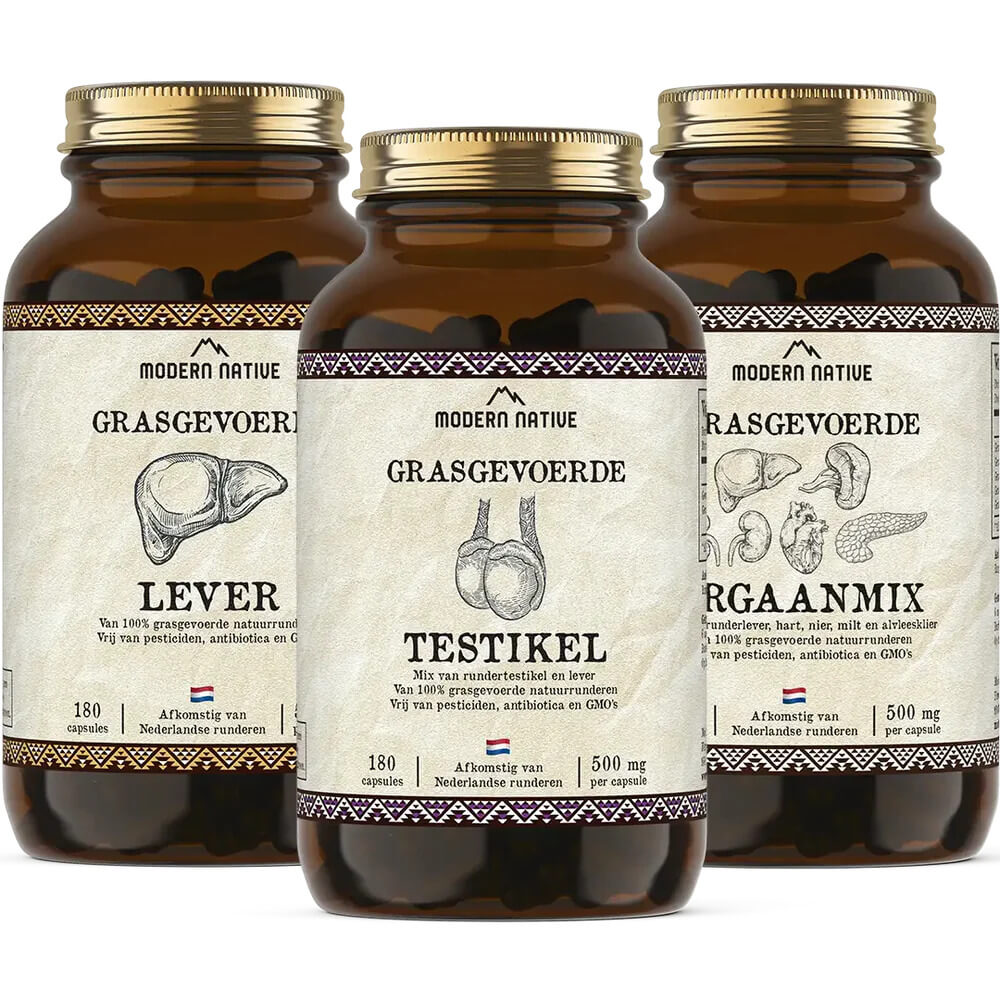
Alongside core supplements, we also offer organ blends from two trusted brands: Modern Native (beef organs) and Hunter & Gather (lamb organs). Below is a quick guide to help you choose beef vs lamb based on taste, tolerance and your goals.
Comparison of beef vs lamb organ supplements
| Supplement | Beef (Modern Native) | Lamb (Hunter & Gather) |
|---|---|---|
| Liver |
Very high in vitamin A, B12 and iron. Freeze-dried beef liver from Czech free-range farms – organic certification | Primal Feast Freeze-dried beef liver from Dutch free-range farms | Modern Native |
Milder taste, typically a lower histamine load.
Freeze-dried lamb liver from Icelandic free-range farms | Hunter & Gather |
| Heart |
High in coenzyme Q10, iron and B vitamins. Freeze-dried beef heart from Dutch free-range farms | Modern Native |
A similar nutritional profile in a milder form. Freeze-dried lamb liver and heart from Icelandic free-range farms | Hunter & Gather |
| Kidneys |
DAO enzyme, selenium and other minerals; can be more challenging in taste and tolerance. Freeze-dried beef kidneys from Dutch free-range farms | Modern Native |
A milder option for sensitive individuals. Freeze-dried lamb kidneys from Icelandic free-range farms | Hunter & Gather |
How to take colostrum
| Goal | Best time | Why then | How to take |
|---|---|---|---|
| General wellbeing & immune support | Morning or late morning (on an empty stomach) | Best absorption of active components | 1–2 g in lukewarm water |
| Gut health & digestion | 30–60 minutes before a meal | Support for the gut barrier and digestion | In lukewarm water, do not overheat |
| Metabolism & weight management | Morning or after exercise | Metabolic support, improved utilisation | Before training, with water |
| Performance & recovery | After training or before bed | Support for repair and recovery | In a protein shake or in the evening |
| Extra support during demanding periods | Morning + evening | Steadier support across the day | Split dose 50/50 |
| Skin & cellular renewal | Before bed (on an empty stomach) | Supports overnight recovery processes | In lukewarm milk or water |
Dosage
- The manufacturer’s recommended daily serving is 6 capsules per day, which equals 3 g of pure freeze-dried colostrum.
- 6 capsules (made from bovine gelatine)* correspond to approximately 24 ml of fresh colostrum.
*Bovine gelatine capsules dissolve quickly in the stomach due to hydrochloric acid, whether taken with food or on an empty stomach. However, the contents – the freeze-dried material – may suit certain situations better:
Taking with food:
Fat-soluble vitamins (A, D, E, K): These vitamins absorb better with fat, so it can be ideal to take capsules with a meal containing healthy fats (e.g. avocado, nuts, olive oil).
Reducing discomfort: Some people may feel mild nausea or stomach discomfort when taking capsules on an empty stomach; food can help reduce this.
Taking on an empty stomach:
Faster uptake: B vitamins and water-soluble minerals can be absorbed effectively even without food.
A quicker “top-up”: Taking capsules on an empty stomach may suit you if you are looking for a quick nutritional boost during the day.
For best absorption of fat-soluble vitamins, we recommend taking capsules with a meal containing fat. If you take them on an empty stomach and have no digestive issues, that can be fine too. The best choice depends on your needs and tolerance.
It is sensible to start with a smaller serving and observe how you respond. If you have significant digestive issues or are unsure about timing and dosing, it is worth speaking with a qualified professional.
Specialist sources suggest that in adults, the daily intake used in studies can range from 3.2 to 60 g, depending on age, body weight and the intended goal. For children, a common range is 0.5 to 3 g per day.*
- Form: Capsules are convenient, but powder can be better for children or anyone who struggles with swallowing.
- When: Ideally on an empty stomach – in the morning after waking or in the evening before bed. Exact timing is less important than consistency.
- How: Take with lukewarm water. Powder can be mixed into porridge, a smoothie or batter – always away from high heat (up to 40 °C).
- Combinations: Often paired with probiotics or omega-3 for broader nutritional synergy.
*Always adapt dosing to individual needs. If you have specific health conditions, we recommend consulting a doctor or nutrition professional.
Ingredients
- Immunoglobulins (IgG, IgA, IgM, IgE, IgD)
- Lactoferrin
- Lysozyme
- Growth factors (such as IGF-1, IGF-2, TGF-β)
- Proline-rich polypeptides (PRP)*
- Vitamins: vitamin A, B1, B2, B6, B12 and E
- Minerals: calcium, sodium, magnesium and zinc
- Amino acids
- Cytokines
- Interferons
- Oligosaccharides
*Proline-rich polypeptides (PRP) are short amino-acid chains with a high proportion of proline, an amino acid naturally present in colostrum.
PRPs are often described in research as compounds involved in immune signalling and balance. They are sometimes referred to as “cytokine modulators” in the scientific literature.
Some research discussions suggest PRPs may play a role in immune regulation, but this area is still developing and does not translate into authorised health claims in the EU.
If you want to explore PRPs further, you can search scientific databases such as NCBI or other nutrition science resources.
Read more on the topic
Frequently asked questions
Can I take this product daily?
Yes. The recommended serving is 6 capsules daily (approx. 3,000 mg of colostrum). It can be taken every day as part of a balanced diet. If you plan long-term use, it is sensible to consult a doctor, particularly if you have a health condition.
Do calves receive enough colostrum?
Yes. We use colostrum from the first milking within the first 12 hours after birth, when immunoglobulin levels are naturally highest. Colostrum for supplements is collected only after calves have received what they need – we use surplus colostrum that is not required by the calf.
Can I take colostrum if I am lactose intolerant?
Lactose content is naturally lower than in regular milk, so many people with lactose intolerance tolerate it well. Even so, we recommend starting with a smaller serving and monitoring your response.
What is the colostrum made from?
The colostrum comes from the first milking of cows (type A1) within the first 12 hours after birth. It is gently freeze-dried, with no chemical additives.
What is the difference between regular milk and colostrum?
Colostrum is naturally more nutrient-dense and contains immunoglobulins, growth factors and lactoferrin in far higher concentrations than regular milk.
How should I take colostrum?
Take it in the morning on an empty stomach, or split the serving across the day to suit your routine. Consistency matters most.
How is the product manufactured? (Jak se kolostrum vyrábí?)
Colostrum is collected within 12 hours after the calf is born, immediately frozen and then freeze-dried. The result is a pure powder with a long shelf life (up to 18 months from freeze-drying).
Can I open the capsules and give them to children?
Yes. The capsules are not enteric-coated, so you can open them and mix the contents into lukewarm porridge or a smoothie (max. 40 °C). Hot food can damage sensitive components.
What is the shelf life?
The colostrum remains stable for 1.5 years from freeze-drying. At the time of delivery, we guarantee at least 1 year of remaining best-before period.
What are the potential benefits and what does science say?
Bovine colostrum naturally contains immunoglobulins, lactoferrin and growth factors. Some limited studies discuss potential roles in immune and gut-related support and in recovery, but overall clinical evidence is still limited. It is best viewed as a high-quality nutritional supplement rather than a miracle solution.
Are there known side effects or contraindications?
Colostrum is generally well tolerated. However, sensitive individuals may experience digestive discomfort (bloating, nausea). It is not suitable for people with an allergy to milk proteins, and if you have an autoimmune condition we recommend consulting a doctor.
Is colostrum compatible with other supplements?
Yes. It is commonly combined with probiotics (gut support), omega-3, or antioxidants as part of a broader nutrition strategy.
How much colostrum should I take and how do I dose it?
Modern Native recommends 6 capsules daily (3 g / 3000 mg). Scientific literature uses a wide range of amounts (from 500 mg up to 60 g), depending on context. We recommend starting low, checking tolerance, and increasing only if needed.
Colostrum: historical and scientific notes
Historical uses of colostrum
Colostrum has appeared across cultures for centuries. In traditional Indian medicine, Ayurveda, it is sometimes referred to as “Ojas” and was considered part of vitality traditions.
In traditional Chinese medicine (TCM), it has at times been described as “beast milk” and associated with ideas of balance and resilience.
Among some Indigenous American cultures, colostrum was viewed as a special substance linked to protection for newborns and general strength.
Today, these historical references are of interest primarily as cultural context, while modern science focuses on colostrum’s nutritional profile and the role of its bioactive components.
Colostrum and scientific research
Colostrum is also the subject of a number of scientific studies. The examples below show how researchers explore its composition and potential biological mechanisms:
Milk fat layer transcriptome: A study sequenced RNA across different stages of lactation, including colostrum, describing the presence of genes and proteins (e.g. isoferritins, cathepsins). More here.
Calf digestive tract development: Research observed how different colostrum feeding strategies in the first 12 hours after birth can influence immune parameters. More here.
Exosomes and inflammatory processes: An experimental mouse study examined bovine colostrum exosomes in relation to microbiota and liver parameters. More here.
These lines of research have not resulted in EU-authorised health claims, but they do show that colostrum remains an active area of scientific interest.
Additional parameters
| Category: | Support digestion |
|---|---|
| EAN: | 8720589464537 |
| Výrobce: | Modern Native B.V. Flevolaan 10, 9501 VG, Stadskanaal, The Netherlands |
| Země původu: | Nizozemsko |
| Proč koupit: | Nizozemská firma, která vyrábí a prodává vysoce kvalitní doplňky stravy. Jsou jimi koncentrované a lyofilizované orgány v kapslích. Jejich posláním je přinášet moudrost našich předků zpět do moderního světa, pro optimální zdraví. |
| Vhodné pro: | Low Carb-Keto-Paleo-Bez cukru-Těhotné-Děti |
| Obsah: | 180 kapslí |
List of ratings
 Petr M.
Be the first who will post an article to this item!
Our ancestors lived differently from us. Traditional societies have been eating organ meat for centuries. They did it for a reason. Intuitively, they knew it was good for them. They knew that organ meats were the source of the most important nutrients. Similarly, in nature many predators go after organ meat first and muscle meat second.
We hardly eat organs these days. It's an ancient tradition that has faded away. Modern Native's mission is to bring the wisdom of our ancestors back to the modern world for optimal health, strength and happiness.
There is no organ meat like meat
Not all organs are the same. When looking for quality (organ) meat, it is important to check several points:
- 100% grass-fed cattle
- Without hormones
- Pesticide and GMO free
- Animals live stress-free and completely in the wild
The term "grass-fed" doesn't tell the whole story. The cow may be partially outside in the summer eating fresh grass, while most of the time she is in the barn and fed concentrate. 100% grass-fed, that's the Modern Native way of doing things. They only work with farmers whose cattle meet the above points. The organs are obtained from cattle in the Netherlands.
Why local cattle?
- It maintains the health of local natural farmers and creates jobs in the industry, thus creating more natural farmers in the Netherlands.
- Where there is more demand, there will be more supply. This will eventually allow the price of quality meat, including organ meat, to fall.
- More local natural farmers means fewer traditional herds (mass production) and happier cattle.
- Money spent on local farms stays in the economy, which has a domino effect and creates more jobs.
- Shorter distribution chains reduce unnecessary transport.
- When there are more natural livestock, healthier soil is created.
- Naturally grazing cattle return nutrients to the soil through the urine and manure they excrete.
Method for Modern Native accessories
- It comes from 100% grass-fed cattle.
- No hormones.
- Pesticide and GMO free.
- The animals live stress-free and completely in the wild.
Why eat organ meat?
Beloved by our ancestors
Traditional peoples, Native Americans, and ancient ancestors believed that consuming the organs of a healthy animal would promote the health of the individual's organ. They ate "from head to tail", i.e. everything from the animal, because they intuitively knew how nutritionally rich the meat from the organs was.