
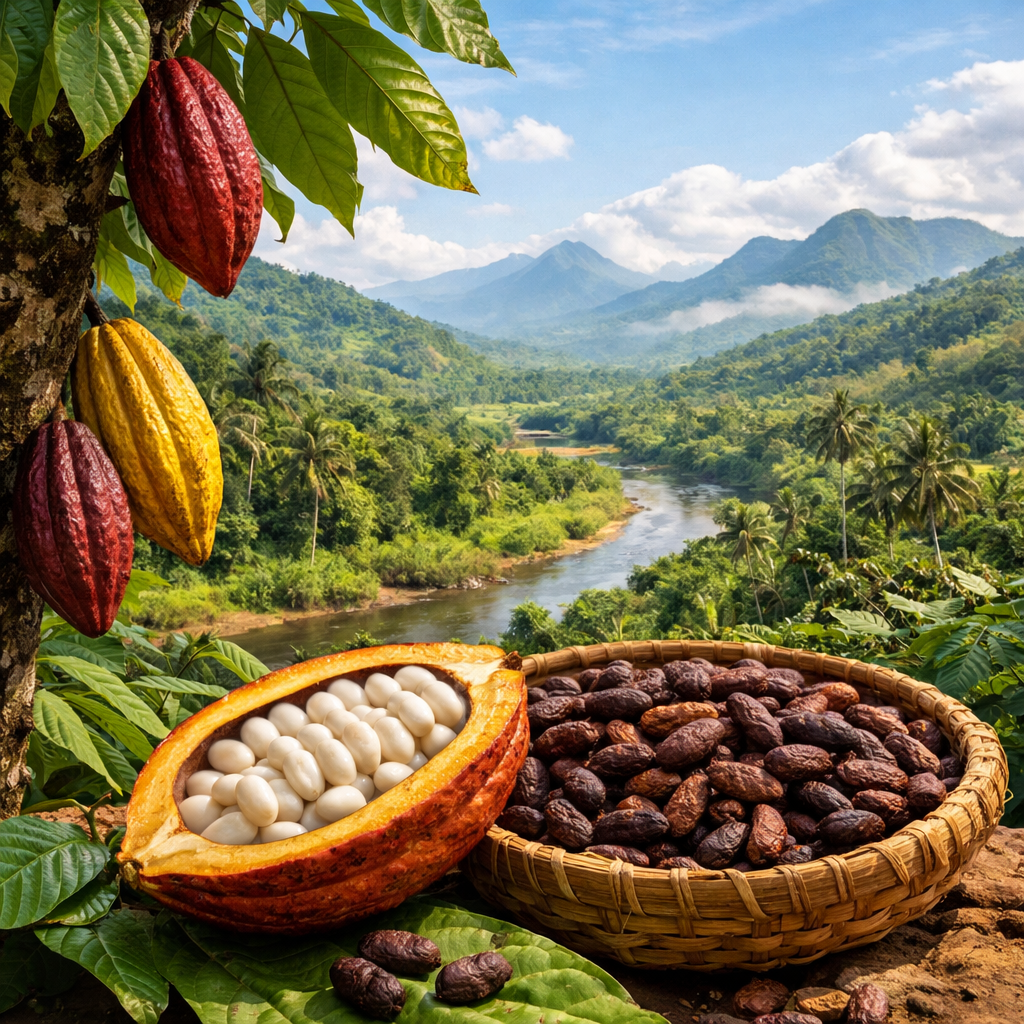
50% chocolate for cooking and baking - milk Cocoa from Mananjary • min. 27 % milk solids • 10 × 100 g
Fine milk chocolate for cooking and baking with 50 % cocoa has a smooth, creamy texture and a flavour that combines Madagascan cocoa with fruit, raisin and citrus notes. The higher cocoa content keeps the chocolate character pronounced even after combining it with other ingredients.
The recipe contains Madagascan cocoa and cocoa butter, whole milk, cane sugar and sunflower lecithin. The couverture works well for ganache, pralines, coatings, baking and chocolate drinks, and can be tempered for making bars and confectionery decorations.


Chocolat Madagascar – milk chocolate for cooking and baking with 50 % cocoa
Milk couverture with 50 % cocoa works well for baking, pralines, ganache, coatings, moulded bars and chocolate drinks. The high cocoa content keeps the chocolate flavour pronounced, while whole milk gives it a smoother, creamier character.
The cocoa comes from Mananjary, Ambatotsara Estate in Madagascar. The chocolate has a light brown to reddish colour, a smooth, creamy texture and a fruity profile with raisin and citrus notes; the Czech label also describes a lightly spicy finish.
It contains Madagascan cocoa butter, whole cow's milk powder, cane sugar, Madagascan cocoa beans and non-GMO sunflower lecithin. Cocoa solids make up at least 50 % and milk solids at least 27 %.
The cocoa is not alkalised, the cocoa butter is not deodorised, and the recipe contains no added flavourings or preservatives. Fine processing to a particle size of below 20 µm contributes to smooth melting and an even texture during confectionery work.
For tempering, melt the couverture at 45–50 °C, cool it to 27 °C for crystallisation, then work with it at 30–31 °C. These temperatures work well for pralines, thin coatings, moulded bars and other products where gloss and a firm snap matter.
The 1 kg pack contains 10 individually wrapped 100 g bars, making it easy to measure the chocolate without portioning a large block. The chocolate is processed and packed directly in Madagascar.
Sources and references
- Current product packaging – specific origin of Mananjary, Ambatotsara Estate, ingredients, cocoa and milk solids content, nutritional values, packaging and storage conditions.
- Chocolat Madagascar – information on 50% milk couverture – flavour profile, fineness, tempering method, non-alkalised cocoa and non-deodorised cocoa butter.
- Chocolat Madagascar – overview of international awards – results for the 50% milk chocolate and terroir varieties from Mananjary.
Where general brand information differs from the specific packaging, the information shown on the product packaging takes precedence in this description.
PraveBio.cz articles on chocolate
Suitable for
Pravé Bio recommends what to try next
- 80% milk chocolate for cooking and baking
A higher cocoa content and less sweet profile for recipes where you want the cocoa flavour to remain pronounced after adding other ingredients. - Organic Chocolat Madagascar cocoa butter
Pure cocoa butter for adjusting the fluidity of chocolate blends and coatings, or for your own recipes.
Quick tip: When making pralines or bars, keep the working temperature at around 30–31 °C after crystallisation. This keeps the couverture fluid enough for moulding and gives it a firmer surface once set.
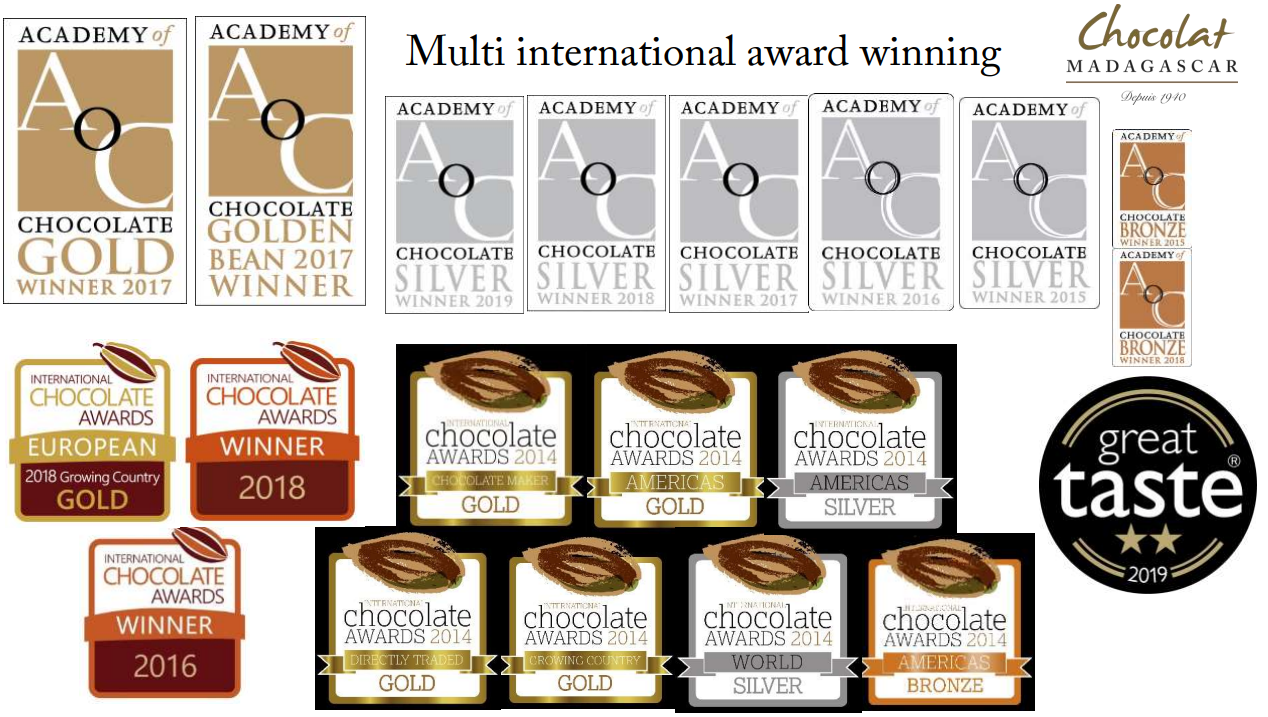
International awards for 50% milk chocolate
Chocolat Madagascar chocolates are regularly assessed in international competitions focused on fine cocoa and finished chocolate. Awards relating directly to this cocoa percentage have been recorded for the 50% milk range.
Single Terroir Mananjary Fine Milk 50 % received a silver award from the Academy of Chocolate. The producer also records awards for other 50% milk varieties in the Great Taste and International Chocolate Awards competitions.
The awards provide additional context; when choosing this particular couverture, the key details are its 50% cocoa content, the origin stated on the packaging, the processing method and the precisely defined tempering temperatures.
Milk chocolate with 50 % cocoa – key benefits
Chocolat Madagascar 50% milk couverture combines a pronounced cocoa content with whole milk and parameters suited to confectionery work.
- 50 % cocoa solids – the cocoa flavour remains pronounced in ganache, coatings and baked desserts.
- At least 27 % milk solids – gives a creamier flavour and smoother texture.
- Cocoa from Mananjary – the specific pack states Ambatotsara Estate as the origin.
- Fineness below 20 µm – a smooth texture without a coarse feel on the tongue.
- No alkalisation – the cocoa beans are not chemically treated to alter their colour and acidity.
- No added flavourings – the flavour comes from cocoa, milk and cane sugar.
- 10 × 100 g – practical portions within the 1 kg confectionery pack.
The result is a milk chocolate for baking and confectionery work that retains the creaminess of a milk chocolate recipe while allowing the cocoa to come through more clearly.
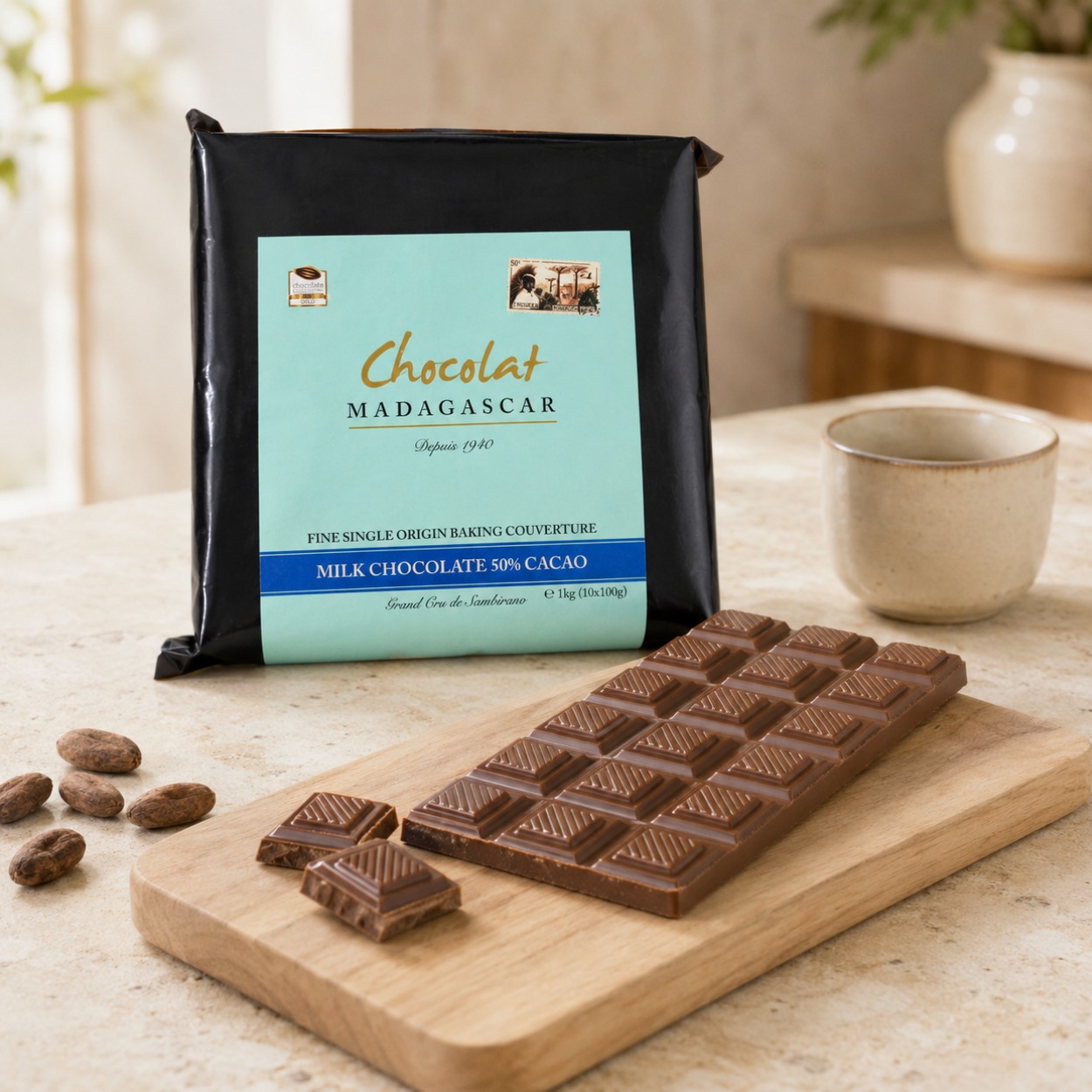
From Mananjary cocoa to finished chocolate in Madagascar
The specific pack states that the cocoa comes from Mananjary, Ambatotsara Estate on the east coast of Madagascar. A precisely defined origin connects the flavour of the finished chocolate with a specific growing area rather than an anonymous blend of cocoa from several countries.
After harvest, the cocoa beans are fermented and dried, with further processing taking place directly in Madagascar. The finished couverture is finely processed to particles below 20 µm, which do not feel coarse in the mouth and work well for smooth ganache, coatings and moulded products.
The cocoa is not alkalised during production and the cocoa butter is not deodorised. The chocolate therefore does not need added vanilla or other flavourings to create its main flavour profile.
Making the finished chocolate in the country of origin follows the Raise Trade principle: Madagascar exports not only cocoa beans, but also carries out further processing and production of the finished product.
How 50% milk couverture differs from standard milk chocolate
The main difference is the 50% cocoa solids content alongside at least 27 % milk solids. The result is chocolate with a more pronounced cocoa profile while retaining the creaminess of milk chocolate.
It contains cocoa butter, whole milk, cane sugar, cocoa beans and sunflower lecithin. The recipe contains no added vanilla or other flavourings, and the cocoa butter is not deodorised.
The couverture can also be tempered. The producer specifies the melting, crystallisation and working temperatures, which matters when making pralines, thin coatings and moulded bars.
Another practical difference is the 10 × 100 g pack: individual bars can be used as needed for a recipe without cutting a 1 kg block.

Why choose Chocolat Madagascar
Made in the country of origin: Chocolat Madagascar processes the cocoa and makes the finished chocolate directly in Madagascar. Processing therefore remains connected to the country where the main ingredient is grown.
Traceable cocoa origin: alongside chocolates from a single country, the brand also offers products from specific regions, plantations and terroirs. Packaging can therefore state not only the country but also the more precise harvest location.
Gentle processing: the brand works with non-alkalised cocoa and non-deodorised cocoa butter. Added flavourings are not used to mask the cocoa's underlying flavour.
Raise Trade: a larger share of processing and production takes place in the country of origin rather than exporting only the agricultural raw material. This connects cocoa growing with local chocolate production.

Made directly in Madagascar
Both the cocoa and the finished chocolate undergo a substantial part of their processing in the country of origin.
Traceable cocoa locations
For selected chocolates, the origin is specified down to the region, plantation or terroir.
Non-alkalised cocoa
The brand retains the cocoa's natural colour and flavour profile without alkaline processing.
Parameters for confectionery work
Couvertures come with specific melting, crystallisation and working temperatures.
Ingredients
Cocoa butter, whole cow's MILK powder, cane sugar, Madagascan cocoa beans, non-GMO sunflower lecithin. Cocoa solids at least 50 %, milk solids at least 27 %.
Contains MILK. May contain traces of nuts and gluten. Allergens are shown in bold.
Nutritional values
| Typical values | per 100 g | What does this mean for you? |
|---|---|---|
| Energy | 2544 kJ / 608 kcal | Energy-dense confectionery ingredient – when baking, the chocolate can be portioned precisely to suit the recipe. |
| Fat | 47 g | The fat content comes mainly from cocoa butter and whole milk and affects both melting and the creamy texture. |
| – of which saturates | 28 g | Saturated fats occur naturally in cocoa butter and milk fat. |
| Carbohydrate | 37 g | This value corresponds to the carbohydrate figure shown on the producer's original nutrition panel. |
| – of which sugars | 33 g | The sugars come from cane sugar and the milk component. |
| Fibre | 2 g | The fibre comes mainly from cocoa beans. |
| Protein | 10 g | Protein occurs naturally in milk and cocoa. |
| Salt | 0.03 g | Salt is not listed as a separate ingredient; the value reflects the amount naturally present in the ingredients used. |
Ingredient breakdown and functional benefits
Cocoa butter
What it is: The natural fat obtained from cocoa beans, forming a significant part of the chocolate recipe.
Function: Determines the melting, fluidity and structure of the couverture during tempering.
Benefits: Non-deodorised cocoa butter retains its own cocoa aroma and works well for smooth coatings, pralines and moulded bars.Whole cow's milk powder
What it is: The milk component of the recipe; the finished chocolate contains at least 27 % milk solids.
Function: Softens the intensity of the cocoa and creates a creamier flavour and texture.
Benefits: Combines a 50% cocoa content with the character of classic milk chocolate.Cane sugar
What it is: The sweetening ingredient used alongside cocoa and milk.
Function: Balances the natural acidity and bitterness of the cocoa beans.
Benefits: With 50 % cocoa solids, the finished chocolate retains a pronounced cocoa flavour.Cocoa beans and sunflower lecithin
What it is: Madagascan cocoa beans form the flavour base; non-GMO sunflower lecithin is an emulsifier.
Function: The cocoa beans provide the main aroma and colour, while lecithin adjusts the viscosity of the couverture.
Benefits: The combination provides a pronounced cocoa profile while allowing smooth handling for coatings, tempering and moulding.
The result? You get a milk couverture with 50 % cocoa, a creamy texture and precisely defined tempering parameters. The 100 g bars make portioning straightforward for ganache, pralines, coatings, baking and making chocolate bars at home.
Important information
- Store in a cool place at 12–20 °C, in dry conditions and away from direct sunlight.
- The recommended relative humidity during storage is no more than 70 %.
- Protect from surrounding odours; once opened, keep well sealed.
- Avoid sudden changes in temperature, which may cause a whitish bloom on the surface of the chocolate.
- Allergens: contains MILK. According to the Czech overlabel, may contain traces of nuts and gluten.
- When melting and tempering, keep the chocolate away from water, which can alter its consistency.
- Use by the best before date shown on the packaging.
FAQ
Is 50% milk chocolate suitable for baking and making desserts?
Yes. This is a confectionery couverture for ganache, pralines, coatings, baked goods, moulded bars and chocolate drinks. A particle size below 20 µm contributes to the smooth texture of the finished products.

Where does the cocoa in this specific pack come from?
The current Czech label states Mananjary, Ambatotsara Estate in Madagascar. This information takes precedence in this description over broader materials used for other batches and terroir varieties from the brand.
How much cocoa and milk solids does the chocolate contain?
It contains at least 50 % cocoa solids and at least 27 % milk solids.
How do I temper 50% milk couverture?
Melt the chocolate at 45–50 °C, cool it to 27 °C for crystallisation, then work with it at 30–31 °C.
Does the chocolate contain lecithin or added vanilla?
It contains non-GMO sunflower lecithin, which adjusts the viscosity of the couverture. Added vanilla and other flavourings are not listed in the ingredients.
Is the cocoa butter deodorised?
No. Chocolat Madagascar states that this couverture uses non-deodorised cocoa butter and non-alkalised cocoa.
How is the 1 kg pack divided?
The pack contains 10 individual 100 g bars. This makes it easy to use individual portions for baking without cutting a large 1 kg block.
How should I store the chocolate?
Store it at a stable temperature of around 12–20 °C, in dry conditions, away from direct light and strong surrounding odours. The producer states a maximum relative humidity of 70 %.
Additional parameters
| Category: | Milk chocolate |
|---|---|
| EAN: | 715547846577 |
| Výrobce: | Chocolat Madagascar |
| Country of origin: | Madagaskar |
| Vhodné pro: | Bez lepku-Soy Free-GMO Free-Low Carb-Těhotné-Kojící-Děti |
| Size: | 1 kg |
About Chocolate Madagascar
Growing fine rare cacao and freshly crafting into fine milk chocolate in Madagascar
Chocolat Madagascar - Fine, Fresh and Fair
Product rating
Leave a rating
List of ratings
 Lucie H.
Discussion
Be the first who will post an article to this item!
Chocolat Madagascar is a small chocolate manufactory that produces its chocolates from the finest organic cocoa beans directly in Madagascar. The taste and quality of its products have already earned it a number of awards in competitions around the world, such as absolute wins in the Golden Bean Award in 2017 and 2020 and the Shining Bright Award 2020 or in Finest Origin. Vegans, lovers of high-percentage chocolates and those who like to eat white chocolates can choose from their offer.
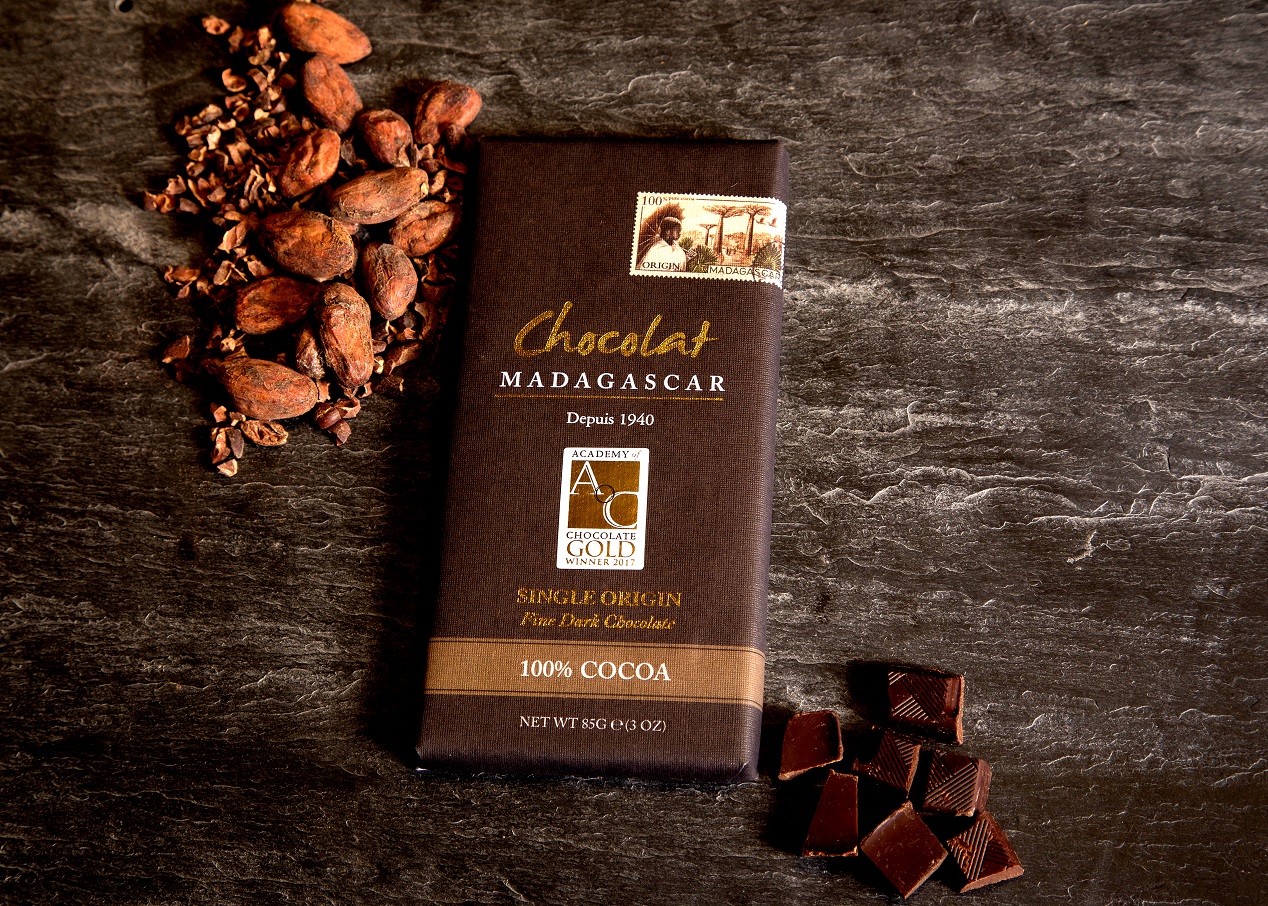
How are Chocolat Madagascar's chocolates different?
Indescribable taste
Thanks to the unique environment of the Madagascan rainforest, the soil and the climate, the cocoa beans grown here have a very specific flavour profile full of fruity notes - they taste of forest fruits, cherries and citrus. Chocolat Madagascar have a naturally very complex taste, without unwanted bitterness, and do not need to be flavored or chemically treated with alkalization.
Maximum freshness
Unlike most chocolate factories, Chocolat Madagascar is located close to cocoa plantations. The fermentation and drying of the cocoa beans takes place within a few days of harvest (other chocolate companies make chocolates from cocoa beans that are often a few years old). Thanks to this, cocoa beans retain the highest possible proportion of active substances, mainly flavonoids.
Sustainability
Cocoa beans are grown organically, so they do not harm the environment with unnecessary pesticides, herbicides or fertilizers. On the contrary, they create a safe haven in the rainforest environment for Madagascar's endangered species.
Raise trade
Chocolat Madagascar buys its cocoa beans from small farmers who harvest them in the Sambirano Valley in north-west Madagascar. It pays them premium prices, which raises their standard of living. Further processing of cocoa, including the actual production of chocolates, also takes place in Madagascar. This provides a further not inconsiderable boost to the island's economy. This support increases the quality of education and skills of employees and their families, ultimately leading to increased wealth and support for this nation. It is thereforefair trade at the highest possible level - raise trade.


