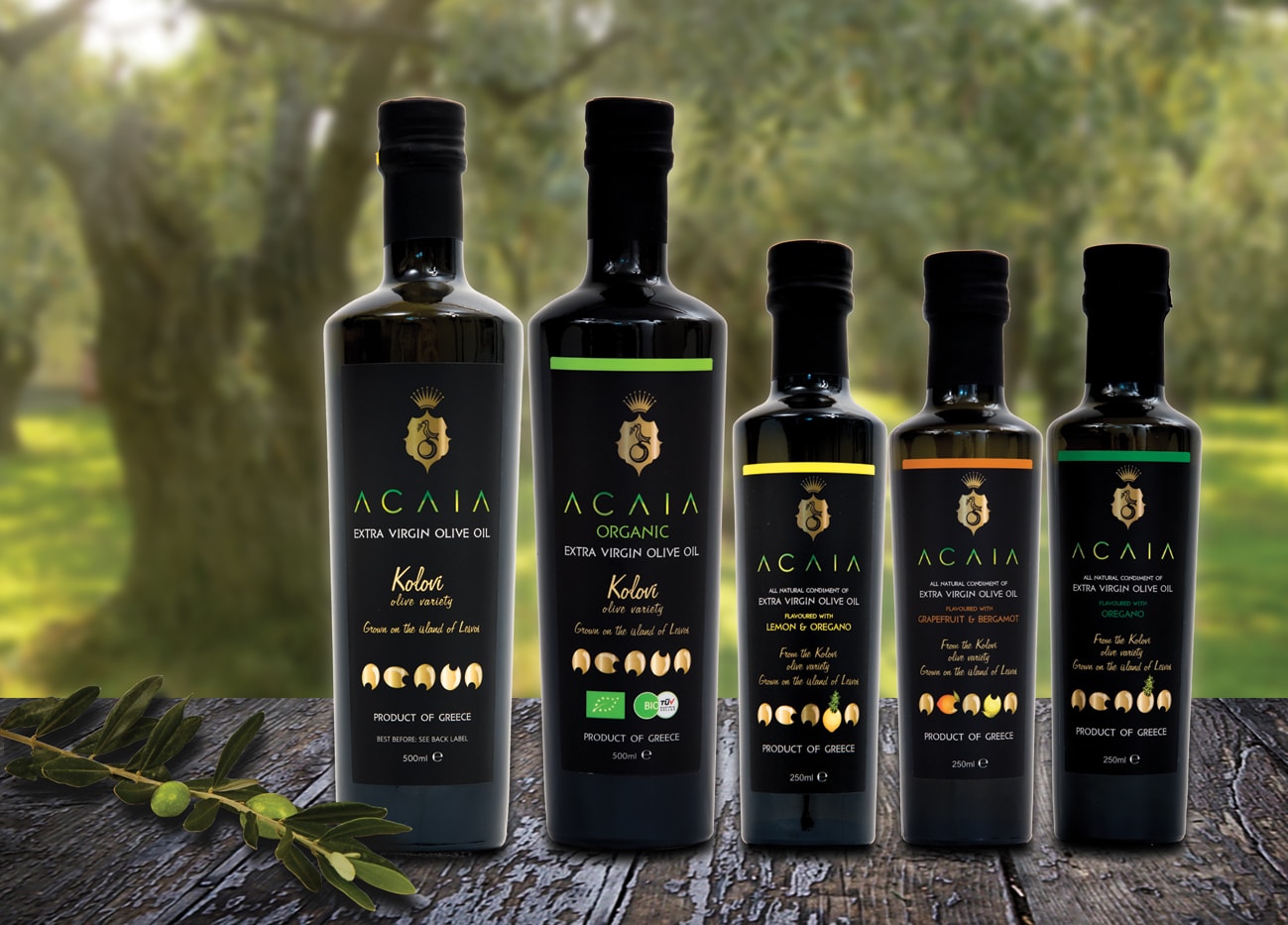
You won't buy good olive oil in a supermarket
The so-called Mediterranean diet is not particularly common in this part of the world. So what exactly is it? Put very simply, the Mediterranean diet combines the principles of healthy eating with the traditional flavours and cooking methods of Mediterranean countries such as Greece, Italy, Spain and Turkey.
How did the Mediterranean diet attract worldwide interest?
Interest in the Mediterranean diet began in the 1960s, when it was found that people living in Mediterranean countries did not die from heart disease as often as those in the USA and northern Europe. Subsequent studies found that the Mediterranean diet reduces the risk of cardiovascular disease. Today, the Mediterranean diet is recommended in the Dietary Guidelines for Americans for healthy eating and the prevention of chronic disease. The World Health Organization has also officially recognised this way of eating as a healthy and sustainable dietary pattern, while the United Nations Educational, Scientific and Cultural Organization (UNESCO) even considers it part of the world's intangible cultural heritage.
 What is the Mediterranean diet?
As mentioned above, the Mediterranean diet is a way of eating based on the traditional cuisine of countries bordering the Mediterranean Sea. Although there is no single precise definition of the Mediterranean diet, it generally includes plenty of vegetables, fruit, wholegrain foods, beans, nuts and seeds, as well as olive oil.
The main elements of the Mediterranean diet include:
-
Daily consumption of vegetables, fruit, wholegrain foods and healthy fats (olive oil).
-
Weekly consumption of fish, poultry, beans and eggs.
-
Moderate consumption of dairy products.
-
Limited intake of red meat.
Another important part of the Mediterranean diet is taking the time to eat at the table with family and friends, accompanied by a glass of red wine, as well as staying physically active – walking, swimming... simply spending time outdoors and keeping moving.
Based on plants, not meat
Vegetables, fruit, herbs, nuts, beans and wholegrain foods form the basis of the Mediterranean diet and are the foundation of its meals. Seafood, dairy products, poultry and eggs are eaten less regularly, while red meat is consumed only occasionally.
Tip: Cooking can use a considerable amount of gas. This article explains how to save gas.
Healthy fats
Healthy fats are a key part of the Mediterranean diet. They are eaten in place of less healthy fats, such as saturated and trans fats, which are industrially produced through a process known as hydrogenation and contribute to heart disease.
Olive oil is the primary source of fat in the Mediterranean diet. Good-quality olive oil contains monounsaturated fats, which have been found to reduce levels of total cholesterol (the total amount of cholesterol in the blood) and LDL cholesterol (often referred to as bad cholesterol, from low-density lipoprotein, or low-density lipoprotein). Why is it called bad cholesterol? Because when present in excess, it can build up in the blood vessels in the form of plaques, which narrow the arteries and lead to atherosclerosis. If an atherosclerotic plaque breaks away, it can cause a heart attack or stroke.
Nuts and seeds also contain high levels of monounsaturated fats. Oily fish such as mackerel, herring, sardines, tuna, salmon and lake trout are rich in omega-3 fatty acids, a type of polyunsaturated fat that may reduce the development of inflammatory conditions in the body. Omega-3 fatty acids also help reduce triglycerides (the amount of stored fat in the human body), blood clotting and the risk of stroke and heart failure.
THE GLOBAL FRAUD BEHIND OLIVE OIL PRODUCTION
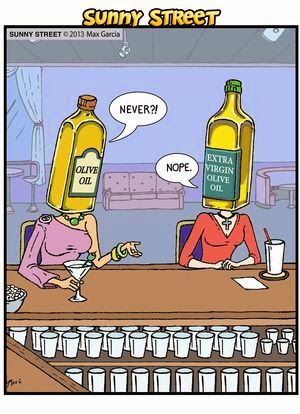 We have already mentioned the popularity of the Mediterranean diet, and as with anything that becomes a global phenomenon, there will inevitably be producers and retailers looking to profit from the trend. One of the main and most unfortunate victims of mass consumption is the much-loved olive oil, particularly extra virgin olive oil. In his book, Extra Virginity: The Sublime and Scandalous World of Olive Oil, which became a New York Times bestseller, author Tom Mueller manages both to write a love letter to traditional family olive oil producers making oil in small batches and to give a biting account of his findings on widespread global fraud in the olive oil trade, which threatens the entire industry. Olive oil has rarely been as compelling as it is in this book, which is recommended for anyone interested in where food comes from and the quality of what they eat.
It is therefore deeply concerning that supermarket shelves can contain deodorised, spoiled and heat-treated liquid fats under the appealing label 'Extra Virgin Olive Oil', full of the very free radicals that genuine olive oil is supposed to counter. In the book, the author speaks to Leonardo Marseglia, chief executive of a large oil conglomerate, who believes that only 2 percent of the world's olive oil can be considered extra virgin, 8 percent can be considered “good”, and around 9 percent “decent”.
What is particularly shocking is the claim that as much as 90 percent of olive oil on the market is classified as lampante, or lamp oil, and is not fit for human consumption unless it is refined. At best, this 'lampante olive oil' is made from rotten olives; at worst, it is olive oil mixed with anything from cheap soya or peanut oil (a frightening prospect for anyone with an allergy) to industrial rapeseed oil, which caused the deaths of more than a thousand people in an area of Spain north of Madrid in the 1980s. Genuine, good-quality, flavourful olive oil is much like wine: every harvest reflects the condition of the trees, the season and the surrounding environment – and you can taste all these characteristics in the oil, including its bitterness and pepperiness. The simple fact that what most of us regard as olive oil and consume every day tastes completely uniform shows the extraordinary extent to which these oils have been processed, deodorised and degraded.
THE SCANDAL IN ITALY
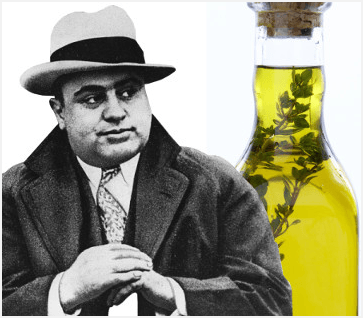 In 2015, seven Italian olive oil producers, including Bertolli, Sasso and Carapelli, were investigated over allegations that they had falsely labelled their olive oil as extra virgin. Prosecutors in Turin launched the investigation following an anonymous tip-off from a specialist journal, La Stampa reported at the time. Tests were carried out on 20 of the most popular brands of extra virgin olive oil – the highest grade available – sold in Italian supermarkets, and found that the labels on nine of them (50%!!!) falsely claimed that the oils were extra virgin. The other four producers suspected of commercial fraud were Coricelli, Santa Sabina, Prima Donna and Antica Badia. The companies were alleged to have breached strict rules governing the production of extra virgin olive oil, a process that is both expensive and time-consuming. Even so, despite the complex production methods, extra virgin olive oil is relatively easy to adulterate, making it extremely difficult for consumers to taste the difference.
Producers should carry out chemical tests before labelling and selling the finished product as extra virgin. In 2014, the Italian Ministry of Agriculture, Food and Forestry seized counterfeit olive oil worth EUR 10 million as part of a crackdown on food fraud. "We are following the investigation closely," Agriculture Minister Maurizio Martina said at the time. “We have been strengthening inspections for months, particularly in view of last year's poor harvest. It is important to protect both consumers and the thousands of honest olive oil producers.” Unfortunately, fraud continues, which is why we do not recommend Italian olive oils...
ACAIA EXTRA VIRGIN OLIVE OIL
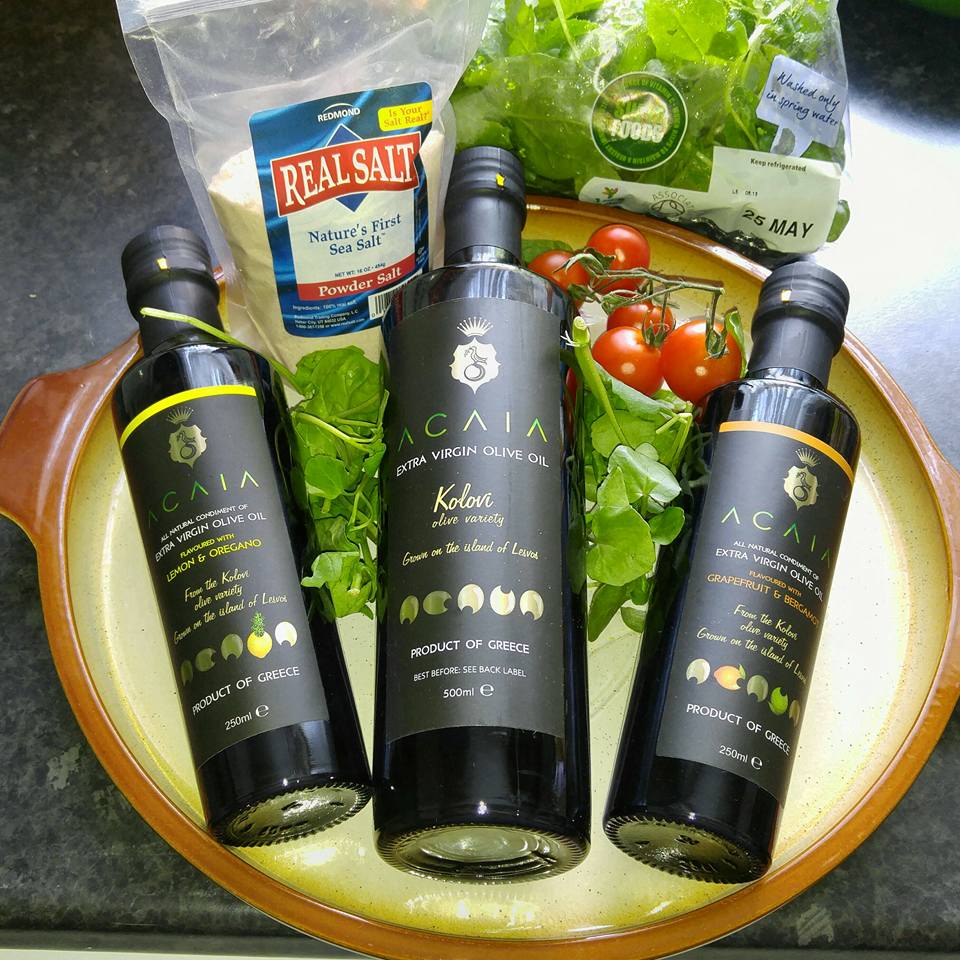 By now, you can probably see that finding honest producers of genuinely good, wholesome olive oil is not easy (and you are unlikely to find it in a supermarket) – personally, I cannot imagine life without it. One of my favourite dinners is rocket with tomatoes, cucumber, pepper and perhaps a little spring onion, tossed with Acaia oil and balsamic vinegar and seasoned with flavoured Real Salt. It really is delicious. I also like adding feta or grilled halloumi to the salad. I eat this salad all year round and almost every day – it is absolutely delicious and easy to prepare.
If you are interested in a more detailed study of this oil's composition and how it performed in laboratory tests – including whether consuming it has a positive effect on cholesterol levels – read this excellent article on the blog of one of our customers: www.puravia.cz
Acaia Oil comes from a small family farm on the island of Lesbos and is genuinely unique. Judges at international competitions around the world seem to agree, with Acaia regularly winning prestigious awards. Oil of this quality is difficult to find in shops – retailers often cite the higher price as a reason why the product would not sell, so we are pleased to be able to offer it online.