
Ceylon Kokonati Organic Green Banana Flour from Sri Lanka for gluten-free baking, cooking and thickening • high in fibre • neutral flavour for sweet and savoury recipes • 450 g
Ceylon Kokonati Organic Green Banana Flour is a finely milled, single-ingredient flour made from 100% unripe bananas, grown, processed and packed in Sri Lanka. Its mild, neutral flavour without an overt banana taste makes it remarkably versatile in both sweet and savoury recipes. Use it for baking, pancakes, porridge and smoothies, or as a simple way to thicken sauces.
With 12 g of fibre per 100 g, it is naturally high in fibre. It contains no added sugar, other flours, starches or fillers and is naturally gluten-free.
Why we chose Ceylon Kokonati for PraveBio.cz
Ceylon Kokonati draws on more than 100 years of family experience working with Sri Lankan agricultural ingredients. The company partners with smallholder farming communities and local processors in rural areas of Sri Lanka, where ingredients are processed and packed close to where they are grown.
For its certified organic products, the brand follows EU Organic and USDA NOP standards, with certification provided through Control Union. Selected products also carry the HEIRLOOM designation, recognising traditionally cultivated ingredients and the knowledge passed down through generations of local growers and producers.
What stood out to us was the brand’s traceable Sri Lankan provenance, straightforward ingredients, direct relationships with local producers and commitment to processing its ingredients in the country where they are harvested. PraveBio.cz / NUZBOZ s.r.o. is the exclusive distributor of Ceylon Kokonati in the Czech Republic and Slovakia, sourcing every product directly from the brand in its original packaging.


Organic Green Banana Flour from Sri Lanka
Ceylon Kokonati Organic Green Banana Flour is a single-ingredient fruit flour made from 100% unripe green bananas grown in Sri Lanka. The bananas are carefully sorted, washed, peeled, sliced, dried, finely milled and packed in their country of origin.
The pack carries the HEIRLOOM designation, which the brand uses to highlight the ingredient’s traditional Sri Lankan origins and its connection with local farming communities. It is not, however, the name of a specifically identified botanical cultivar; no such cultivar is listed in the manufacturer’s technical specification.
Unlike powder made from ripe yellow bananas, this flour is neither sweet nor strongly banana-flavoured. The ingredient itself may have a very delicate fruity note, but once used in a finished dish it behaves like a mild, neutral flour without the typical taste of banana. That makes it equally at home in sweet and savoury recipes.
The current technical specification declares 12 g of fibre per 100 g, meaning the product meets the conditions for the claim “high in fibre”. A separate laboratory analysis of a 2022 sample measured total fibre at 15.3 g/100 g. For the nutrition table, we use the more conservative figure from the manufacturer’s current specification.
The only ingredient is green banana flour, with no added sweeteners, preservatives, colours or other flours. The product has no added sugar; it contains only the sugars naturally present in bananas.
What the RAW label on the pack actually means: the manufacturer has confirmed that the term refers to the use of raw, unripe green bananas. It does not confirm drying below 45°C and is not a temperature-defined RAW certification. We therefore do not market this product as low-temperature-processed RAW flour. According to the specification, it can be used both uncooked and after cooking or baking.
Key features of green banana flour
100% green bananas
A single-ingredient flour with no added starches, cereal flours, sweeteners, flavourings or preservatives.
High in fibre
The manufacturer declares 12 g of fibre per 100 g; laboratory analysis of a 2022 sample measured 15.3 g/100 g.
Neutral flavour in recipes
No sweet banana aftertaste, so it will not overpower chocolate, spiced or savoury recipes.
Gluten-free and grain-free
Green bananas do not naturally contain gluten; no gluten was detected in the 2022 test sample at a reporting limit of 2 mg/100 g.
HEIRLOOM and single source
The brand uses the HEIRLOOM designation for ingredients linked to traditional cultivation and rural farming communities in Sri Lanka.
Processed and packed in Sri Lanka
We import the flour in the brand’s original packaging, prepared in the country of origin.
Why choose it as a gluten-free flour?
Green banana flour is more than simply another substitute for conventional flour. Its main strength lies in its combination of neutral flavour, high fibre content, grain-free origin and impressive ability to absorb liquid. In a recipe, it can therefore do several jobs at once: form part of the flour base, increase the fibre content or help thicken the mixture.
| Flour | What makes it different | When it works well | What to bear in mind |
|---|---|---|---|
| Green banana flour | Free from grains and nuts as ingredients, neutral in flavour, high in fibre and particularly effective at thickening. | Pancakes, brownies, biscuits, flatbreads, porridge, sauces, curries, smoothies and gluten-free flour blends. | It contains no gluten, so it cannot create the elastic structure needed for yeasted dough on its own. Add liquid gradually. |
| Almond flour | Higher in fat and protein, with a nutty flavour and a softer, denser finish. | Cakes, biscuits, macarons and recipes designed with a lower proportion of starch. | It is an allergen and cannot be swapped for banana flour in the same ratio. |
| Coconut flour | Highly absorbent, very high in fibre and distinctly coconut-flavoured. | Recipes developed specifically for coconut flour, often with a higher proportion of eggs or liquid. | Even a small amount can change the texture considerably; it is not normally substituted 1:1. |
| Oat flour | A mild cereal flour with a naturally sweet note and a different type of fibre. | Porridge, pancakes, biscuits and quick bakes. | For a gluten-free diet, it must be specifically labelled gluten-free; oats contain the protein avenin. |
| Rice flour | A light, neutral cereal flour commonly used as the base of gluten-free flour blends. | Cake bases, biscuits, breads and blends containing starches. | Used on its own, it can produce a drier or more crumbly result; it is usually combined with other flours and a binder. |
| Buckwheat flour | A naturally gluten-free pseudocereal with a more pronounced earthy flavour and more protein than banana flour. | Pancakes, bread, savoury baking and rustic recipes. | Its distinctive flavour will not suit every dessert; banana flour is far more understated. |
Who is this flour for?
For gluten-free and grain-free recipes
Ideal for anyone looking beyond rice, maize or oat flour and keen to work with a single-ingredient fruit flour.
For adding more fibre
The flour is high in fibre and can be added to both baked and no-cook recipes, depending on the texture you want.
For a neutral flavour
A good choice when you do not want a nutty, coconut, pulse-based or distinctly buckwheat flavour.
For vegan cooking
The only ingredient is dried green banana. The flour itself contains no animal-derived ingredients.
This is not a keto or low-carbohydrate flour. The manufacturer declares 75 g of carbohydrate per 100 g. Its key strengths are its high fibre content, suitability for gluten-free and grain-free recipes, neutral flavour and origin from unripe green bananas.
How to use green banana flour
Green banana flour is starchy, absorbs water well and contains no gluten. There is therefore no single substitution ratio that works across every recipe. The right amount depends on whether you are making pancakes, brownies, bread or a sauce, or simply adding it to a gluten-free flour blend.
The easiest place to start: replace around 15–25% of the flour blend in a familiar gluten-free recipe with green banana flour. Add the liquid gradually, then leave the batter or dough to rest for 5–10 minutes. In recipes developed specifically for green banana flour, it can also be used as the main or only flour in certain types of bake.
| What are you making? | How to start | What will improve the finished texture |
|---|---|---|
| Pancakes, drop scones and waffles | Use 20–40% green banana flour in a gluten-free blend, or follow a recipe developed specifically for 100% green banana flour. | Egg, or a flaxseed or chia binder, plenty of liquid and a short resting time. |
| Brownies, muffins and biscuits | Start with 20–35% alongside rice, oat, almond or buckwheat flour. A higher proportion can work in denser recipes. | Fat, egg or another binder, and careful baking to avoid drying them out. Green banana flour continues to thicken as it rests. |
| Cake bases and quick, unleavened bakes | Use approximately 15–30% of the blend; the remainder can be rice, oat, buckwheat or almond flour together with starch. | Psyllium, xanthan gum, egg, chia or flaxseed, depending on the recipe. |
| Bread and yeasted dough | Do not begin with a 100% substitution. Use approximately 10–20% in a recipe developed for gluten-free yeasted baking. | A blend of flours and starches, psyllium or xanthan gum, and accurately measured water. Without a binder, the bread will be crumbly. |
| Sauces, soups and curries | Start with 1–2 teaspoons per 250 ml of liquid. | First mix it with a small amount of cold water, then stir it into the dish. It thickens gradually. |
| Smoothies, yoghurt and porridge | Start with 1 tablespoon. | Mix thoroughly and add more liquid as needed; the flour will noticeably thicken your drink or porridge. |
| No-bake bases and energy balls | Add one spoonful at a time until you reach the desired firmness. | Coconut, seeds, nut butters, dates or other dried fruit. |
How to create your own gluten-free flour blend
In a gluten-free blend, green banana flour can provide both fibre and thickening power. For a lighter texture, it is often paired with a more neutral flour and a starch:
- For pancakes and drop scones: green banana flour + rice flour or gluten-free oat flour.
- For muffins and cake bases: green banana flour + rice flour + tapioca or potato starch.
- For denser desserts: green banana flour + almond flour.
- For rustic bakes: green banana flour + buckwheat flour + psyllium.
- For yeasted bread: use a smaller proportion of green banana flour within a broader blend of flours, starches and a binder.
If the batter or dough is too thick: do not add more flour immediately after mixing. Leave it to stand for a few minutes, then add liquid little by little. If the bake is crumbly: the recipe needs a more suitable binder or a combination with another flour or starch.
Green banana flour, ripe banana flour and plantain flour: what is the difference?
| Product type | Starting ingredient | Flavour and nutritional profile | Typical uses |
|---|---|---|---|
| Ceylon Kokonati Green Banana Flour | Peeled, unripe green bananas; not plantains. | Neutral in finished dishes, less sweet, high in fibre and rich in carbohydrate in the form of starch. | Sweet and savoury baking, pancakes, sauces, curries, porridge, smoothies and no-bake mixtures. |
| Ripe banana flour or powder | Ripe yellow bananas, in which some of the starch has converted into naturally occurring sugars during ripening. | Sweeter, more aromatic and closer to dried fruit; commonly used to add both flavour and sweetness. | Porridge, smoothies, desserts, fruit fillings and flavouring. |
| Plantain flour | Plantains, which are generally used in cooking more like a starchy vegetable. | Starchy and less sweet; the final composition depends on the variety, ripeness and whether the flesh or the whole fruit is used. | Flatbreads, savoury bakes, porridge, soups and traditional cooked dishes. |
As bananas ripen, some of their starch gradually converts into simple sugars. Flour made from ripe bananas is therefore sweeter and more aromatic, while flour made from unripe green bananas remains more neutral and starchy. The precise amounts of sugars, fibre and resistant starch will always vary according to the variety, stage of ripeness and processing method.
Resistant starch and blood sugar: what can be claimed for this product
Unripe green bananas are recognised in scientific literature as a potential source of resistant starch. Its level can, however, be significantly affected by the variety, ripeness, drying temperature, milling, preparation method and subsequent cooking.
We do not have a laboratory measurement of resistant starch or a glycaemic index for this particular flour. We therefore cannot state a precise resistant starch content, describe the flour as low glycaemic or promise a smaller rise in blood sugar. The authorised European claim for resistant starch may be used only for a food in which resistant starch accounts for at least 14% of total starch; we do not have evidence that this product meets that condition.
Is this flour suitable for people with diabetes? It cannot be described as “flour for diabetics”. The manufacturer declares 75 g of carbohydrate per 100 g, equivalent to 18.75 g of carbohydrate in an indicative 25 g serving. Suitability depends on the quantity used, the complete recipe, the other components of the meal, treatment and individual glycaemic response. If you have diabetes, count the carbohydrate within your meal plan and discuss an appropriate portion with a registered dietitian or diabetes specialist.
Research into green banana biomass, native banana starch and other green banana flours has produced interesting findings, but these cannot automatically be applied to this particular product. The substantiated product benefit is its high total fibre content.
What happens during cooking: when starch is cooked or baked, it gelatinises and some naturally resistant RS2 starch may become more digestible. The outcome depends on the amount of water, temperature, cooking time and subsequent cooling. There is therefore no single universal temperature above which all resistant starch disappears.
Independent laboratory analyses of the product
The manufacturer has supplied two laboratory reports for a sample of organic green banana flour from 2022. These are analyses of a specific product sample, not certificates covering every current batch.
| Laboratory and report | Parameter tested | Result | Note |
|---|---|---|---|
| Bureau Veritas Consumer Products Services Lanka Report No. (7422)290-0068, 19 December 2022 |
Total fibre | 15.3 g/100 g | AOAC 991.43 method. The report states that this particular test was not included within the scope of the SLAB-accredited ISO 17025:2017 accreditation. |
| Industrial Technology Institute, Colombo Report No. SS 2213557, tested 16–28 November 2022 |
Gluten | Not detected | Detection limit stated in the report: 2 mg/100 g. |
| Industrial Technology Institute, Colombo | Fat and saturates | Not detected | Detection limit: 0.01%. |
Some figures in the 2022 laboratory results differ from the manufacturer’s current declaration. This may reflect the natural variability of an agricultural ingredient, a different sample or the analytical method used. We therefore present the mandatory nutrition information in line with the current specification and product label.
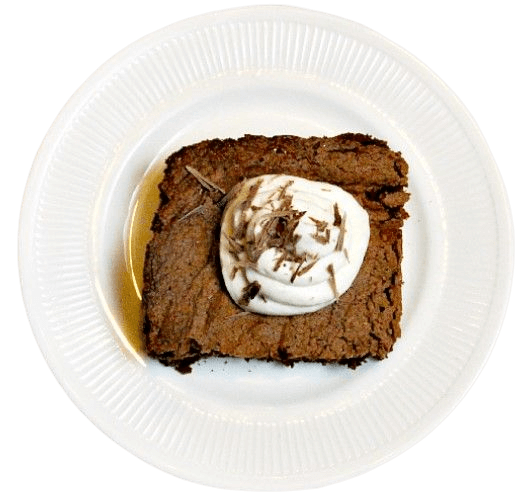
Recipe: gluten-free brownies made with green banana flour
Ingredients
- ¾ cup honey or coconut syrup,
- ¾ cup coconut oil,
- 2 eggs,
- 1 cup green banana flour,
- ¾ cup cocoa powder.
Method
- Preheat the oven to 180°C.
- Mix the honey or syrup with the coconut oil.
- In a separate bowl, combine the green banana flour and cocoa powder.
- Stir the dry mixture into the wet ingredients, then add the eggs gradually.
- Transfer the batter to a greased tin measuring approximately 20 × 30 cm.
- Bake for 20–30 minutes, checking with a skewer after 20 minutes.
- Allow the brownies to cool before slicing.
Why choose Ceylon Kokonati flour

Ceylon Kokonati is a family-owned New Zealand brand whose owners are originally from Sri Lanka. Drawing on generations of family experience and long-standing relationships with local growers and processors, they source Sri Lankan ingredients directly in their country of origin.
The green bananas are grown, processed and packed in Sri Lanka. The flour therefore remains in the brand’s original retail packaging from the place of production right through to the customer. PraveBio.cz is the exclusive distributor of Ceylon Kokonati in the Czech Republic and Slovakia and sources the products directly from the brand.
The single source wording on the pack indicates a clearly defined Sri Lankan origin. It does not necessarily mean that the bananas come from one individual farm. According to the brand’s materials, it works with collectives of smallholder farmers.
HEIRLOOM on the label refers to the ingredient’s traditional agricultural roots and the preservation of growing and processing knowledge passed down through generations. As the technical documentation does not identify a specific cultivar, we do not present this designation as botanical certification of a particular variety.
Most products carry EU Organic and USDA Organic certification.

Sri Lankan origin
The bananas are grown, processed and packed in their country of origin.
HEIRLOOM tradition
The designation on the pack refers to traditional cultivation and agricultural knowledge passed down through generations within local communities.
One clearly declared ingredient
Made from 100% green bananas, with no added starches or other flours.
Packed at source
The flour remains in its original Ceylon Kokonati packaging from processing in Sri Lanka through to sale to the customer.
Supporting rural communities
The brand works with collectives of smallholder growers and processors in rural areas of Sri Lanka.
Exclusive distribution in the Czech Republic and Slovakia
PraveBio.cz is the exclusive distributor of Ceylon Kokonati in the Czech Republic and Slovakia. We source the product directly from the brand in its original retail packaging.
Ingredients, nutrition and product information
Full ingredients
100% flour made from dried, unripe green bananas from organic farming.
No added sugar. Contains naturally occurring sugars.
Please note: Packed in a facility that also handles coconut.
Nutrition information
| Typical values | Per 100 g | Per 25 g serving |
|---|---|---|
| Energy | 1,412 kJ / 338 kcal | 353 kJ / 84 kcal |
| Fat | 0 g | 0 g |
| – of which saturates | 0 g | 0 g |
| Carbohydrate | 75 g | 18.75 g |
| – of which sugars | 20 g | 5 g |
| Fibre | 12 g | 3 g |
| Protein | 3.2 g | 0.8 g |
| Salt | 0.05 g | 0.01 g |
The nutrition information is based on the manufacturer’s current technical specification. The salt value has been calculated from the declared sodium content. The pack contains approximately 18 servings of 25 g.
Product details
| Product type | Single-ingredient fruit flour |
|---|---|
| Ingredient | Unripe green bananas, not plantains |
| Pack claims | HEIRLOOM, organic, single ingredient, single source, GMO free, vegan, RAW* |
| Country of origin and manufacture | Sri Lanka (Ceylon) |
| Organic certification shown on the pack | EU Organic and USDA Organic |
| Allergen statement on the label | Packed in a facility that also handles coconut. |
| Net weight | 450 g |
| Number of servings | Approximately 18 servings of 25 g |
| Suitable for | Vegan, gluten-free and grain-free recipes |
| Packaging | Resealable pouch, packed in Sri Lanka |
| Shelf life | 24 months from the date of manufacture |
*According to the manufacturer’s explanation, the RAW wording on the pack refers to the use of raw, unripe bananas, not to confirmed drying below 45°C.
Storage
Store in the original, tightly sealed pack in a cool, dry place away from direct sunlight. Protect from moisture. After opening, always reseal the pouch carefully and use a clean, dry spoon.
Read more
- Fruit Flours II – Green Banana Flour
- Fruit Flours I – Breadfruit Flour
- A Gluten-Free Diet: Not Just for People with Coeliac Disease?
FAQ
Additional parameters
| Category: | Flour |
|---|---|
| EAN: | 4796010580804 |
| Vhodné pro: | Keto-Paleo-GMO Free-Vegan-Bezlepková dieta-LowCarb |
| Výrobce: | Ceylon Kokonati |
| Země původu: | Srí Lanka |
| Proč koupit: | Jediná ingredience, balena u zdroje, nikdy žádné příměsi, single-origin, GMO-free a vegan. |
Green Banana and Plantains on Ketogenic Diet Explained By Dr. Berg
Green Banana Flour Bread recipe
Green Banana Flour Pancakes recipe
Green Banana Flour Tortilla Wraps recipe
Product rating
Leave a rating
List of ratings
 Andrea Š.
 pravebio.cz
(Administrator)
pravebio.cz
(Administrator)
 Lucie
Jana Č.
(Administrator)
Lucie
Jana Č.
(Administrator)
Discussion
Be the first who will post an article to this item!
The Ceilon Kokonati brand was established in 2013. In its range you can find a variety of high quality and affordable products made from sustainably produced coconuts, spices and tropical fruits.
The brand's name refers to the country that its founders consider home, Ceylon, Sri Lanka, where the coconuts for the coconut line of products are grown and processed. Ceylon, a British Crown Colony from 1815-1948, is now known as Sri Lanka, but the founders of the brand prefer to call it Ceylon because it definitely sounds more exotic and "pure Ceylon" is a brand in itself, reminiscent of the fresh unique essence of pure Ceylon tea. "Kokonati" on the other hand is Maori for coconut, so absolutely the most appropriate brand name for the most coconutty goodness ever.
The Ceilon Kokonati brand is run by a married couple. The female founding half is Mrs. Bûmika, which means Lady of the Earth in Sanskrit. Her great-grandfather was one of the pioneers of coconut oil pressing in Ceylon, making her the fourth generation of coconut oil presser. The male founding half, Mr. Mosqi, in turn, is originally a pure Ceylon tea grower.
Ceylon Kokonati is wholly owned and operated in New Zealand. Loose products from Kokonati uses several ethical brands that produce clean, organic food and beauty products. By selling Kokonati products, rural communities and traditional livelihoods are supported. All their products are ethically harvested and there is almost no waste in their production. Each part of the coconut is used in the production of a different product. Kokonati products are single-ingredient, packaged directly at the source, never mixed, single-species, non-GMO and vegan.
With a passion for organic, regenerative farming, sustainability and collective partnerships, Kokonati products come only from small farms and mills in rural villages in Sri Lanka. Each Kokonati product is produced in a specialized mill that produces only that type of product. Quality is therefore the best it can be, and every step of production is backed by the experience and knowledge of many generations. Ceylon is blessed with an abundance of healthy, exotic fruits, nuts, herbs and spices.
Ceylon Kokonati follows the principles of balanced living - live and let live.
They're trying to keep everything in even better condition than when they found it..


