
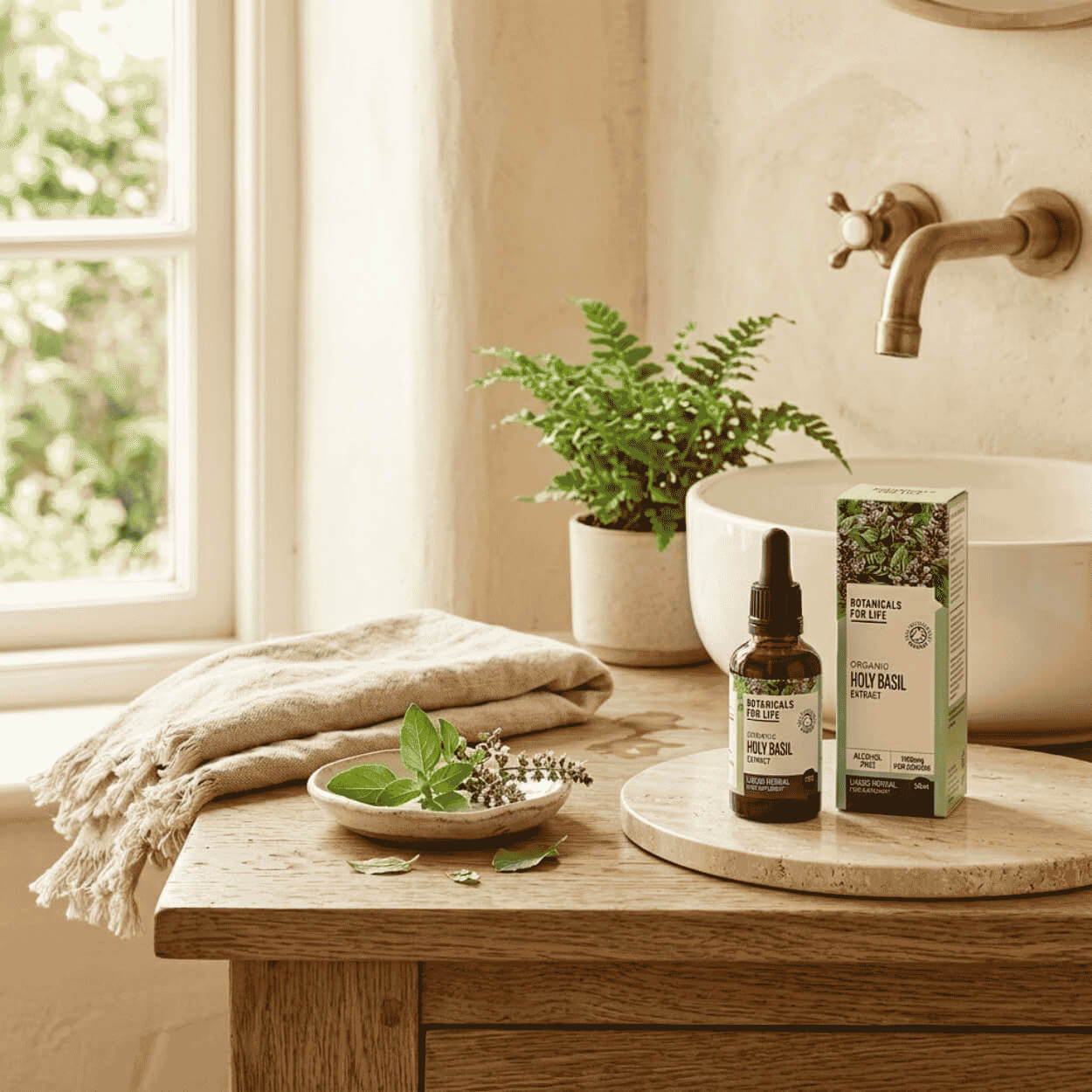
Holy Basil Tulsi (Ocimum tenuiflorum) – organic glycerine herbal extract dietary supplement • organic tulsi • liquid extract • alcohol-free formula • 1:1 ratio • dropper dosing • vegan formula • 50 ml
Holy basil (tulsi) is one of the traditional aromatic plants used in Ayurveda and comes in various herbal forms. It contains no caffeine and can therefore be chosen as a plant-based supplement without this stimulant. The aerial parts naturally contain compounds including eugenol, ursolic acid, rosmarinic acid and ocimumosides.
Botanicals For Life processes certified organic holy basil into an alcohol-free 1 : 1 extract: 1 ml (approx. 20 drops) corresponds to 1 000 mg of dried aerial parts, approximately 5 000 mg of fresh plant material. The base consists of organic coconut-derived vegetable glycerin and purified water; a 50ml bottle provides approximately 50 servings.
Why we added Botanicals For Life to the PraveBio.cz range
Botanicals For Life is a British brand of liquid herbal extracts. It works with herbs from certified organic and agroecological farms in Europe and India; selected species are also sustainably wild harvested in line with FairWild (an international certification and standard for the sustainable collection of wild plants).
The extracts are produced through the following process: the dried herb is extracted, the alcohol is then removed by rotary evaporation, the extract is freeze-dried and redissolved in organic coconut glycerin and purified water. Compared with conventional alcohol tinctures, these extracts have a milder taste and a different alcohol-free base. The finished product retains the declared extraction ratio of 1 : 1.
The brand places emphasis on full transparency: the origin of the herbs, extraction method and context of use are stated directly on the packaging, including a QR code with further information. We are the exclusive importer and distributor of the brand throughout Europe.


Holy Basil (Tulsi) – Organic Alcohol-Free Herbal Extract
Holy basil, also known as tulsi, is an aromatic herb with a long history of use in Ayurveda. Botanicals For Life uses its certified organic aerial parts and processes them into a liquid extract without caffeine or other declared stimulants. Within the range of herbal extracts, this is a single-herb product with the part of the plant used, ingredients and amount of raw material per serving clearly stated.
The aerial parts of holy basil naturally contain eugenol, ursolic acid, rosmarinic acid and ocimumosides. These are characteristic plant compounds that help describe the chemical profile of the raw material, but their presence alone does not guarantee a particular health effect.
The extract has a 1 : 1 ratio. One 1 ml serving, approximately 20 drops, corresponds to 1 000 mg of dried holy basil aerial parts, representing approximately 5 000 mg of fresh plant material. This figure allows a more precise comparison with 1 : 5 tinctures, herbal teas or capsules, as the amount of dried raw material per serving is clearly stated.
The finished extract is alcohol-free. Its base consists of vegetable glycerin from organic coconut and purified water, avoiding the pronounced alcoholic taste of conventional tinctures. The product is vegan, also appropriate for a vegetarian diet, the raw material comes from organic production and processing takes place in the United Kingdom.
When considering this product, look at the exact botanical raw material, extraction ratio, amount per serving and recommended use on the label. This extract is not standardised to a specific amount of ursolic acid or any other individual compound; the declared parameter is the 1 : 1 ratio. Use only the recommended amount and pay attention to your own tolerance.
The recommended serving is 1 ml (approx. 20 drops). A 50 ml bottle provides approximately 50 servings, or around 50 days at one serving daily. Further herbal and nutritional options can be found in the food supplements category and the overview of herbal extracts and functional mushrooms.
Read more on the topic
Pravé Bio recommends adding:
- Magnesium Bisglycinate – L Cell
A standalone mineral supplement in capsules. Information on the amount of magnesium, recommended dosage and conditions of use can be found on the page and label of the individual product. - Vitamin D3 Vitashine Spray – Vegetology
Plant-based vitamin D3 from lichen in a practical spray format. When using it, take into account your total vitamin D intake from other supplements and follow the dosage on the label. - Fermented Synbiotics – Regenesis
A different type of supplement based on fermented sprouted soya beans, artichoke and chicory; suited to customers who, alongside a herbal extract, also pay attention to their diet and fermented foods.
Did you know?
- Extraction ratio and standardisation are not the same: the 1 : 1 ratio describes the relationship between the amount of dried plant material used and the finished liquid extract. Standardisation, by contrast, states a defined amount of a specific measured compound. This product declares an extraction ratio rather than percentage standardisation of an individual compound.
- Why the format matters: studies may use standardised extracts, whereas the main declared parameter here is the 1 : 1 ratio. Extraction ratio and standardisation are not the same; when comparing scientific data, it is therefore important to consider the specific raw material, dose and processing method used.
- Chemical profile: characteristic compounds in holy basil include eugenol, ursolic acid, rosmarinic acid and ocimumosides. Listing them describes the plant material rather than promising a particular outcome from use.
Key benefits of holy basil extract
- Organic holy basil – certified organic aerial parts of the plant are used rather than a blend of several different herbs.
- 1 : 1 ratio – 1 ml provides the equivalent of 1 000 mg of dried holy basil, approximately 5 000 mg of fresh plant material. The concentration is therefore straightforward to read and compare.
- Alcohol-free – the finished extract is carried in coconut-derived vegetable glycerin and purified water, which may suit people who prefer not to use alcohol tinctures.
- No declared caffeine – neither caffeine nor another stimulant is listed in the stated ingredients.
- Naturally occurring plant compounds – the aerial parts contain eugenol, ursolic acid, rosmarinic acid and ocimumosides.
- Clear difference from a 1 : 5 tincture – at a 1 : 1 ratio, 1 ml corresponds to one gram of dried raw material; at a 1 : 5 ratio, the same volume corresponds to a lower equivalent of dried plant material. The ratio itself, however, does not indicate standardisation of specific compounds.
- Vegan formulation – free from animal-derived ingredients and appropriate for vegan and vegetarian diets.
- Practical drop-by-drop dosing – 1 ml is approximately 20 drops, making it easy to measure.
- Approximately 50 servings – at one 1ml serving, a 50ml bottle lasts approximately 50 days.
- Transparent specifications – the label states the part of the plant used, extraction ratio, amount of dried raw material per serving, liquid base and recommended dosage.
How to choose a product from the Botanicals For Life range
When choosing a herbal extract, consider the exact botanical name, the part of the plant used, extraction ratio or standardisation, amount per serving and recommended use on the label. Different herbs, and even different parts of the same plant, are not automatically interchangeable.
Astragalus extract is a standalone single-herb product. Astragalus, also known as Huang Qi, has a history of use in traditional Chinese medicine; this traditional context does not in itself determine the properties of a specific food supplement. When choosing, refer to the information on the label of the individual product.
For other extracts in the range, it is also useful to compare the identity of the raw material, the part of the plant used, concentration, carrier and manufacturer's instructions:
- Echinacea is a well-known herb in European and North American traditions. For a particular product, check the echinacea species, part of the plant used and recommended amount.
- Andrographis is a distinctly bitter herb known from Ayurvedic and Chinese traditions. Products may differ in the part of the plant used, extraction ratio and dosage.
- Lapacho (pau d’arco) comes from plant material of South American origin. When comparing products, check the exact botanical name, part used and processing method.
- Black walnut and wormwood are two different plant materials. Always consider the exact species and part of the plant alongside the common herb name, and follow the warnings and recommended use for the specific product.
- Barberry (berberis) includes several botanical species that should not be regarded as interchangeable. The Latin name, part of the plant used and declared amount per serving are key when choosing a product.
- Bearberry (uva ursi) is a traditional European herbal material. Before use, check the part of the plant, extract concentration, recommended amount and all warnings on the label.
- Mullein refers to several species within the Verbascum genus. When comparing products, check the botanical species, part used and processing format.
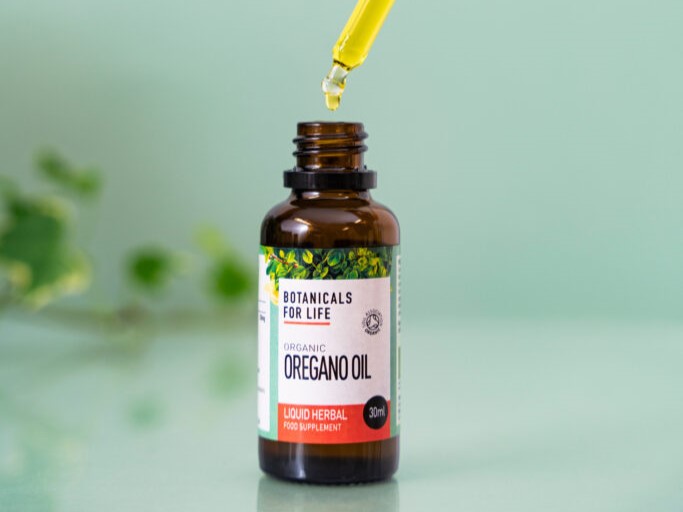
- Oregano oil is a concentrated aromatic plant product. Directions and recommended amounts can vary according to concentration and formulation, so follow the label.
Why Choose Botanicals For Life
Botanicals For Life is a British brand from the same group as Mushrooms For Life. Distribution is handled by Living Planet Distribution (LPD), a company founded in 2016 by Graham Botfield and Ben Shouler. LPD also includes the brands Planet Paleo, Living Nutrition and Cardio Smile.
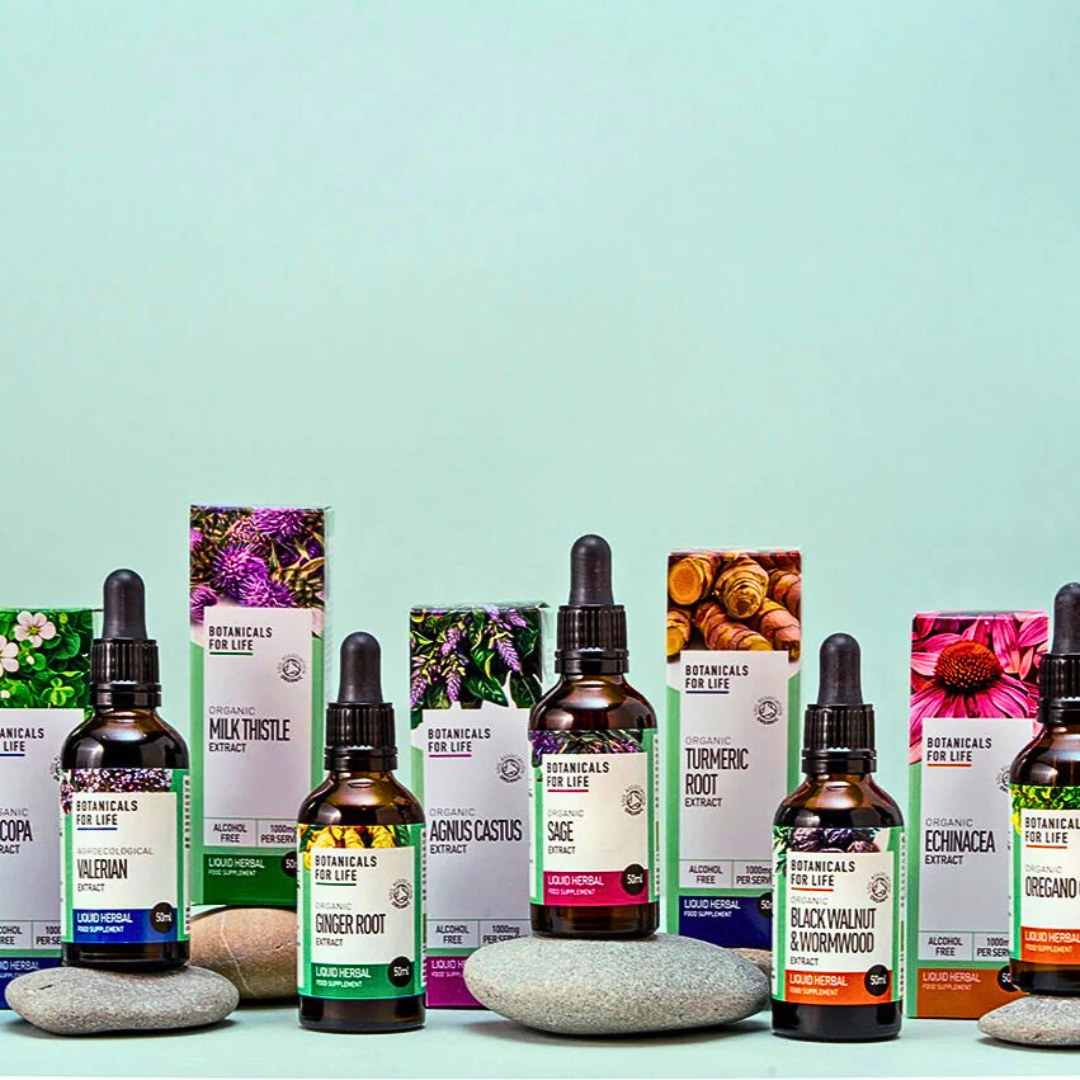
With herbal extracts, the plant species is only part of the picture; how it is grown and harvested also matters. Botanicals For Life works with herbs from organic farming (certified Soil Association Organic), agroecological cultivation and wild collection (wild crafted). Where the FairWild standard applies to a particular raw material, this is stated on the label.
Extract production: an extract is prepared from the dried plant, followed by evaporation, freeze-drying and conversion back into liquid form. The finished extract is alcohol-free. Its base consists of vegetable glycerin from organic coconut and purified water. The liquid format allows precise dosing by the drop.
The label provides information about the origin of the raw materials, processing method and recommended use. The packaging also includes QR codes with further information, including warnings about contraindications.
Why we recommend this brand: Each extract clearly states the key details: origin of the raw material, cultivation and production methods, and any relevant certifications.
This means the choice can be based on documented information rather than simply the name of the herb. This level of transparency is particularly relevant in the field of herbal food supplements.

Origin of Raw Materials
Herbs come from organic farming, agroecological cultivation or wild collection (wild crafted) – depending on the individual plant. The type of origin is stated on the label. Many extracts on the market do not provide this information.
Independent Quality Certifications
Selected products carry Soil Association Organic certification. Some wild-collected herbs also carry the FairWild standard.
Alcohol-Free
The finished extract is alcohol-free. Its base consists of vegetable glycerin from organic coconut and purified water. Compared with conventional alcohol tinctures, the resulting extract has a milder, naturally sweet taste profile.
Transparent Information
The label provides information on the origin of the raw materials, processing and recommended use. Further information, including warnings about contraindications, is available via QR codes.
Ingredients
Organic coconut-derived vegetable glycerin, purified water, organic holy basil aerial parts extract.
1 ml (approx. 20 drops): 1 000 mg of holy basil extract at a 1 : 1 ratio, prepared from 1 000 mg of dried aerial parts, approximately equivalent to 5 000 mg of fresh plant material. Pack contains 50 ml / approximately 50 servings.
Food supplement. Not a substitute for a varied diet. Do not exceed the recommended daily dosage. Keep out of reach of kids.
Ingredient Breakdown and Their Roles
Holy Basil (Tulsi)
What it is: An aromatic plant traditionally valued in Ayurveda. Certified organic aerial parts of the plant are used rather than a single isolated plant metabolite.
Function: The aerial parts naturally contain eugenol, ursolic acid, rosmarinic acid and ocimumosides. The extract is prepared at a 1 : 1 ratio, so 1 ml corresponds to 1 000 mg of dried plant material.
Benefits: This is a single-herb supplement with no declared caffeine. The label states the part of the plant, amount of raw material per serving, liquid base and recommended dosage.Coconut-Derived Vegetable Glycerin
What it is: Organic vegetable glycerin derived from coconut material and used as a carrier in alcohol-free herbal extracts.
Function: It keeps the extract in liquid form and allows convenient dosing by the drop without an alcohol base.
Benefits: It has a naturally sweet taste profile, so the finished extract tends to taste milder than a conventional alcohol tincture.Purified Water
What it is: Water used as part of the liquid base of the extract.
Function: Together with coconut glycerin, it forms the carrier medium for the alcohol-free liquid format.
Benefits: It allows for a simple formulation without the need for alcohol in the finished product.
Other Ingredients
No other ingredients are listed in the declared formulation.
Directions
One serving is 1 ml (approx. 20 drops). Measure it with the dropper and take it directly or mix it into a small amount of water, according to preference.
At one 1ml serving daily, a 50ml bottle provides approximately 50 servings. Use only the amount stated on the packaging.
Warnings
- Food supplement. Not a substitute for a varied and balanced diet or a healthy lifestyle.
- Do not exceed the recommended daily dosage. Keep out of reach of kids.
- During pregnancy or breastfeeding, consult a doctor or pharmacist before use.
- If you regularly take medicines or have a long-term health condition, check that the combination is appropriate with a doctor or pharmacist.
- Stop use if you experience an adverse reaction.
FAQ
What is holy basil, or tulsi?
Holy basil is an aromatic plant with a long history of use in Ayurveda. In English-language materials, it is commonly referred to as holy basil or tulsi. Botanicals For Life uses its aerial parts.

Who is holy basil extract for?
The product is for adults who prefer a single-herb supplement without alcohol and with no declared caffeine. Before use, read the ingredients, recommended amount and warnings on the label.
What does a 1 : 1 extraction ratio mean?
The 1 : 1 ratio means that 1 ml of the finished extract corresponds to 1 000 mg of dried plant material. It is a production figure describing the relationship between the amount of dried herb and the finished liquid extract.
How much holy basil is in one serving?
One 1 ml serving, approximately 20 drops, provides the equivalent of 1 000 mg of dried aerial parts. This amount is approximately equivalent to 5 000 mg of fresh plant material.
How long does a 50ml bottle last?
At one 1ml serving, the bottle provides approximately 50 servings. At one serving daily, this works out at approximately 50 days.
How should the product be taken?
One recommended serving is 1 ml, approximately 20 drops. Take it directly or mix it into a small amount of water. Always follow the current label and do not exceed the recommended daily amount.
Does the extract need to be taken at a particular time of day?
The available product specification does not require a particular time of day. Choose a time that suits your taste preferences and usual routine, and keep to the recommended amount stated on the label.
Does this extract contain alcohol?
The finished extract is declared alcohol-free. Its liquid base consists of organic coconut-derived vegetable glycerin and purified water.
Is an alcohol-free extract weaker than an alcohol tincture?
The absence of alcohol in the finished carrier does not in itself determine concentration. The extraction ratio and amount of dried raw material per serving are among the relevant points for comparison. Here, the ratio is 1 : 1, so 1 ml corresponds to one gram of dried herb.
How does a 1 : 1 extract differ from a 1 : 5 tincture?
At a 1 : 1 ratio, 1 ml of finished extract represents the equivalent of 1 g of dried plant material. At a 1 : 5 ratio, 1 ml represents approximately one fifth of this equivalent. The ratio does not indicate how much of a specific compound, such as ursolic acid, is present; that would require standardisation.
How does this extract differ from holy basil capsules?
The liquid format allows the serving to be measured with a dropper and does not require swallowing capsules. When comparing products, also check whether capsules contain plain powder, a standardised extract or another type of extract. Some competing capsules, for example, are standardised to a specific percentage of ursolic acid, whereas the main declared parameter here is the 1 : 1 ratio.
How does the liquid extract differ from tulsi tea?
With tea, the strength of the infusion depends on the amount of herb, water temperature and steeping time. With this liquid extract, the amount of dried raw material per 1 ml is precisely defined by the 1 : 1 ratio. Tea, by contrast, offers a different taste experience and a larger volume of liquid.
Is the extract standardised for ursolic acid?
The product specification does not state a specific percentage standardisation for ursolic acid or any other individual compound. The declared parameter is the 1 : 1 extraction ratio. Standardisation and extraction ratio are two different figures.
Which compounds occur naturally in holy basil?
Listed characteristic compounds include eugenol, ursolic acid, rosmarinic acid and ocimumosides. Their presence describes the chemical profile of the plant but does not in itself guarantee a particular health outcome.
Why are the aerial parts of the plant used?
The aerial parts of holy basil are the declared plant material used in this extract. When comparing different products, check whether they use the leaves, the whole aerial part, seeds or another part of the plant, as these are not interchangeable raw materials.
What is the botanical name of holy basil?
Holy basil is known by the botanical name Ocimum sanctum; the synonym Ocimum tenuiflorum is also used in scientific sources. Common names include tulsi and holy basil.
Does tulsi contain caffeine?
Holy basil is not a source of caffeine in the way coffee or tea is, and caffeine is not listed in the declared ingredients of this product. This may be useful for customers who do not want to increase their daily intake of stimulants.
Is it better to take tulsi in the morning or evening?
The available product specification does not require a particular time of day. Choose a time that fits your usual routine and allows you to keep to the recommended amount. The current instructions on the label always take priority.
Can the drops be mixed with water?
Yes, the liquid serving can be added to a small amount of water for easier use. The glycerin base has a naturally milder and slightly sweet taste profile compared with alcohol tinctures.
Is the extract suitable for vegans?
Yes. The product is described as suitable for vegan and vegetarian diets, and no animal-derived ingredients are listed in the declared formulation.
Is the holy basil in this product organic?
Yes. Both the holy basil and coconut-derived vegetable glycerin are described as certified organic ingredients. This is therefore more specific than simply describing the plant as a natural ingredient.
Where is the extract made?
The finished extract is described as made in the United Kingdom. This is also one of the details that distinguishes the product from anonymous herbal tinctures without clearly stated brand provenance.
How does Botanicals For Life differ from a conventional tulsi tincture?
The main difference is the combination of certified organic raw material, a 1 : 1 ratio, a clearly stated plant part, an alcohol-free coconut glycerin base and a vegan formulation. When comparing it with a conventional tincture, consider the same five parameters rather than only bottle size or price.
Is a 1 : 1 ratio automatically better than a standardised extract in a capsule?
No. They are two different ways of describing a product. A 1 : 1 ratio describes the relationship between the plant material used and the liquid extract. Standardisation, by contrast, states the amount of a specific measured compound. The relevant choice depends on which figure matters more to you and whether you prefer drops or capsules.
Can this product be compared with standardised extracts?
Only to a limited extent. This product declares a 1 : 1 ratio, whereas standardised extracts state a defined amount of a specific measured compound. Comparisons therefore need to consider the raw material, part used, dose and processing method.
Is this product a medicine?
No. It is a food supplement, not a medicinal product. It is not a substitute for a varied and balanced diet or a healthy lifestyle, and the recommended daily amount should not be exceeded.
Can holy basil be combined with magnesium?
These are different types of supplements. When combining them, follow the recommended amounts for both products and take into account your total magnesium intake from other supplements. If you take medicines or have a health condition, check that the combination is appropriate with a doctor or pharmacist.
Can tulsi be combined with vitamin D?
Vitamin D and holy basil are quite different in nature. With vitamin D, total daily intake from food, supplements and, where relevant, laboratory values should be considered. When combining them, follow the dosage for both products and check that you are not taking vitamin D from several products at the same time.
Can holy basil interact with medicines?
Interactions cannot generally be ruled out with herbal supplements. If you regularly take medicines, particularly over the long term, check compatibility with a doctor or pharmacist before using the herbal extract at the same time.
Is tulsi suitable during pregnancy and breastfeeding?
The available information does not provide sufficient evidence to recommend independent use during pregnancy or breastfeeding without professional advice. During these periods, discuss the use of holy basil with a doctor or pharmacist in advance.
Additional parameters
| Category: | Bioactive herbal extracts |
|---|---|
| EAN: | 658556116449 |
| Manufactured by: | Living Planet Distribution Unit 1 Riverside Bellbrook Business Park Uckfield, TN22 1QQ |
| Country of origin: | Great Britain |
| Vhodné pro: | Vegan-Organic certification |
| Volume: | 50 ml |
Product rating
Be the first who will post an article to this item!
Discussion
Be the first who will post an article to this item!

Botanicals For Life was created in Britain by the team behind the successful brand Mushrooms For Life and is led by experienced naturopath Ben Shouler. The company specialises in premium herbal food supplements – organically or agro-ecologically grown plants are processed using modern extraction methods to ensure high bioavailability of active compounds.
Its mission is to make high-quality natural extracts accessible to a wider audience while at the same time protecting the health of the planet; it therefore focuses on sustainable sourcing, production without synthetic additives and full “Made in UK” manufacturing. Each product supports the vitality, immunity and hormonal balance of modern life, while reflecting the brand’s commitment to transparent quality and ethical business practices.
Renowned herbal supplements thanks to:
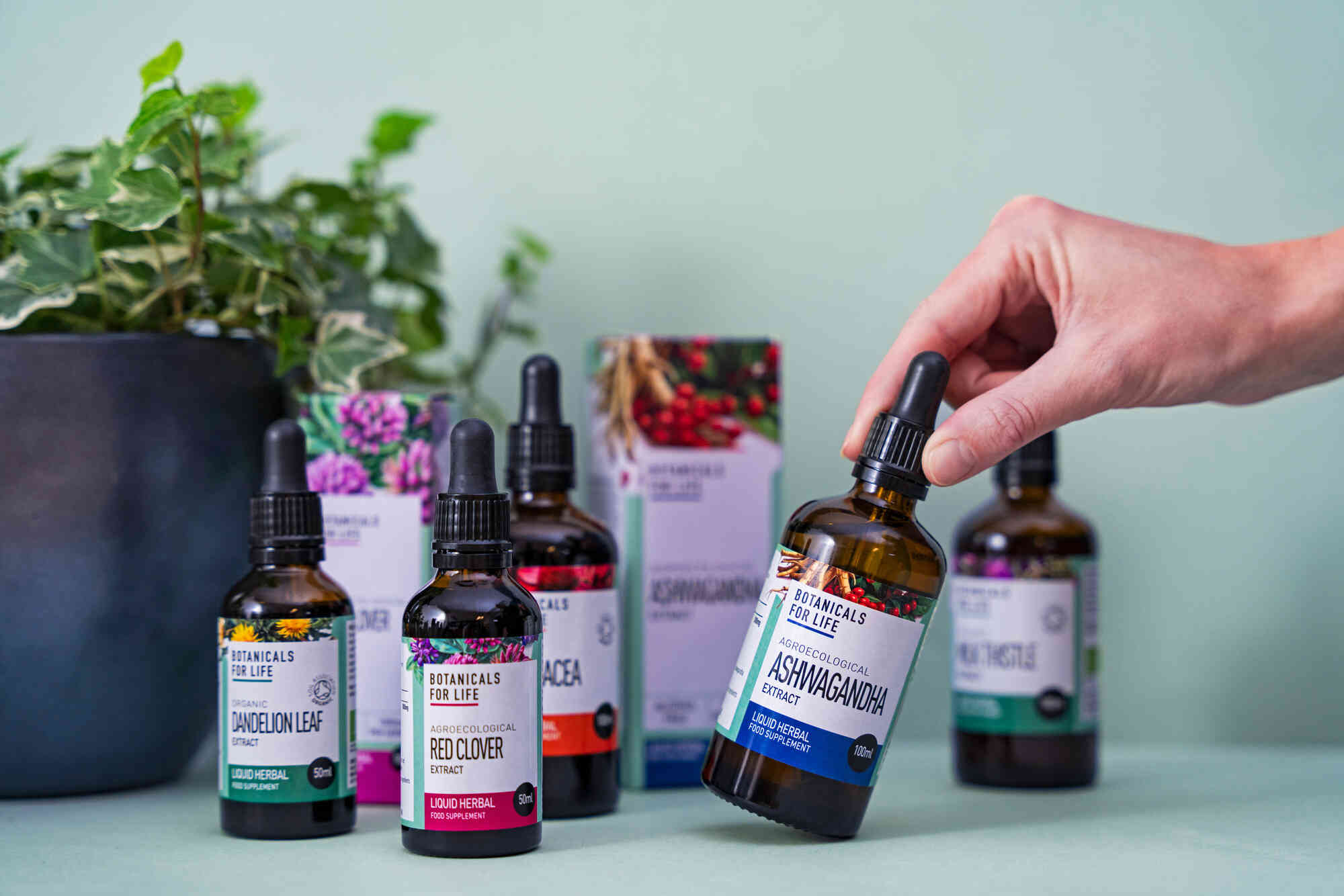
- Maximum efficacy – Botanicals For Life uses advanced extraction methods that ensure high bioavailability of active compounds.
- Ecological origin – All herbs come from certified organic farms without pesticides or synthetic fertilisers.
- Transparent production – The products are made in the United Kingdom under strict quality control and full traceability.
- Sustainability – The brand opts for responsible sourcing and eco-friendly packaging to minimise its impact on the planet.
- Expert formulation – All formulas are created by naturopath Ben Shouler and a team of specialists with many years of experience in botanical medicine.

Adaptogenic extracts
Immune support
Women’s hormonal balance
Support for emotional wellbeing
Who is behind the Botanicals For Life brand
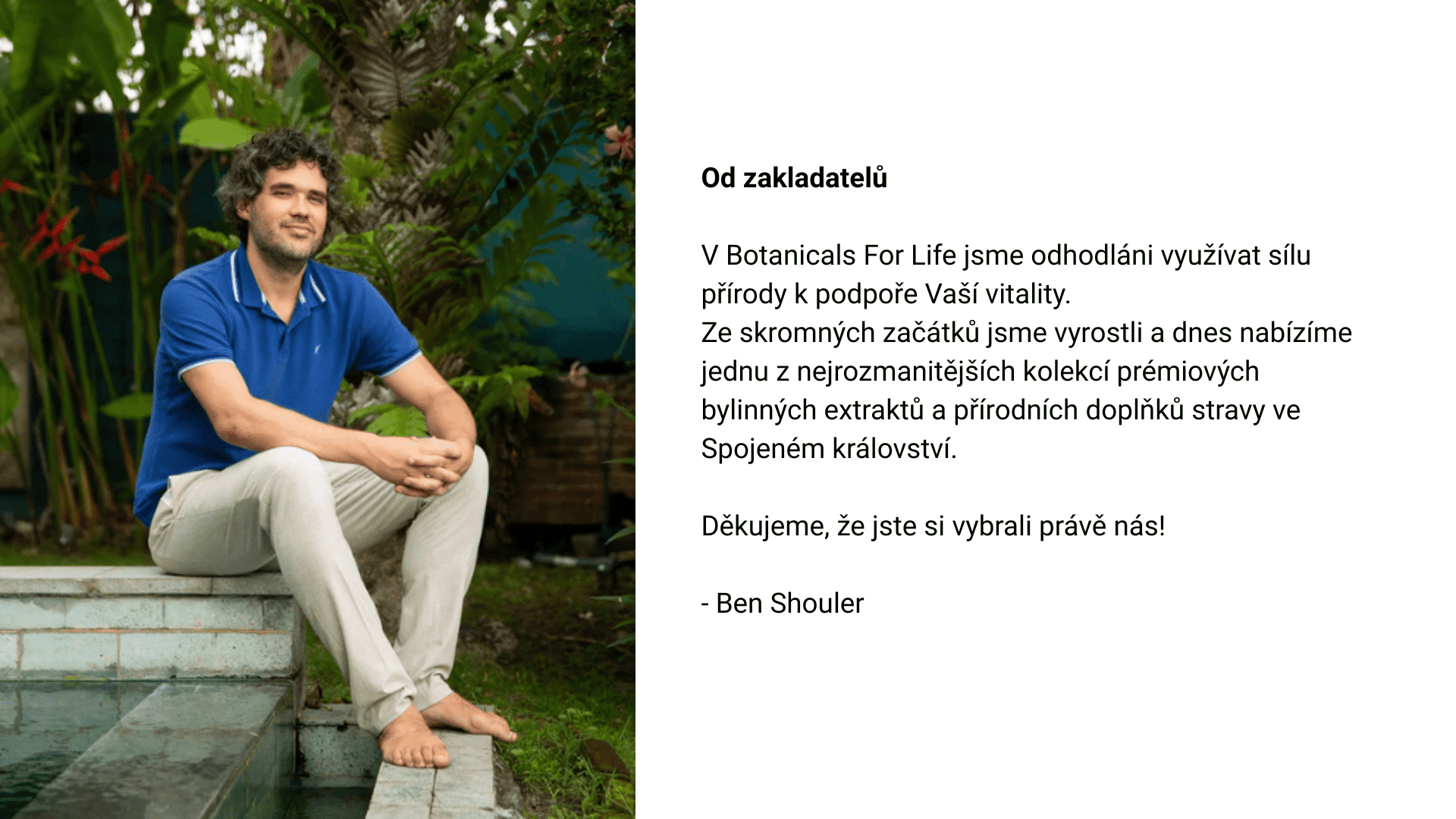
The Botanicals For Life brand was founded by naturopath Ben Shouler and nutritional therapist Graham Botfield. In 2016 they jointly established the distribution company Living Planet Distribution to bring innovative, high-quality food supplements to the market. Thanks to their own research, modern extraction technologies and a focus on raw materials from ecological farming, they have built a company that now represents more than ten brands and hundreds of product lines in the field of natural medicine.
Building on the success of their first brand, Mushrooms For Life, focused on medicinal mushrooms, they created Botanicals For Life – a portfolio of organic herbal extracts formulated with the same care and scientific approach. Both brands share a philosophy of sustainable sourcing, maximum efficacy and transparent UK-based production, which has earned them a reputation as a reliable partner for anyone seeking a natural path to vitality.
The mission of Botanicals For Life
The mission of Botanicals For Life is to make premium herbal supplements from ecological farming accessible to the wider public and to connect traditional herbalism with current scientific knowledge. Through state-of-the-art extraction technologies, it maximises the bioavailability of active compounds, while strictly transparent UK production guarantees purity and traceability at every step.
At the same time, the brand is built on sustainable sourcing, eco-friendly packaging and a “zero-waste” mindset, so that care for the health of the planet goes hand in hand with care for human health. The goal is to offer ethical, scientifically informed supplements that support immunity, hormonal balance and overall vitality.
Botanicals For Life within Living Planet Distribution
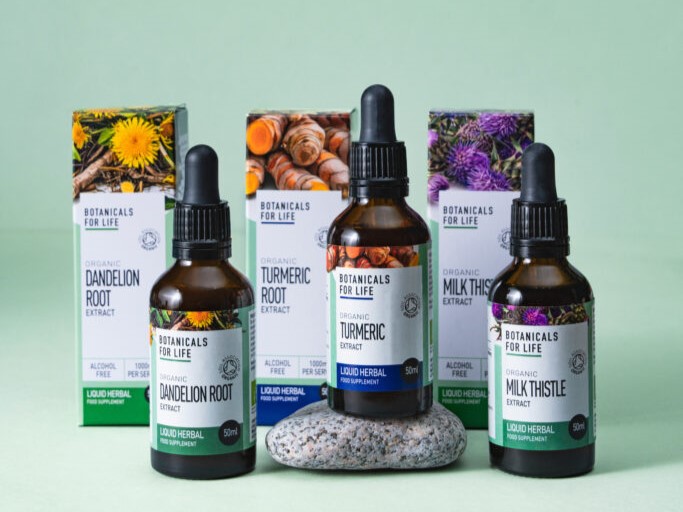
Botanicals For Life is a premium herbal brand in the portfolio of the British company Living Planet Distribution, which introduced it in 2023 alongside other innovative brands as part of its strategy to offer the highest-quality natural food supplements.
Living Planet Distribution thus acts as a parent distributor and incubator, providing development, manufacturing and global commercial support for Botanicals For Life.
The mission of Living Planet Distribution – under which Botanicals For Life sits together with other brands – is to bring unique, high-quality products to market and provide expert, research-based education.
The company positions itself as an innovator without compromise, with a strong focus on the finest available ingredients, sustainable sourcing and the long-term support of the health of its customers and the planet.
Transparency and education
Each product comes in detailed packaging with information on the origin of the herbs, extraction methods, traditional use and recommended dosage. Via a QR code you can access further details on the energetics of the herbs, contraindications and additional information.
Botanicals For Life is committed to transparency and sustainability – offering products that benefit personal health while also contributing to a healthier planet.
Product ranges of targeted health-supporting formulas
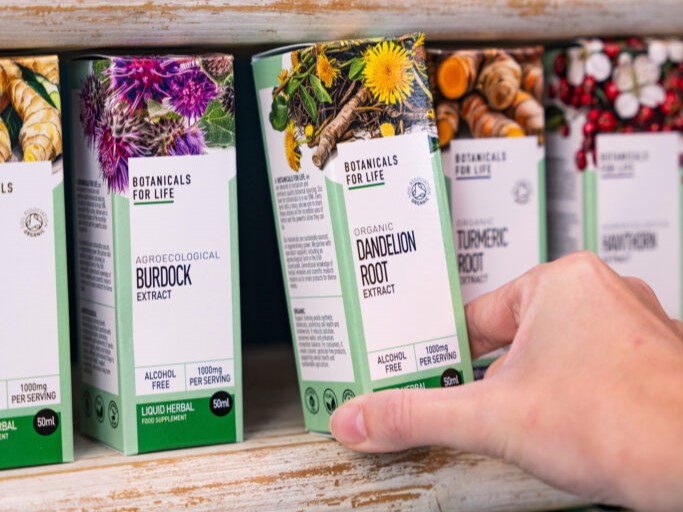
Mind & Mood
Adaptogenic, nootropic and nervine herbs for mental clarity and emotional balance. Includes extracts of ashwagandha, chamomile and valerian root.
Digest & Detox
Diuretic, bitter and hepatoprotective herbs to support digestion and detoxification. Contains extracts of burdock, milk thistle and dandelion.
Male Support
Adaptogenic and anti-inflammatory herbs for men’s vitality with stinging nettle root.
Female Support
Toning and detoxifying herbs for hormonal balance and skin health with chaste tree, red clover and sage.
Ageing & Longevity
Herbs that support cardiovascular health, cognitive function and overall longevity, such as extracts of hawthorn and turmeric.
Immunity
Adaptogenic, immunomodulating and antimicrobial herbs for immune support. Contains extracts of astragalus, echinacea and oregano oil.
Who are the founders of Botanicals For Life
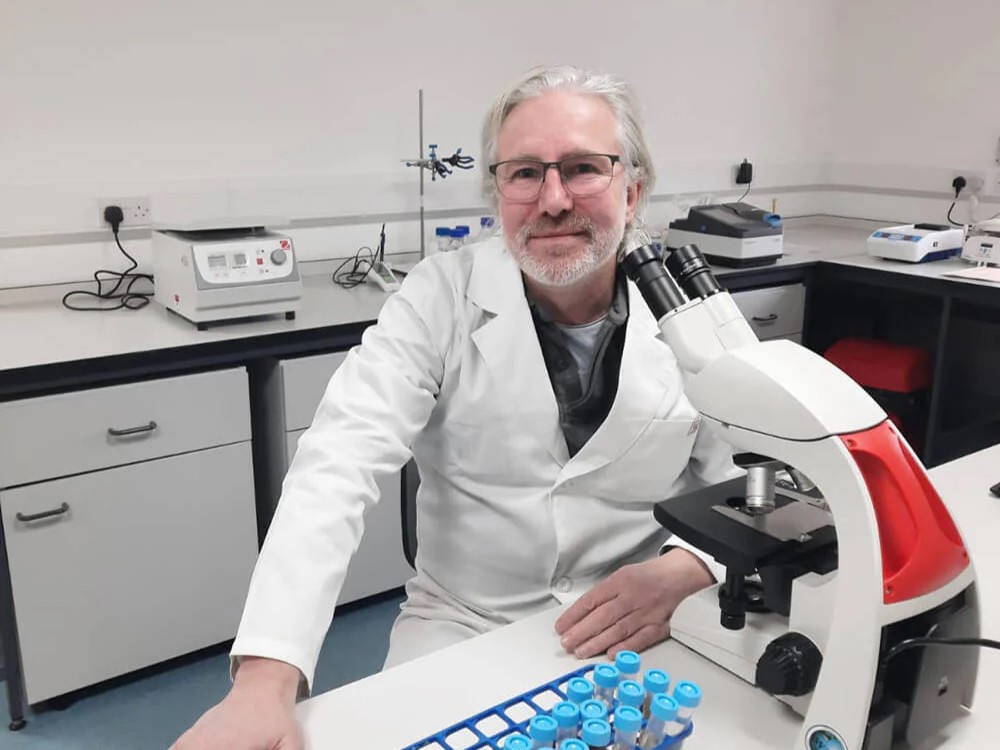
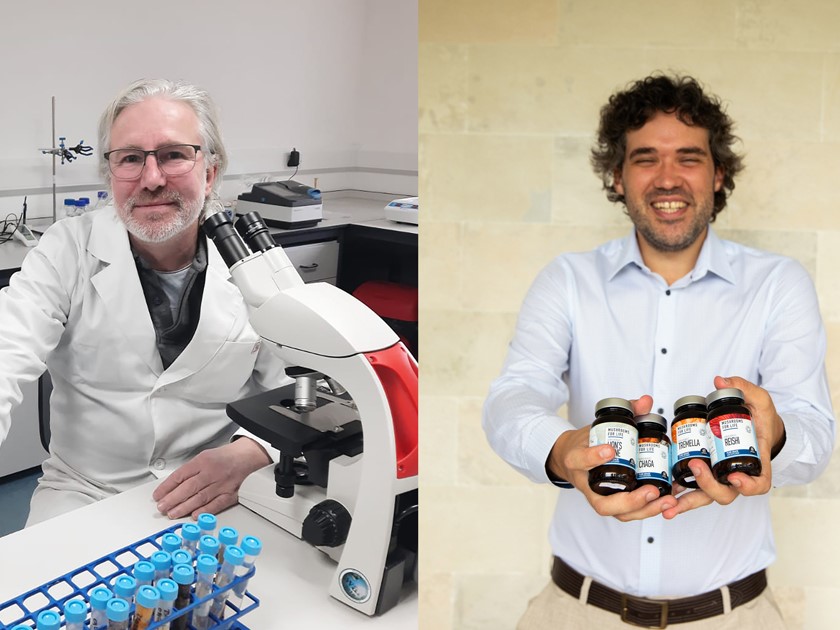
Graham Botfield
Founder Graham Botfield is a nutritional therapist and researcher specialising in the gut microbiome and the traditional use of herbs.
He has worked with leading supplement brands, including New Chapter, whose founder and master herbalist Paul Schulick strongly influenced Graham’s approach to developing nature-inspired supplements. Together with a specialist microbiologist, Graham is continually creating new fermented formulas and studying their benefits.
Alongside fermentation, Graham’s great passion is education. He uses his research as a basis for lectures on the benefits of fermented plants in addressing modern health challenges.
Ben Shouler
Ben Shouler is a British naturopath and the founder of the brands Planet Paleo and Botanicals For Life. Following his own health crisis in early adulthood and the study of natural medicine while travelling across Asia, he discovered the potential of collagen and herbs to support recovery and health.
In 2016 he founded Planet Paleo to fill a gap in the market for clean, grass-fed and MSC-certified collagen, which he combines with traditional herbs and functional nutrients.
Today he creates effective, ethically sourced formulas and, as a lecturer, helps to popularise paleo nutrition, collagen and personalised nutrition, inspiring the community to adopt a more sustainable approach to health.

Botanicals For Life offers a wide range of premium organic herbal extracts and natural food supplements that provide comprehensive support for immunity, vitality and hormonal balance.
See for yourself.
Who Botanicals For Life products are designed for

Women 40+
Athletes
Mothers
Stressed professionals
Conscious individuals
Commitments of the Botanicals For Life brand

Natural formulation
Maximum efficacy
Transparency
Education
Sustainability


