
Bamboo bandages for the most sensitive skin – a great invention from Down Under
The PATCH brand was founded by James Dutton in 2016. The idea came from his two sons – one was allergic to plasters, while the other disliked having any antiseptic or healing product applied to his skin. After looking into conventional plasters, James found that their composition can contain a whole range of chemicals that certainly are not suitable for allergy sufferers and are best avoided by everyday users too. He decided to develop natural hypoallergenic plasters that would both protect injuries and help them heal more quickly, removing the need to apply additional healing products.

Why it may be better to avoid conventional plasters
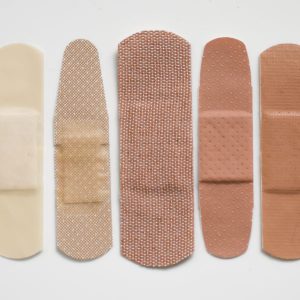
The main issue with commonly available plasters is that their full composition is often difficult to establish. Try searching online for the ingredients in the plasters you currently have in your first-aid kit, or take a look at the box. You will most likely find that the dressing pad is made from treated cotton and other natural or processed fibres. In most cases, this cotton is bleached with chlorine, much like the cotton used in sanitary pads, tampons and other hygiene products.
The plaster itself may be made from PVC, PE or PU, or from fabric. Plastic versions are more or less water-resistant, but they do not allow the wound to breathe, which can slow the natural healing process. Fabric plasters come with the same issue of chemical bleaching with chlorine. The adhesive used to keep plasters on the skin is usually based on either latex or acrylate. Both substances can cause allergic reactions. Some types of adhesive may also still contain animal-derived ingredients, which means the plasters are not suitable for vegans and, in some cases, not even for vegetarians.
What we cannot see, and can be very difficult to establish, is whether the dressing pad or the plaster itself has been treated not only with potentially toxic bleaching agents but also with other substances such as parabens, thimerosal and more.
Why PATCH plasters?
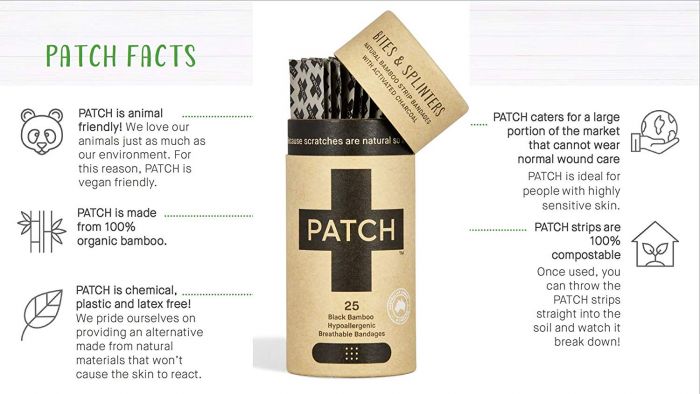
In recent years, more attention has been paid to chlorine bleaching of cotton and its implications when the material is used in hygiene or cosmetic products. We naturally do not want intimate areas or facial skin coming into contact with this kind of potentially problematic material. And even more so when the skin is broken. With PATCH plasters, you can be sure – as confirmed by certification – that the material used is 100 % organic, free from toxic bleaching agents and other harmful additives.
PATCH plasters are made entirely from bamboo fibres. This makes them highly breathable and fully compostable (including the box they come in). Bamboo is also considered a sustainable raw material. This tropical grass grows very quickly (with growth of up to 1 m per year) and, unlike cotton, requires relatively little water or fertiliser. It is also remarkably versatile – it can be eaten, used to make paper, building materials and textiles, turned into a range of wood-style accessories, and even used as a base material for bioplastics. We are likely to hear a great deal more about bamboo in the future :).
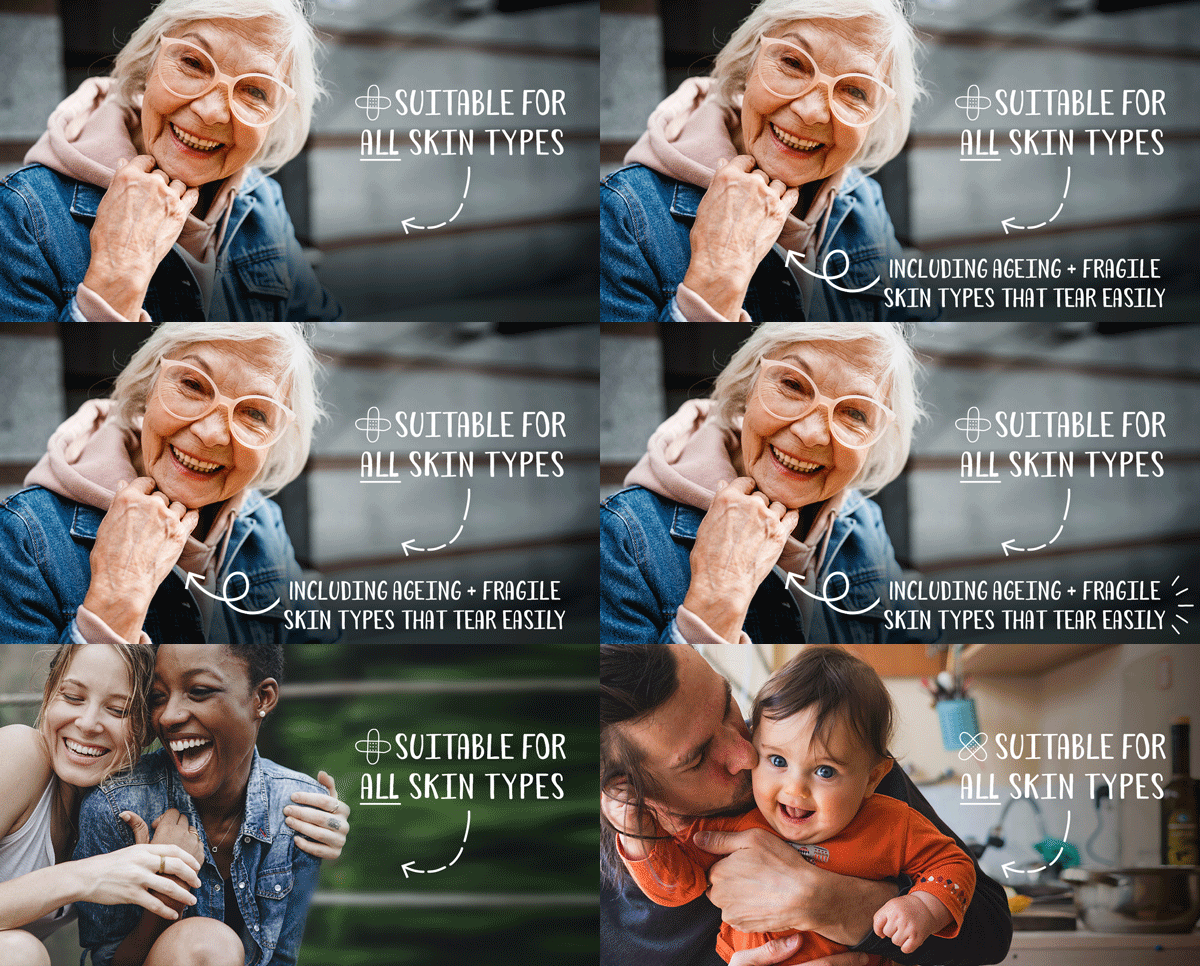
PATCH plasters stay in place using a hypoallergenic adhesive – Pressure Sensitive Adhesive (PSA) based on a blend of natural minerals and nanotechnology. It contains no latex or acrylates. This makes the plasters suitable even for people with severe allergies and very young kids. The plasters are not tested on animals and are also suitable for vegans.

Active ingredients in PATCH plasters
PATCH plasters are also enriched with natural ingredients traditionally used to support skin recovery. Here is what they offer:
- Activated charcoal – absorbs impurities from minor wounds and helps support the healing process. Bamboo plasters with activated charcoal are particularly suited to insect bites and embedded splinters.
- Aloe vera – a soothing plant with cooling and skin-supporting properties. Aloe plasters are therefore well suited to minor burns and blisters.
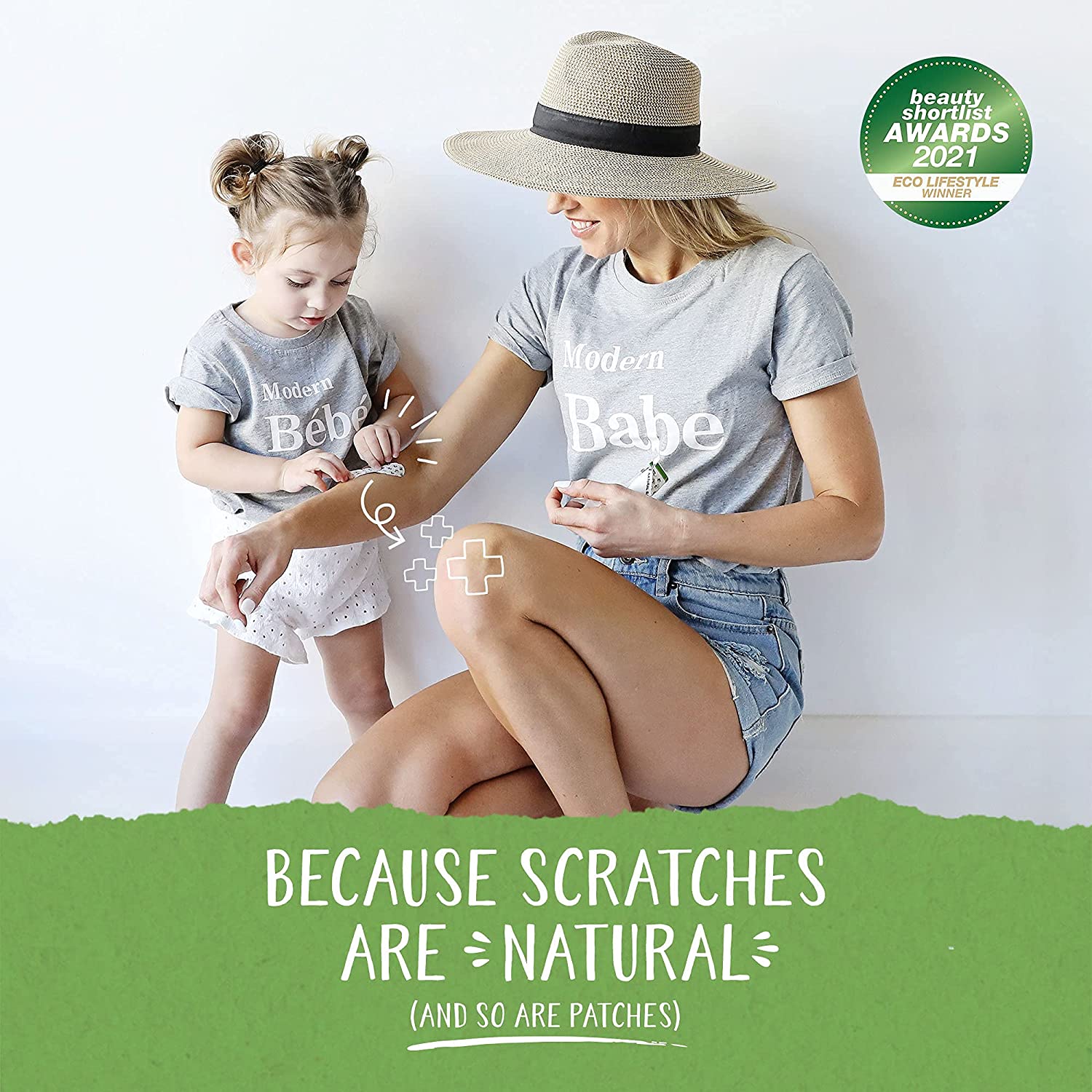
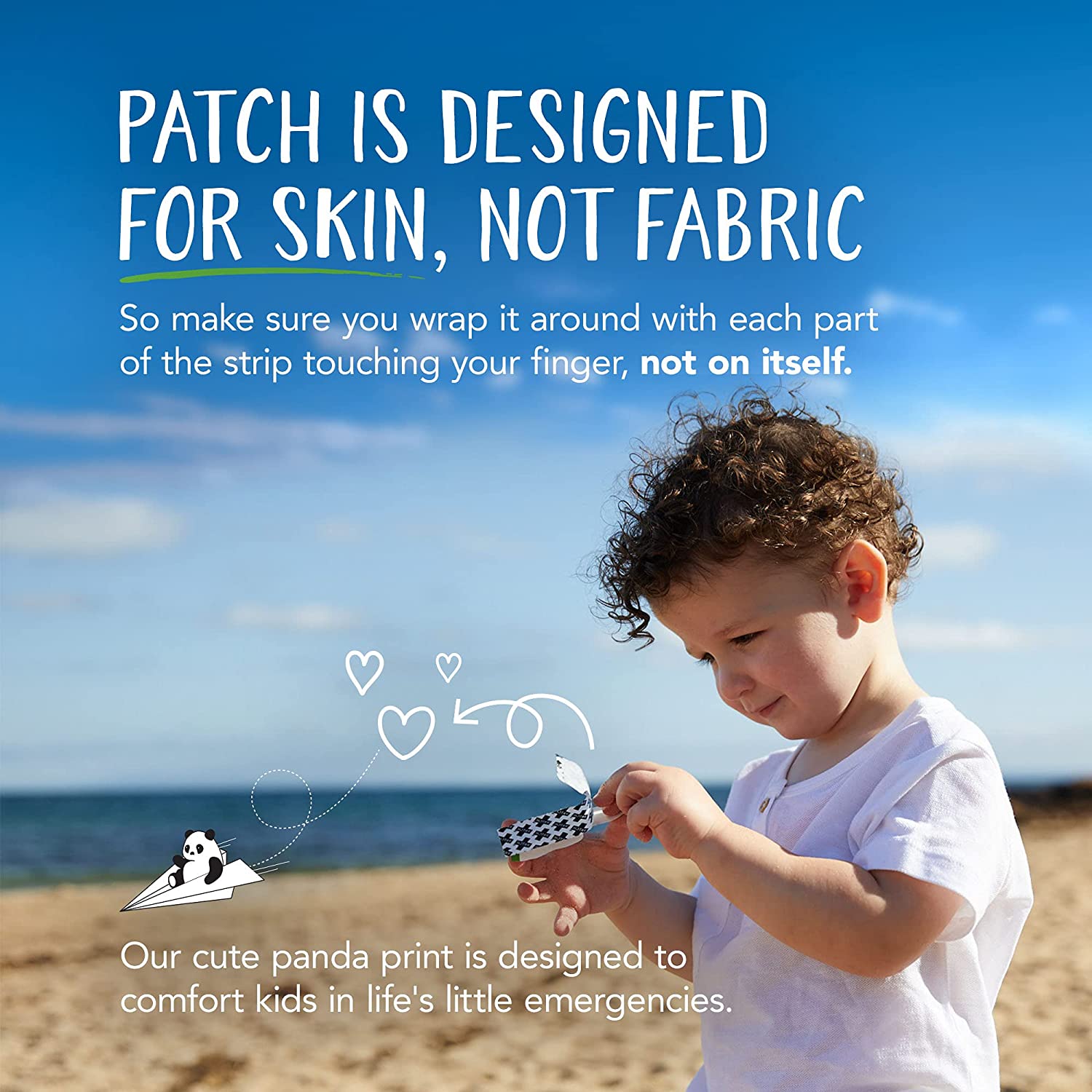
- Coconut oil – contains lauric acid, which the body can use as part of its defence against harmful microorganisms. It converts lauric acid into a substance called monolaurin, which acts against viruses, bacteria and fungi. Coconut oil is used in PATCH kids' plasters with a playful panda print. They are made for everyday scratches and grazes and are gentle enough even for newborns.
Want to learn more? Read our related articles:
How to put together a non-toxic first-aid kit
What should you pack for a hike?
How was the world's first zero-waste cosmetic product created?